
Bulgaria woke Monday to a political landscape transformed, with pro-Russian former president Rumen Radev’s Progressive Bulgaria party commanding nearly 45 percent of the vote after partial results — a performance that shattered opinion poll projections, humiliated parties that have dominated the country for a generation, and raised immediate questions about where a NATO member sitting on Europe’s eastern flank will position itself toward Moscow.
With 60 percent of ballots counted, Radev’s party held 44.6 percent — more than three times the support of the next closest competitors. The pro-European We Continue the Change-Democratic Bulgaria coalition sat at 14.2 percent and the long-ruling GERB party of former prime minister Boyko Borissov at 13 percent. If the numbers hold, Progressive Bulgaria could govern alone in a strong minority government, ending the paralysis of eight elections in five years that has left Bulgaria functionally ungovernable since 2021.
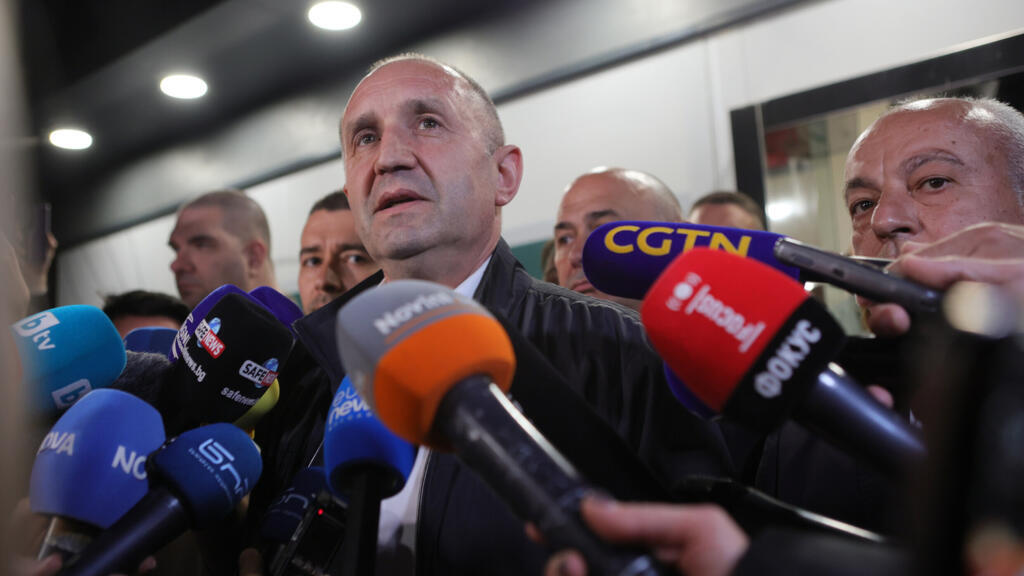
“This is a victory of hope over distrust, a victory of freedom over fear, and finally, if you will, a victory of morality,” Radev told a late-night press conference Sunday.
Read also: Fuel Crunch Looms As Grounding Threat Grows For Airlines
The result carries implications that extend well beyond Sofia. Radev is a former fighter jet pilot who has argued for restoring the free flow of Russian oil and gas into Europe, criticised EU renewable energy policy, and drawn explicit comparisons to Hungary’s Viktor Orbán in his talk of improved ties with Moscow. He has opposed military support for Ukraine throughout the conflict with Russia. Bulgaria, a NATO member that joined the eurozone as recently as January — a step Radev himself criticised — now appears headed toward leadership whose sympathies run in directions that will unsettle Brussels and reassure the Kremlin simultaneously.
The wave Radev rode was not primarily ideological. Bulgaria’s voters are exhausted. The country has held eight parliamentary elections in five years, producing a succession of weak coalition governments incapable of passing budgets, pursuing reforms or providing the basic stability that allows ordinary life to function with any predictability. The previous government fell after mass street protests against a proposed budget that would have raised taxes and social security contributions — a last straw for a population already worn down by political dysfunction and rising costs since the euro adoption.
Evelina Koleva, a digital marketing manager in Sofia, captured the sentiment that appeared to drive the result. “There is now an opportunity for the things people have been hoping to see change to actually become visible,” she said.
Radev has been deliberately vague about what change looks like in practice. He indicated Sunday that he would be willing to work with the pro-European PP-DB bloc on judicial reform and said Bulgaria would “make efforts to continue on its European path” — language carefully calibrated to avoid alarming European partners while committing to nothing specific. Whether that vagueness survives contact with actual governance, and whether his instincts on Russia translate into policy shifts that test NATO’s internal cohesion, will become clear quickly if he forms a government.
Read more: Nigeria, 116 Others Left Without US Ambassadors — Report
Bulgaria joined the EU in 2007 and has developed substantially since communism’s fall in 1989. Life expectancy has risen, unemployment sits at the lowest level in the bloc and euro adoption has brought economic stabilisation. But the country lags on multiple other EU benchmarks and has struggled with endemic corruption that successive governments — including Borissov’s — have been accused of perpetuating rather than addressing.
Tihomir Bezlov of the Centre for the Study of Democracy in Sofia offered a sober assessment of what the victorious camp has actually proposed for Bulgaria’s most pressing challenges. “The country’s main challenge is the economic crisis and the demographic crisis,” he said. “There do not seem to be many ideas in the winning camp on either of these issues.”
Final results are expected Monday. The question of whether Radev governs alone or assembles a coalition will shape how much of his foreign policy instinct translates into actual foreign policy — and how much Brussels, Washington and Kyiv have to worry about the newest member of the eurozone’s relationship with Moscow.