
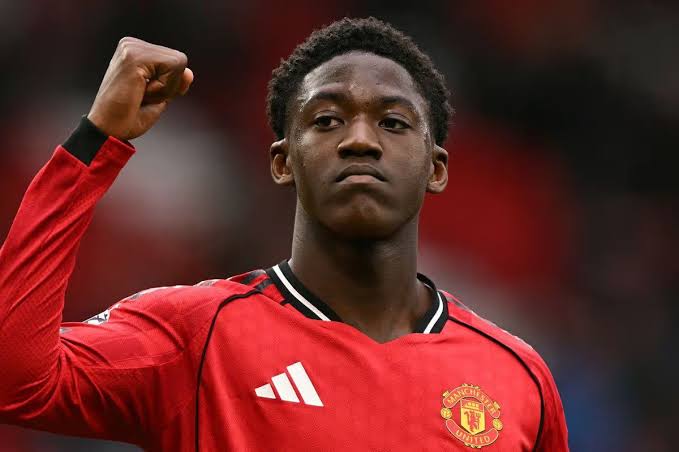
Contract renewal negotiations involving Kobbie Mainoo and Manchester United signal a calculated long-term talent retention strategy within one of global football’s most commercially influential institutions. The anticipated agreement, expected to extend Mainoo’s tenure at Old Trafford until 2031, represents more than a routine player renewal; it reflects evolving investment logic across elite football markets where youth development, wage structuring, and brand sustainability increasingly intersect.
At the centre of the proposed deal is a revised salary package designed to align Mainoo’s earnings with his growing strategic importance to the club. For Manchester United, the renewal underscores a broader shift toward consolidating homegrown talent as a foundation for competitive stability, financial efficiency, and long-term sporting identity.
Within modern football economics, securing emerging assets early in their peak development cycle has become a cornerstone risk-management strategy, particularly for clubs balancing performance ambitions with strict financial governance frameworks.
Mainoo’s trajectory over the past seasons has elevated him from academy prospect to first-team mainstay, reinforcing the commercial and sporting logic of a long-duration contract. As an England international midfielder, his presence carries value beyond match performance. Players with national team exposure generate measurable increases in brand visibility, merchandise demand, and global fan engagement—metrics closely tracked by top-tier football organisations operating as multinational entertainment entities.
From a governance standpoint, long-term deals of this nature provide clubs with leverage in future transfer negotiations. By extending contractual security until 2031, Manchester United effectively strengthens its negotiating position against potential external interest. In an era defined by escalating transfer valuations, controlling contract length allows clubs to protect asset value while reducing the likelihood of forced sales driven by expiring agreements.
Financial modelling within elite football increasingly mirrors practices found in corporate asset management. Player contracts function as depreciating yet tradable assets, with market value influenced by age, performance metrics, injury risk, and commercial profile. Extending Mainoo’s contract at this stage of his career represents a calculated bet on future output, with anticipated returns extending across competitive performance, broadcasting revenues, and sponsorship alignment.
Read Also: Major NYC Storm Could Trigger $100B Insurance Loss — KCC
The salary increase embedded in the expected agreement reflects another structural trend: performance-linked compensation frameworks designed to retain talent while maintaining compliance with league financial regulations. The Premier League operates within an evolving regulatory environment that emphasises sustainability, profitability thresholds, and responsible wage management. Clubs must therefore balance player remuneration against revenue generation capacity to avoid regulatory penalties and maintain competitive licensing status.
Manchester United’s internal planning appears aligned with these structural realities. In recent seasons, the club has prioritised integration of academy-developed players into its senior squad, reducing reliance on costly external acquisitions. This model supports long-term financial stability while reinforcing institutional identity—an increasingly valuable intangible asset in a crowded global sports marketplace.
Mainoo’s development pathway illustrates the operational value of investment in youth academies. The club’s training infrastructure, scouting network, and performance analytics ecosystem have enabled it to identify and cultivate players capable of transitioning into elite competition environments. Such systems represent substantial capital investments, often rivaling infrastructure spending in other entertainment industries. Retaining graduates who successfully navigate this pipeline maximises return on those investments.
From a market positioning perspective, securing Mainoo’s future also reinforces Manchester United’s messaging to supporters and investors. Long-term retention of promising domestic players signals institutional confidence in internal talent development, strengthening stakeholder trust at a time when fan engagement and commercial partnerships are tightly linked to sporting narratives.
The global football economy continues to experience structural transformation driven by digital broadcasting, streaming partnerships, and cross-border sponsorships. Clubs now operate within a complex financial ecosystem influenced by global capital flows, currency fluctuations, and regional market expansion strategies. Player retention decisions increasingly reflect these macroeconomic considerations rather than purely tactical needs.
Within this environment, English clubs maintain a particularly influential role. The Premier League’s global broadcast footprint ensures that emerging players gain rapid international exposure, creating secondary commercial benefits for clubs that successfully cultivate young talent. Mainoo’s rising profile within England’s national team structure enhances his international marketability, further reinforcing the financial rationale behind a long-term commitment.
There are also competitive implications. Stability in midfield roles—often described as the structural core of modern tactical systems—can significantly influence team performance across multi-season cycles.
By securing Mainoo’s services through the end of the decade, Manchester United reduces uncertainty in one of the most strategically critical positions on the pitch. Such continuity supports long-term tactical planning and squad development, particularly as clubs seek to maintain consistency across domestic and European competitions.
The psychological dimension of contract extensions should not be underestimated. For emerging players, long-term agreements provide security that can support performance consistency and career planning.
For clubs, they reinforce institutional culture by rewarding progression and signalling pathways for future academy graduates. These internal signals often shape recruitment pipelines, influencing how young athletes perceive developmental opportunities within specific organisations.
From a risk-management standpoint, extended contracts also provide insurance against volatile transfer markets. The cost of acquiring comparable midfield talent through international transfers has escalated sharply in recent years, often exceeding nine-figure sums for elite players. Retaining internally developed assets mitigates exposure to these market fluctuations while preserving financial flexibility for targeted acquisitions in other areas of the squad.
In parallel, the anticipated contract extension aligns with broader commercial planning cycles. Sponsorship negotiations, licensing agreements, and merchandising strategies frequently incorporate player-specific branding elements. Maintaining continuity with high-potential athletes enables clubs to structure multi-year partnerships with greater certainty regarding promotional assets and public engagement campaigns.
Industry analysts increasingly interpret long-term youth retention strategies as indicators of institutional resilience. Clubs capable of maintaining competitive squads through internal development demonstrate stronger capacity to withstand financial shocks, regulatory changes, and shifts in broadcast revenue structures. Manchester United’s decision to prioritise Mainoo’s retention fits within this emerging governance framework.
Read Also: Zelensky Slams Absence Of US Envoys Visit To Kyiv
Looking ahead, the proposed extension through 2031 places Mainoo among a cohort of players expected to shape the club’s next competitive cycle. The timeline suggests alignment with broader squad renewal strategies, infrastructure investments, and brand expansion initiatives targeting emerging global markets.
For the wider football industry, the development reinforces a key structural trend: the elevation of youth retention as a primary mechanism for sustaining competitive advantage in an increasingly regulated financial environment. As governing bodies tighten oversight on spending and profitability, internally developed talent becomes one of the most reliable drivers of long-term performance sustainability.
Ultimately, the anticipated agreement reflects more than a contractual milestone. It represents a strategic decision positioned at the intersection of talent management, financial governance, and global brand development. In a sport where competitive margins are narrowing and financial scrutiny is intensifying, securing foundational players such as Kobbie Mainoo signals an organisational commitment to continuity, resilience, and future growth within the world’s most commercially significant football league.