
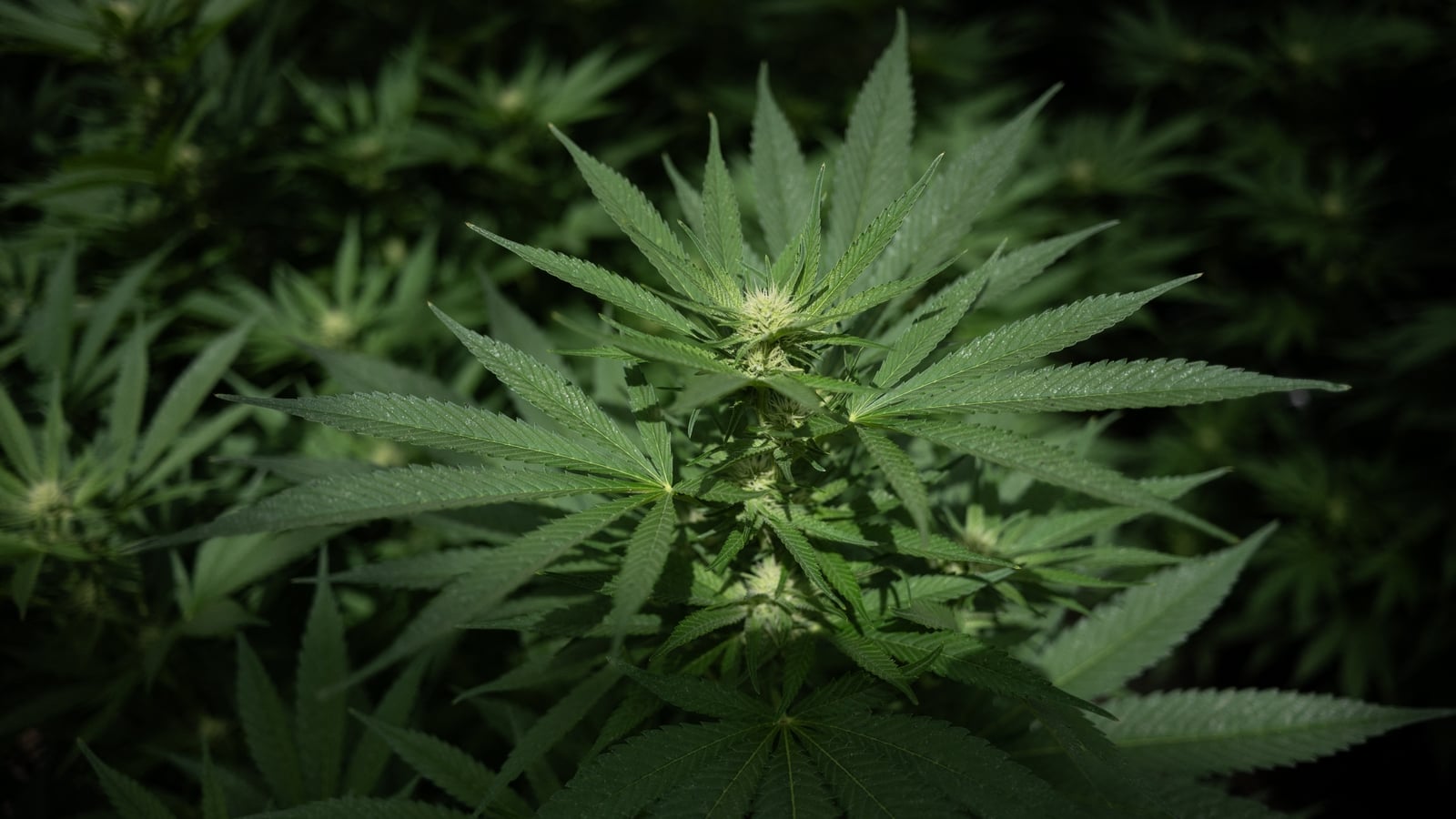
The US Justice Department moved Thursday to loosen federal restrictions on marijuana, announcing it would immediately ease rules on state-regulated medical cannabis products and fast-track a broader reclassification of the drug — the most significant shift in American drug policy in decades, arriving from an administration that few in the cannabis industry had expected to deliver it.
Acting Attorney General Todd Blanche said state-regulated medical marijuana products would be moved from Schedule I — the federal government’s most restrictive category, grouping cannabis alongside heroin as a substance with high abuse potential and no accepted medical use — to a less restrictive classification that includes common painkillers, ketamine and testosterone. FDA-approved marijuana products would follow. A broader reclassification covering all uses of the drug will be pursued through formal proceedings beginning June 29, when the Justice Department will begin gathering expert testimony and evidence.
The announcement does not legalise marijuana federally. What it does is begin dismantling the regulatory architecture that has kept a $47 billion industry in a state of permanent legal contradiction — legal in 40 states for medical purposes, recreational in 24 states and the District of Columbia, and simultaneously a federal crime that has resulted in millions of arrests while publicly traded companies sell cannabis products on stock exchanges.
Read also: Nigeria, 116 Others Left Without US Ambassadors — Report
“This rescheduling action allows for research on the safety and efficacy of this substance, ultimately providing patients with better care and doctors with more reliable information,” Blanche said.
Cannabis company shares jumped between six and 13 percent on the news before reversing gains as investors absorbed the limited immediate scope of the action. The market’s ambivalence captured the announcement’s essential tension — historic in direction, constrained in execution. Tilray Brands CEO Irwin Simon called it “a pivotal moment” and said federal policy was “finally aligning with science, medicine, and most importantly, patient needs.” Wall Street was less certain that Thursday’s moves were enough to fundamentally change the business environment that has made cannabis companies perpetually undervalued relative to their state-level revenues.
The practical barriers the reclassification is expected to ease are real. Under Schedule I, cannabis companies cannot deduct standard business expenses from federal taxes — an anomaly known as 280E that effectively imposes a punishing tax rate on legal operators. Research on cannabis has been severely limited by federal restrictions that made it nearly impossible to study a substance that tens of millions of Americans were already using. Banking access has been constrained because federally regulated financial institutions faced legal exposure from serving cannabis businesses operating legally under state law but illegally under federal statute.
Reclassification addresses all three, at least partially. Research barriers fall. The tax treatment normalises. Banking exposure decreases. None of this solves the fundamental patchwork of state and federal law that governs a market where a dispensary employee in Colorado is simultaneously a legal small business owner and a federal drug offender, but it begins pulling the federal framework closer to the reality on the ground.
Read also: Tensions Flare Ahead Of US-Iran Truce Negotiations
Trump ordered the Justice Department to loosen marijuana restrictions in a December executive order — a move that surprised many observers given the party’s historical opposition to cannabis liberalisation and drew objections from dozens of Congressional Republicans at the time. Thursday’s announcement formalised that directive into action. Trump posted on Truth Social calling for Congress to update the law to ensure access to the “full spectrum” of CBD products while restricting those that pose health risks.
Not everyone in his party was receptive. Senator Tom Cotton of Arkansas offered the clearest dissent. “Marijuana today is much more potent than just ten or twenty years ago, leading to increased psychosis, anti-social behaviour and fatal car crashes,” he wrote on social media. “A change to marijuana’s drug classification is a step in the wrong direction.” His objection echoes the standard conservative case against liberalisation — that higher potency modern cannabis carries genuine public health risks that reclassification would normalise and expand.
The Biden administration had attempted a similar reclassification in 2024. It was not finalised before Trump returned to office, and the Drug Enforcement Administration subsequently scrapped the effort under the new administration’s early direction. The irony that it is now a Trump Justice Department completing what Biden started will not be lost on either side’s political operatives.
Nearly one in five Americans uses marijuana in a given year, according to the CDC. It is the most widely used illicit drug in the country and the world. The gap between that fact and the federal legal classification that called it equivalent to heroin has been widening for thirty years. Thursday’s announcement began, formally, to close it.