
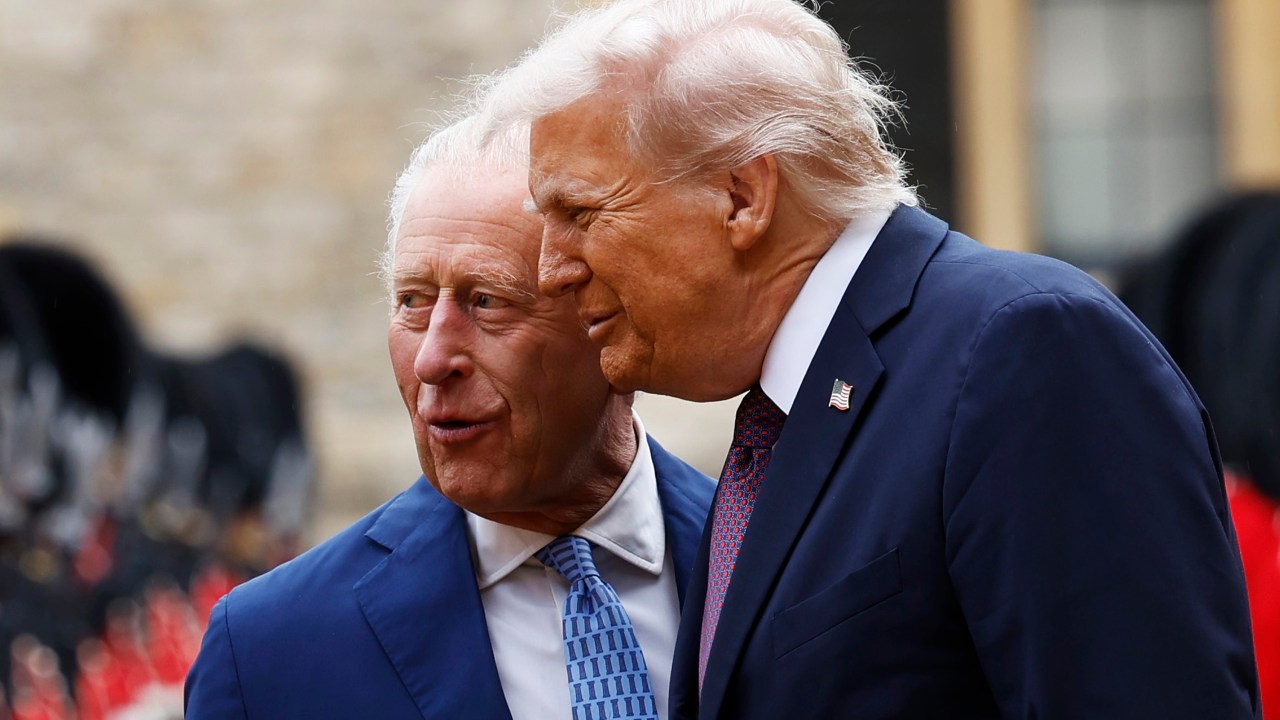
King Charles III and Queen Camilla are boarding their flight to Washington anyway. Twenty-four hours after a gunman rushed a Secret Service checkpoint at the Washington Hilton with a shotgun, a handgun and multiple knives — forcing the emergency evacuation of Donald Trump and Melania Trump from the White House Correspondents’ Dinner — Buckingham Palace confirmed Sunday that the four-day state visit to the United States will begin as scheduled on Monday.
The decision came after a full day of transatlantic consultation between British and American security services, diplomats and royal household officials working simultaneously on both sides of the Atlantic. The conclusion they reached was that the threat had been contained, the suspect was in custody, and the conditions for a safe royal visit remained intact.
“Following discussions on both sides of the Atlantic through the day, and acting on advice of government, we can confirm the state visit by their majesties will proceed as planned,” a Buckingham Palace spokesperson said. “The king and queen are most grateful to all those who have worked at pace to ensure this remains the case and are looking forward to the visit getting underway tomorrow.”
Read also: Beijing Applauds Countries Blocking Taiwan Leader’s Airspace
There may be minor operational adjustments to one or two engagements within the programme, the Palace said, without identifying which ones. The broader itinerary — a private meeting with Trump, an address to a joint session of Congress marking 250 years since American independence, and the full apparatus of a state visit between two of the world’s oldest allies — remains in place.
Charles had been kept informed of Saturday’s events throughout the day. The Palace said he was relieved that Trump, Melania and all guests had come through the incident unharmed, and that both he and Camilla had privately reached out to the Trumps to express their sympathies. The gesture was personal before it was diplomatic, which is precisely the kind of distinction that state visits are designed to make visible.
Trump, for his part, was unconcerned. Speaking in an interview on CBS News’ 60 Minutes, he said the British monarch would be well looked after. “I think it’s great; he’ll be very safe. The White House grounds are really safe.” He added that authorities had given him no indication of any further threats against himself or other senior officials.
Acting Attorney General Todd Blanche, who has been leading the federal response to Saturday’s attack, told reporters that investigators believed the gunman’s likely target was the president and administration officials. He expressed full confidence in the security arrangements for the royal visit. British senior minister Darren Jones reinforced that message, saying the two countries’ security services were already in close cooperation and that those discussions would continue intensively in the days ahead.
Read also: Trump Ousts Attorney General Bondi, Picks Ex-Personal Lawyer
The shooting itself was contained at the checkpoint. The suspect — a 30-year-old from California — was intercepted before reaching the ballroom where Trump and hundreds of journalists were gathered. A Secret Service officer was shot at close range but survived because his protective vest absorbed the impact. The suspect was taken to hospital. No one else was physically harmed.
That it was stopped before it became something worse is the operative fact. The layers of security that exist around a presidential event held, which is also the argument for why a royal state visit to Washington this week carries manageable risk rather than unacceptable risk.
The visit itself matters beyond its ceremonial dimensions. Charles is scheduled to address Congress in a moment that carries genuine historical weight — a reigning British monarch speaking to the American legislature at the quarter-millennium mark of independence from British rule. The symbolism is the kind that both governments invest in precisely because the underlying relationship has been under strain.
Britain has refused to join the US-Israeli military campaign against Iran. Trump has not been quiet about his frustration. He called Prime Minister Keir Starmer “no Winston Churchill.” He dismissed British aircraft carriers as toys. The language was public, pointed and entirely out of keeping with the careful diplomatic register that has historically governed how Washington and London air their differences.
A state visit is the formal answer to all of that — a demonstration that the relationship between two countries is larger than any single disagreement, that institutions outlast arguments, and that allies can sit across from each other in the same room even when they cannot agree on what is happening in the room next door.