
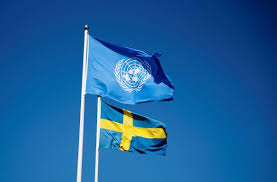
A boy diagnosed with autism, severe developmental disorder, cerebral palsy, hydrocephalus and epilepsy was deported from Sweden to Albania at the age of 10, and again at 14, without authorities first establishing whether the medication and care keeping him alive would be available on arrival. The United Nations Human Rights Committee said on Monday that those decisions amounted to a violation of his right to life.
The ruling, dated March 30, concerns a young Albanian identified in the case file as E.B., now 21. His family first arrived in Sweden in 2012 seeking protection and medical treatment for a constellation of conditions that, taken together, leave him entirely dependent on consistent specialist care.
Their asylum claim was rejected. So were the appeals that followed. In 2016, the family was put on a flight back to Tirana.
They came back almost immediately, this time without legal status, because the alternative — interrupting E.B.’s treatment — was one his parents would not accept. Swedish authorities turned down a fresh sequence of residency applications and, in 2019, deported him a second time, when he was 14. He has since returned to Sweden once more and, according to his submission to the committee, is now facing yet another removal order.
The committee’s eighteen independent experts, who monitor compliance with the International Covenant on Civil and Political Rights, found that Stockholm had crossed a line that international human rights law treats as absolute.
States, the committee said, must not remove a person from their territory where there are substantial grounds to believe doing so would expose them to a real risk of irreparable harm in the receiving country. In E.B.’s case, that risk was foreseeable and the verification was never done.
Read also: Russia Threatens Response As Finland Lifts Nuclear Weapons Ban
“Before deporting a child with severe and complex disabilities, and life-threatening health conditions, states must carry out a rigorous, individualised assessment and ensure that essential treatment and medication will in fact be accessible and available in the receiving country,” said Wafaa Bassim, the committee’s vice chair.
The decision frames the failure as procedural in form but substantive in consequence. By neither confirming that the specific medications E.B. relies on were available in Albania, nor that he would have practical access to the medical infrastructure his conditions demand, Swedish authorities — in the committee’s reading — placed him at a real risk of irreparable harm.
That, the panel concluded, breached two of the covenant’s most heavily protected guarantees: the right to life, and the right not to be subjected to torture or to cruel, inhuman or degrading treatment.
The committee has asked Sweden to review E.B.’s pending applications for asylum or a residence permit and to pay him adequate compensation. It has no enforcement mechanism. Its findings cannot compel a state to act. What they carry instead is reputational weight, particularly in a country that has long projected a self-image as a global standard-setter on human rights and refugee protection.
Read also: Sweden Moves To Tighten Citizenship Rules Ahead Of Election
That self-image has come under pressure as Sweden’s centre-right government, supported by the Sweden Democrats, has tightened asylum and migration rules sharply in recent years, narrowing eligibility, shortening permits and accelerating returns. Cases involving children with disabilities have largely been treated within that broader system, rather than as a category requiring separate safeguards. Monday’s decision pushes back on precisely that assumption.
For E.B., the immediate question is whether Stockholm will pause the new removal order while it reconsiders his file. For Sweden, the question is broader.
The committee’s ruling does not order a policy change. But it sets a clear standard — that deporting a severely disabled child without confirming the receiving country can keep that child alive is, in the language of the covenant, a violation of the right to life — and challenges Sweden either to meet that standard or to explain why a child in E.B.’s circumstances was twice put on a plane without it.