
Hezbollah entered the Iran war on March 2 as a calculated gamble — and two months later, inside the organization, more than a dozen officials are beginning to reckon with how expensive the bet has been.
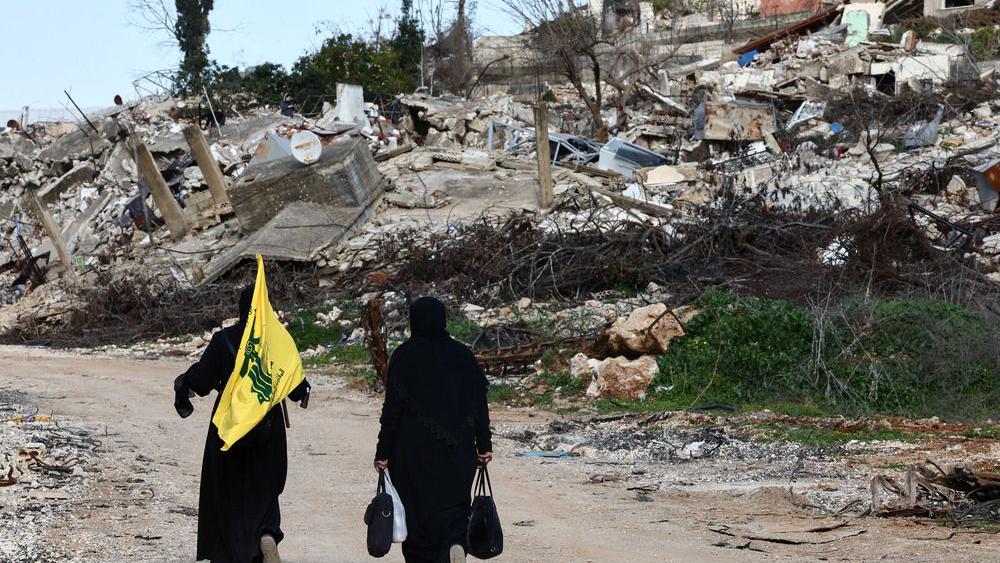
Israel has occupied a section of southern Lebanon stretching as far as 10 kilometers across the border, demolishing villages and establishing what it calls a security buffer zone. Hundreds of thousands of Hezbollah’s Shia Muslim constituents have been displaced, forced into Christian, Druze and other areas where many openly blame the group for dragging Lebanon into another war. And according to casualty estimates from sources within Hezbollah itself — figures the group’s media office publicly disputes — several thousand of its fighters have been killed since hostilities resumed.
The graves are visible evidence of what the official statements deny. In the southern suburbs of Beirut that Hezbollah controls, more than two dozen freshly dug plots were filled with fighters’ bodies in the days immediately after the April 16 ceasefire took hold.
Simple marble tombstones identify some as commanders, others as rank-and-file fighters. In the single village of Yater, local council records document the deaths of 34 Hezbollah members. One Hezbollah commander told Reuters that scores of fighters had gone to the frontline towns of Bint Jbeil and Khiyam intending to fight to the death, and that their bodies had not yet been recovered.
Lebanon’s health ministry has recorded more than 2,600 deaths since March 2, roughly a fifth of them women, children and medical workers. Three sources, two of them Hezbollah officials, told Reuters the ministry’s figures do not capture many of the group’s military casualties — a gap that, if accurate, places the true toll considerably higher than public figures suggest.
Read also: Lebanon Sheds Pawn Role As Ceasefire Holds, Leader Says
The political damage has compounded the military losses. In Beirut, domestic opposition to Hezbollah’s status as an armed group has hardened, with rivals arguing that its decision to fire rockets at Israel on March 2 — two days into the US-Israeli campaign against Iran — exposed Lebanon to a war it had nothing to gain from and everything to lose. In April, Lebanon’s government held direct talks with Israel for the first time in decades, a development Hezbollah firmly opposed and which illustrated how far its domestic standing has slipped.
Hezbollah lawmaker Ibrahim al-Moussawi rejected the characterization that the group acted as Iran’s proxy. He told Reuters the decision to enter the conflict was driven by the need to “break this vicious cycle where the Israelis can target, assassinate, bombard, kill, without any revenge.” On the question of losses, he was philosophically direct: “you don’t go into making calculations of how many are going to be killed” when “pride and sovereignty and independence” are at stake.
The strategic logic behind Hezbollah’s gamble, as its officials describe it, rests on the assumption that its participation would force Lebanon onto the agenda of US-Iranian negotiations — that Tehran’s leverage in any eventual deal could be used to secure a more robust ceasefire than the fragile November 2024 truce that followed the Gaza war.
That ceasefire had left Hezbollah holding fire even as Israel continued killing its members, and the group emerged from it weakened, its leader Hassan Nasrallah dead alongside approximately 5,000 fighters.
Read also: Israel Opposition Leader Warns It Faces Security Disaster
Rearmed with Iranian help and employing new tactics including drones, Hezbollah returned to conflict with capabilities that surprised observers who had written it off. But whether tactical resilience translates into strategic gain is a different question. “Hezbollah has shown more resilience than many thought possible, but that was not a strategic gain in itself,” said Yezid Sayigh of the Carnegie Middle East Center in Beirut. “The only thing that will contain Israel is a comprehensive US-Iran deal. Without a deal, there’s going to be a lot of pain for everyone. At best, a hurting stalemate.”
The deal Hezbollah is counting on may not include Lebanon at all. Trump said last month that any agreement Washington reaches with Tehran “is in no way subject to Lebanon.” A Western official told Reuters there was a real possibility that a US-Iran settlement could be reached without addressing the Lebanon conflict. Tehran has demanded that Israel’s campaign against Hezbollah be included in any broader deal. Hezbollah’s Moussawi said the group had “full trust in Iran — that the Iranians will not sell their own friends.”
That trust is being tested in real time. The April 16 ceasefire reduced the intensity of hostilities but has not stopped them.
Israel and Hezbollah continue trading fire in the south, where Israeli troops remain entrenched in the buffer zone and Netanyahu has declared Hezbollah’s disarmament a fundamental demand in any eventual peace talks. Hezbollah has ruled disarmament out entirely, describing it as a matter for national dialogue rather than external imposition — a position that leaves the two sides’ stated requirements for peace entirely incompatible.
The gamble Hezbollah made on March 2 has not yet paid off. Whether it eventually does depends on negotiations between Washington and Tehran that may or may not bring Lebanon with them.