
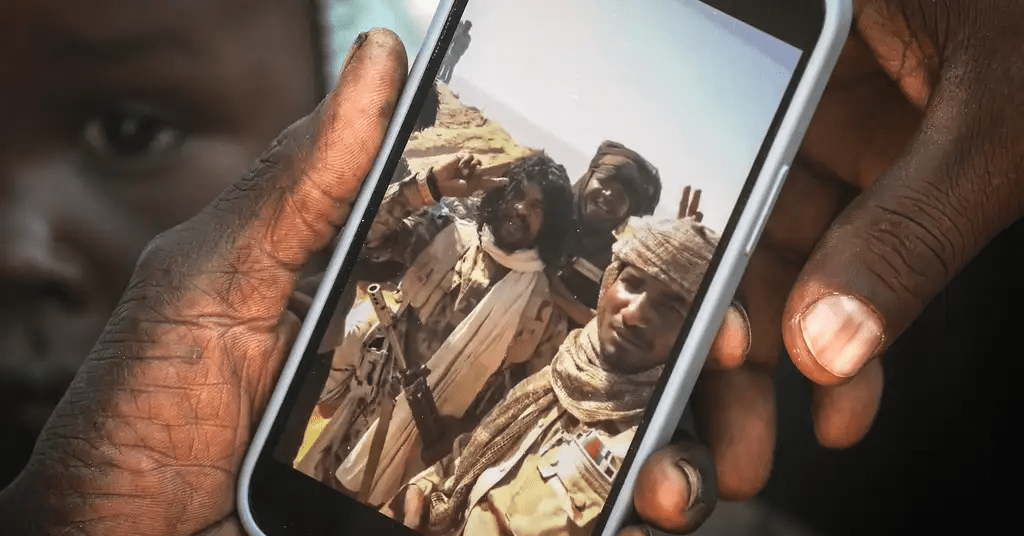
A Sudanese paramilitary commander arrested last year following international outrage over video evidence of reprisals against unarmed civilians in Al-Fashir has been freed from detention and is directing troops on the front lines in the Kordofan region — while the government that controls his force flatly denies he ever left prison.
Nine sources independently confirmed the release and battlefield return of the commander known as Abu Lulu. Two of them — a Sudanese intelligence official and a Rapid Support Forces officer — said they personally saw him at the front in March. A third source, a Chad-based soldier with direct access to RSF leadership, said senior officers pushed for his return to the field specifically to boost troop morale at a difficult moment in the fighting.
The RSF’s governing authority rejected all of it.
“The assertion that Abu Lulu was released is false, malicious, and completely untrue,” said Ahmed Tugud Lisan in a statement issued in response to inquiries. Abu Lulu and others accused of violations during the assault on Al-Fashir, the statement read, remain in custody and have never left prison. A special court, Lisan added, would hear the case against them.
Read also: RSF Drone Strike In White Nile Kills 17, Students Included
Thirteen named sources told reporters they had information about Abu Lulu’s release, among them three RSF commanders, an RSF officer, a close relative of Abu Lulu, a Chadian military officer with ties to RSF leadership, and seven additional individuals with contacts inside RSF command or intelligence networks.
The accounts they offered cut directly against the official denial.
One RSF officer said leadership had ordered certain commanders not to discuss Abu Lulu’s return to combat — an instruction that itself suggests awareness of what his presence on the battlefield would mean for the organization’s already battered international standing. A relative confirmed the release but said it came with conditions: Abu Lulu was not to appear publicly on the front or allow himself to be filmed fighting. No images of him in combat after his release have surfaced, though sources attribute that absence to strict controls on documentation rather than to any absence from the fighting.
“He has been free for about three or four months and is now on the front with his units,” one anonymous RSF officer said.
His relative added that the RSF simply could not afford to leave him out of the fight. Abu Lulu commands loyalty among frontline units in a way that few others can replicate, and the Kordofan campaign has placed enormous pressure on RSF positions. Morale, the relative said, was the calculation that overrode everything else.
What Abu Lulu is accused of doing in Al-Fashir makes that calculation deeply difficult to defend before any international audience.
Six witnesses interviewed in refugee camps in Chad placed him directly at scenes of killing, assault, and deliberate targeting of civilians. Manazil Musa, 25, identified Abu Lulu from video footage shown to her by a reporter. She said he stopped her family on the road during their flight from Al-Fashir, seized their phones and belongings, beat them, and killed her brother Mubarak.
“Abu Lulu — the one who tormented us,” she said. “He killed Mubarak. He killed our families and our men.”
Madina Adam, 38, provided an account of Abu Lulu entering Al-Fashir University on October 27 during what she described as a campaign of civilian intimidation. She said he shot multiple people there, including a pregnant woman he shot seven times in the abdomen after learning she was seven months along. Adam also described him forcing approximately a dozen children to sit on the ground and chant RSF slogans before shooting them.
Read also: Sudan Market Drone Strike Kills 11, Civilian Deaths Surge
Human rights investigators and monitoring organizations have separately documented mass atrocities during the RSF’s assault on Al-Fashir — killings, systematic abuse, and crimes against civilians that legal experts and international observers have characterized as serious violations of international humanitarian law.
Abu Lulu’s original arrest last year came after video of the reprisals spread internationally, generating enough pressure that the RSF moved — at least visibly — toward some form of internal accountability. A disciplinary investigation was reportedly launched into the conduct of senior commanders following Al-Fashir’s capture. The specifics of those proceedings were never fully confirmed.
Whatever process existed has now, according to multiple independent sources, produced its answer: the man at the center of the most documented atrocity allegations is back in uniform, commanding troops, and operating under orders not to be seen doing it.
Sudan’s war between the national army and the RSF has driven what the United Nations describes as one of the world’s worst humanitarian crises, with millions displaced and acute famine conditions spreading across Darfur and other regions. Al-Fashir, the last major city in Darfur not under RSF control when the assault began, became a focal point for international concern precisely because of what witnesses said was happening to civilians caught inside it.
Those witnesses are now in Chad. Abu Lulu, according to the sources who say they saw him, is in Kordofan — armed, active, and officially, according to his organization, still behind bars.