
When U.S. and Israeli airstrikes triggered the Iran war at the end of February and Iran effectively sealed the Strait of Hormuz, energy markets convulsed across Europe. Italy convulsed harder than most.
The country generates nearly half its electricity from natural gas — the highest proportion in the European Union, according to 2025 data from the Ember and Energy Institute think tanks. Spain runs on gas for roughly a fifth of its power. Germany at 17%. France, anchored by nuclear, at 3%. Italy, at close to 50%, had built an electricity system that functions only as long as imported gas flows freely. When the strait closed, the flow stopped being free in any sense of the word.
Families and businesses across the country felt it immediately. And now, as Copenhagen Infrastructure Partners — a Danish firm with capital ready to deploy into Italian offshore wind — sits waiting for an auction calendar that Rome promised by 2028 but has yet to schedule, the cost of years of deliberate policy choices is becoming impossible to ignore.
The irony is structural. Italy is the European Union’s largest importer of liquefied natural gas through the Gulf. It had more reason than almost any other member state to have sprinted toward renewables before the supply chains it depends on became a war zone. Instead, after Moscow invaded Ukraine in 2022 and gas markets first lurched, Italy launched a search for new gas suppliers. It is doing the same thing now.
“Our panic today over the energy impact of the wars in progress is partly because we haven’t pursued the right policies and investments in the past,” said Riccardo Barbieri, director general at Italy’s Treasury — a candid admission from inside the government about the cost of the path it chose.
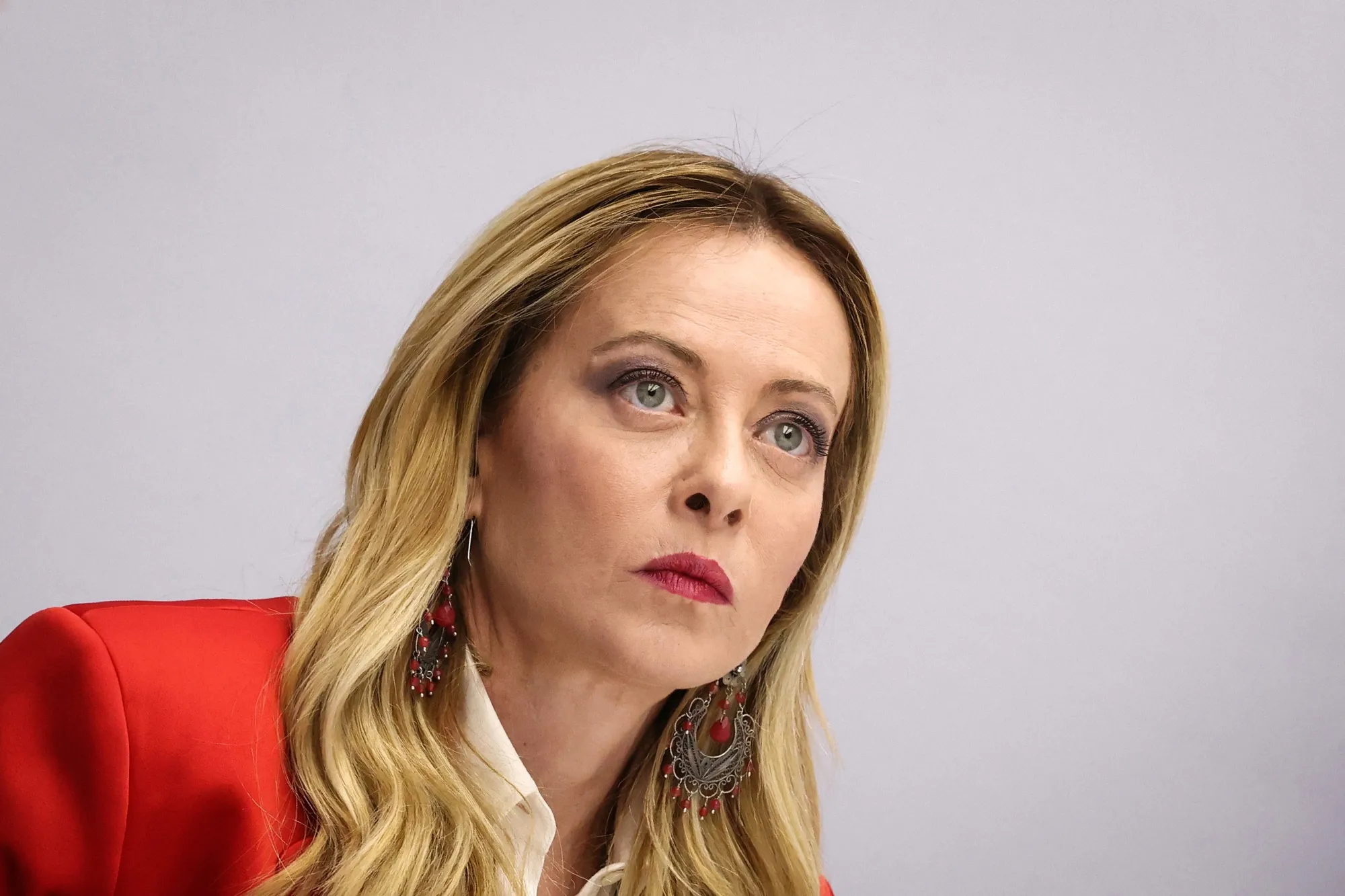
That path runs directly through Prime Minister Giorgia Meloni, who has governed since 2022 with a visible contempt for the energy transition. She has publicly dismissed it as the “ideological transition” and declared it not driven by science. Under her administration, the share of EU post-COVID recovery funds Italy dedicates to greening its economy slipped from an original 39.5% to 37.1% — barely clearing the bloc’s mandatory 37% floor. She has proposed reimbursing gas-fired power plants for costs incurred under the EU’s Emission Trading Scheme, a move environmental groups say amounts to a direct subsidy for continued fossil fuel dependency. Parliament passed legislation this year pushing the permanent closure of Italy’s coal plants back by 13 years, to 2038.
Read also: Search Underway In Maldives For Bodies Of 4 Italian Divers
The numbers on renewables tell the same story from a different direction. Between 2020 and 2024, the contribution of solar, wind, and hydroelectric power to Italy’s electricity output rose by just over two percentage points, reaching 41%, according to Eurostat. In Spain over the same period, renewables in the power mix climbed by 17 points. Germany added 10. France, with nuclear already doing the heavy lifting, still added 6.5. Italy’s gain was the smallest in the peer group by a significant margin.
Enrico Giovannini, a former infrastructure minister who now leads ASviS, a Rome-based sustainable development institute, did not soften his assessment.
“In recent years we have waged a war on renewables,” he said. The politicians and industry voices who called for slowing the green transition, he added, are now the same ones complaining that energy costs have spiked — failing to connect the two facts.
The explanations offered inside the government lean on bureaucracy, local resistance, and inter-ministerial friction. Energy Minister Gilberto Pichetto Fratin pointed to NIMBY opposition at the municipal level as the primary obstacle, while also acknowledging jurisdictional clashes between his Environment ministry and the Culture ministry over permitting. These are real frictions. They are also frictions other European governments, operating under similar pressures, managed to work through.
Read also: Dutch Hospital Breaches Hantavirus Protocol Amid Outbreak
Meloni’s answer to Italy’s medium-term energy problem is nuclear power. Italians have voted against it twice in four decades. Economists widely view the timeline for new nuclear capacity — and its cost — as incompatible with addressing a crisis already in progress. Giovannini was more blunt: “I suspect all this talk about nuclear reactors may be a weapon of mass distraction to avoid discussing renewable energy.”
At the state enterprise level, the picture is mixed at best. Eni has built out several low-carbon units, though hydrocarbons remain its core business. Enel, under a CEO installed by Meloni three years ago, pivoted away from renewable energy development toward lower-risk regulated businesses — a retreat from the sector Italy most needed it to press forward in.
Meanwhile, Copenhagen Infrastructure Partners’ country manager Michele Schiavone watches the calendar. The 2024 Italian law that created incentives for offshore wind developers promised auction dates by 2028. No schedule has been announced. No signal has come from Rome that one is imminent. Schiavone said offshore wind could generate twice as much electricity per installed gigawatt as solar, and half again as much as onshore wind — a density of output that a country paying the price of gas dependency might be expected to find compelling.
“The silence is not just preventing us going forwards, it is taking us backwards,” he said. “It’s an own-goal that is too bad to be true.”
Meloni has asked the EU for budget flexibility to help Italian households and companies manage their energy bills. Brussels has not agreed. The offshore wind auctions remain unscheduled. The gas still has to come from somewhere.