
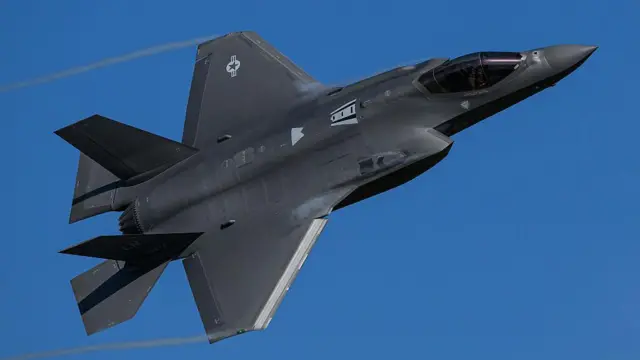
The fragile ceasefire framework between the United States and Iran is facing renewed strain after Washington confirmed fresh military strikes targeting Iranian assets near the Strait of Hormuz, underscoring the persistent volatility surrounding one of the world’s most strategically important maritime corridors. United States Central Command stated that American forces carried out what it described as “self-defence strikes” in southern Iran on Monday, targeting missile sites and vessels allegedly attempting to deploy naval mines near the Gulf shipping corridor.
The operation marks one of the most significant military escalations since the ceasefire arrangement between Washington and Tehran came into effect in April, highlighting the increasingly difficult balance between maintaining diplomatic negotiations and enforcing military deterrence in the region.
US officials framed the strikes as limited and defensive in nature.
Centcom spokesperson Capt Tim Hawkins said the actions were intended to protect American personnel and preserve maritime security while maintaining overall commitment to the ceasefire framework. The reported targets were located near Bandar Abbas, a critical Iranian naval hub positioned along the Strait of Hormuz.
The Strait of Hormuz remains central to the geopolitical and economic dimensions of the conflict. Roughly one-fifth of globally traded oil and significant volumes of liquefied natural gas transit through the narrow waterway, making any disruption capable of rapidly affecting energy markets, shipping insurance costs, and international supply chains.
Washington has repeatedly insisted that unrestricted navigation through the strait constitutes a core strategic priority. Following the strikes, Marco Rubio reaffirmed that position, stating that the waterway “has to be open one way or the other” and describing Iranian interference with Gulf shipping as “unlawful,” “unsustainable,” and unacceptable to the international community.
Despite the military escalation, Rubio maintained that negotiations with Tehran remain active. He indicated that additional talks involving Iranian negotiators and regional intermediaries, including Qatar, were expected to continue, though he acknowledged that disagreements over language and sequencing within the draft framework remain unresolved.
Read also: Trump Threats Push Canada Closer To Nordic Arctic Partners
The dual-track approach — military pressure combined with continued diplomacy — reflects the broader strategic posture currently being pursued by the United States. Donald Trump has repeatedly argued that economic and military leverage are necessary to secure a “good deal” capable of permanently preventing Iran from obtaining nuclear weapons capability while ensuring the reopening of Gulf trade routes.
At the same time, Washington appears reluctant to trigger a wider regional war that could destabilise energy markets, disrupt allied Gulf economies, and increase global inflationary pressures linked to fuel supply shocks. Iran’s response has remained confrontational but calibrated.
The Islamic Revolutionary Guard Corps claimed it had downed a US drone and fired upon an American fighter aircraft and another drone that allegedly entered Iranian airspace, though Tehran did not provide operational details or precise timing.
Iranian officials also reiterated that Tehran reserves what it described as a “legitimate and definite” right to respond to any ceasefire violations.
Meanwhile, Mojtaba Khamenei issued a strongly worded statement during Hajj commemorations, declaring that the Middle East would “no longer serve as shields for US bases” and arguing that American regional influence was declining.
The remarks carry broader symbolic and political significance.
Khamenei, who assumed leadership following the death of his father earlier this year during Israeli strikes, has remained largely absent from public view amid reports that he sustained injuries during the conflict’s early stages. Intelligence assessments cited by US media suggest communication challenges involving Iran’s leadership structure may be contributing to the slow pace and complexity of current negotiations.
The evolving diplomatic discussions reportedly centre on a provisional memorandum of understanding rather than a final settlement. Key components under discussion include a 60-day extension of the ceasefire, phased reopening of the Strait of Hormuz, mechanisms governing maritime security, and future negotiations over Iran’s nuclear programme and sanctions relief.
However, the most contentious issues remain unresolved. These include the scope and timing of sanctions removal, the release of frozen Iranian financial assets, and US demands concerning Iran’s enriched uranium stockpiles. The nuclear dimension continues to represent the core strategic issue.
The International Atomic Energy Agency previously estimated that Iran possessed approximately 440 kilograms of uranium enriched to 60% purity at the beginning of the conflict — technically a short step away from weapons-grade enrichment levels.
Trump stated Monday that the enriched uranium would either be transferred immediately to US control or destroyed within Iran under coordinated supervision. Tehran, meanwhile, continues to insist its nuclear programme remains civilian in nature.
Read also: Nvidia Earnings Ease AI Bubble Fears But Markets Stay Cautious
The broader geopolitical environment surrounding the negotiations remains highly unstable. Since the conflict began in February following coordinated US and Israeli strikes on Iranian targets, the region has experienced sustained military confrontation, maritime disruptions, energy market volatility, and intensified strategic competition involving Gulf states and global powers.
Iran’s effective restriction of Hormuz shipping routes earlier this year triggered sharp increases in global oil prices and raised fears of prolonged supply chain disruptions across Asia and Europe. Although markets have stabilised somewhat amid renewed diplomatic engagement, the latest military exchanges demonstrate how quickly tensions can re-escalate even during active negotiations.
For global policymakers and financial markets, the central challenge is no longer simply preventing direct military confrontation. It is establishing a sustainable framework capable of balancing maritime security, nuclear oversight, regional deterrence, and economic stability simultaneously.
At present, the ceasefire appears less like a stable peace arrangement and more like a highly fragile containment mechanism operating under constant pressure from unresolved strategic disputes. Whether diplomacy ultimately succeeds may depend on whether both governments can maintain negotiations while managing military incidents that continue to test the limits of restraint across the Gulf region.