
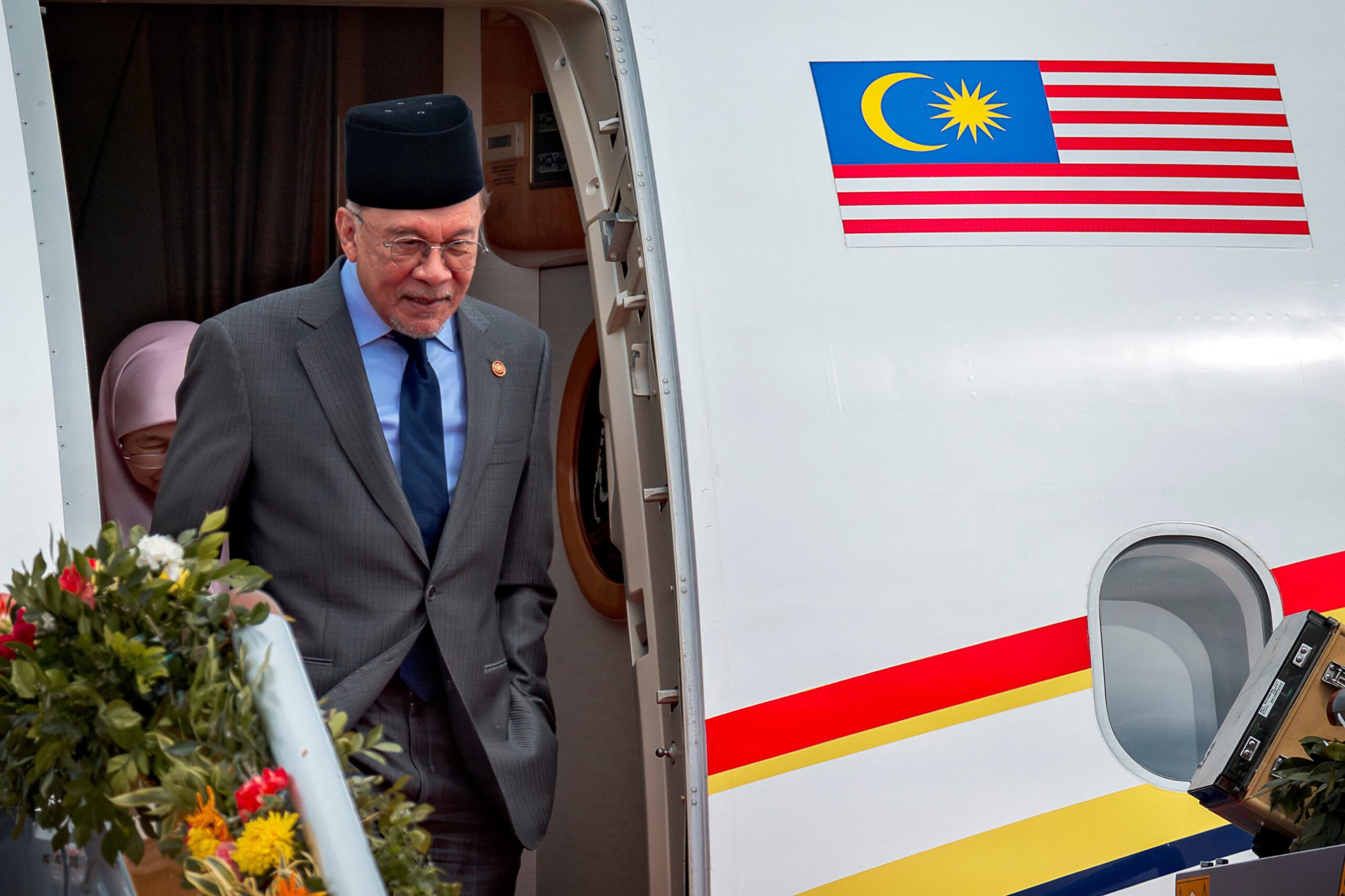
The clearest sign that Malaysian Prime Minister Anwar Ibrahim’s ruling coalition is fracturing is not the snap elections themselves — it is that one of his own coalition partners has announced it will contest those elections without him.
Barisan Nasional, which governs the southern state of Johor as part of Anwar’s national alliance, dissolved the Johor state assembly on Monday and promptly declared it would contest the resulting elections independently, without support from Anwar’s Pakatan Harapan bloc. In a coalition government, that is not a scheduling disagreement. It is a public signal that the partnership’s internal logic is breaking down. Johor elections must be held within 60 days.
Negeri Sembilan followed two days later. That state assembly was dissolved on Friday, with Pakatan — Anwar’s own bloc — contesting all 36 seats after having won 17 at the last election.
The two simultaneous state elections, arriving against a backdrop of coalition infighting, failed reform momentum, and mounting pressure over the fate of an imprisoned former prime minister, have crystallized a political moment that could define whether Anwar reaches the 2028 general election from a position of strength or managed decline.
Anwar’s office did not respond to requests for comment.
The structural tensions inside the coalition are not new, but they have become harder to paper over. Anwar’s governing alliance is an arrangement of formerly antagonistic forces — his own reformist Pakatan Harapan bloc bound together with Barisan Nasional, the establishment vehicle that governed Malaysia for decades before its corruption scandals fractured its hold on power, and several smaller parties. The coalition’s internal disagreements over how to navigate ethnic and religious policy in a multi-racial, Muslim-majority country have been an ongoing source of friction. Progressive allies have grown openly frustrated at the pace of reform. And Anwar has faced escalating pressure from the United Malays National Organisation — the dominant force within Barisan — over UMNO’s push for a royal pardon for former prime minister Najib Razak, who was imprisoned in 2022 for his role in the 1MDB corruption scandal that ran into billions of dollars.
Read also: Malaysia Police Probes Bloomberg Over Alleged Defamation
That last issue sits at the coalition’s most combustible fault line.
Najib remains UMNO’s most politically potent figurehead despite his conviction. The party’s campaign for his pardon places Anwar in an impossible position: resist, and risk destabilizing a partner he needs for his parliamentary majority; accommodate, and hand his critics — and the Malaysian public — a signal that the reform agenda he ran on is negotiable when coalition management demands it. Neither outcome is clean.
The state elections will not, by themselves, alter the arithmetic in the national parliament. Anwar’s majority is not directly at stake in Johor or Negeri Sembilan. But political momentum in Malaysia, as elsewhere, does not confine itself to the specific contest at hand. Significant losses — particularly in Johor, where Barisan’s decision to run alone already suggests the coalition cannot present a unified front — would weaken the alliance heading into a national election that must be held by early 2028. Anwar said last month he was considering calling a snap general election if internal divisions continued to deepen. The state results will inform whether he acts on that.
Two additional states, Malacca and Sarawak, are also scheduled to hold elections in the coming months. Malaysia’s Election Commission has noted that an early general election would allow state polls to run concurrently — a cost-saving logic that is also, in political terms, a mechanism for controlling the narrative. Holding multiple elections at once limits the opposition’s ability to treat each one as a referendum on the government and compresses the timeframe in which bad news can accumulate.
Read also: Modi In Malaysia To Deepen Trade, Defense, And Tech Ties
Whether Anwar reaches that calculation will depend in part on what happens in the next 60 days in two states where his coalition is already running in different directions.
Johor is the more revealing test. A state where the coalition cannot agree on a joint candidate slate before a single vote is cast is a state where the broader alliance’s cohesion is already a question rather than an assumption. Barisan’s independence there is not just an electoral tactic — it is a declaration that UMNO’s interests and Pakatan’s interests, in at least this contest and at least at this moment, do not align.
For Anwar, who built his government on the improbable premise that old rivals could govern as genuine partners, that declaration is the result that matters most — arriving before the campaigning has even begun.