
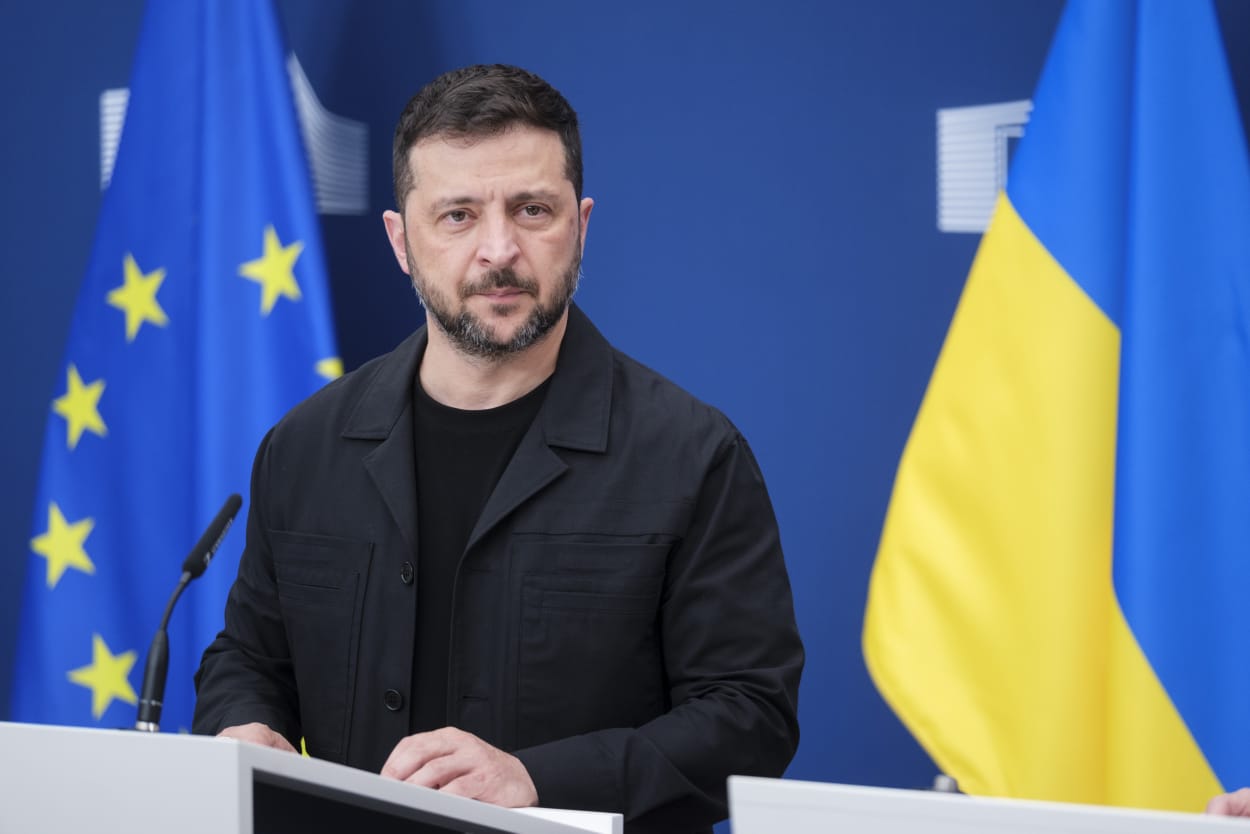
Ukrainian President Volodymyr Zelenskyy published a rare open letter to Vladimir Putin on Thursday night proposing direct face-to-face peace talks — a gesture that arrived less than 24 hours after Ukrainian drones struck an oil terminal and naval base in Saint Petersburg while the Russian city was hosting the country’s flagship international economic forum, and that drew from Moscow a response so choreographed it bordered on theater.
The Kremlin said Putin could see Zelenskyy “any time” — in Moscow.
Zelenskyy had anticipated exactly that kind of deflection and addressed it in the letter before it was published. A meeting on Russian soil was ruled out in advance. The Ukrainian leader instead called for a neutral venue, a fixed date, and a full ceasefire for the duration of any negotiations. “Ukraine proposes ending this war through direct engagement between us — and you,” he wrote. “If you do not personally come to the conclusion that it is time to end this war, Ukraine will continue fighting for its existence.”
Direct, public appeals from Zelenskyy to Putin are uncommon. Thursday’s letter was unusual in form, carefully worded, and deliberately timed.
The backdrop matters. Russian forces have continued advancing along sections of the front line, but the pace has slowed measurably since late 2025.
Read also: Russia Bombs Kyiv On Eve Of Zelensky-Trump Peace Talks
An analysis of Institute for the Study of War data compiled by AFP found that Ukraine recaptured more territory than it lost in May for the second consecutive month — a development that stands in uncomfortable contrast to Putin’s insistence, offered to foreign journalists in Saint Petersburg just before Zelenskyy’s letter was published, that Russia was “advancing along the entire line of contact.” The Russian leader added that Moscow remained “absolutely ready and willing to reach an agreement with Ukraine through peaceful means,” without specifying what terms that willingness would actually require.
What he did specify was his continuing doubt about Zelenskyy’s political legitimacy.
Putin returned, as he has before, to the argument that Zelenskyy’s authority requires “analysis” given that his initial five-year presidential term expired in 2024. Ukrainian martial law prohibits elections during wartime — a constraint Zelenskyy has offered to resolve by holding a vote or referendum if a full ceasefire is first in place. The legitimacy argument is not new, and its repetition tells less about Zelenskyy’s legal standing than about Moscow’s negotiating posture: an adversary whose mandate you question is an adversary you are not obliged to negotiate with as an equal.
Read also: Ukraine’s Zelensky Turns To Davos For Support
The Kremlin said Putin had not yet been shown the letter when Dmitry Peskov offered the come-to-Moscow invitation to state media.
Donald Trump, whose administration has spent months in largely unproductive shuttle diplomacy between the two sides — efforts substantially complicated by the simultaneous prosecution of the U.S.-Israeli campaign against Iran — called the prospect of a Zelenskyy-Putin meeting “great” from the Oval Office. He also made a claim of authorship. “I suggested those compromises,” he told reporters, without identifying what those compromises were or which side he expected to accept them. Trump has faced sustained criticism for the disparate treatment he has extended to the two leaders — publicly berating Zelenskyy in the same Oval Office earlier this year while separately extending an invitation to Putin for a summit in Alaska.
Ukraine’s battlefield posture has also grown more assertive.
Long-range strikes on Russian energy and military infrastructure have intensified in recent months. Kyiv frames these attacks as proportionate responses to nightly Russian missile and drone barrages on Ukrainian cities.
Thursday’s strikes on Saint Petersburg — hitting an oil terminal and a naval facility while Russia’s so-called “Russian Davos” economic forum was underway — carried an unmistakable message about reach and timing. Putin addressed the damage with a candor unusual for him on matters of military vulnerability, acknowledging that Russia’s air defense network requires strengthening. “Russia has an air defence system. Yes, we must improve it. Yes, we must strengthen it,” he said. “And we will do so.”
That admission, from a leader who rarely concedes defensive weakness publicly, arrived on the same day his spokesman was inviting the Ukrainian president to make his case in Moscow.
Russia’s terms for peace remain what they have been: Ukrainian withdrawal from the Donbas, large portions of which Kyiv still holds and controls. Moscow has insisted those withdrawals are preconditions before negotiations begin, not subjects for negotiation themselves.
Zelenskyy’s letter does not engage those terms directly. It asks, instead, for the two leaders to sit across a table from one another — a request Putin has rejected in every configuration except one, saying he would meet Zelenskyy only to finalize an already completed agreement, not to negotiate the shape of one.
Which is, in practice, the same as not meeting at all.