
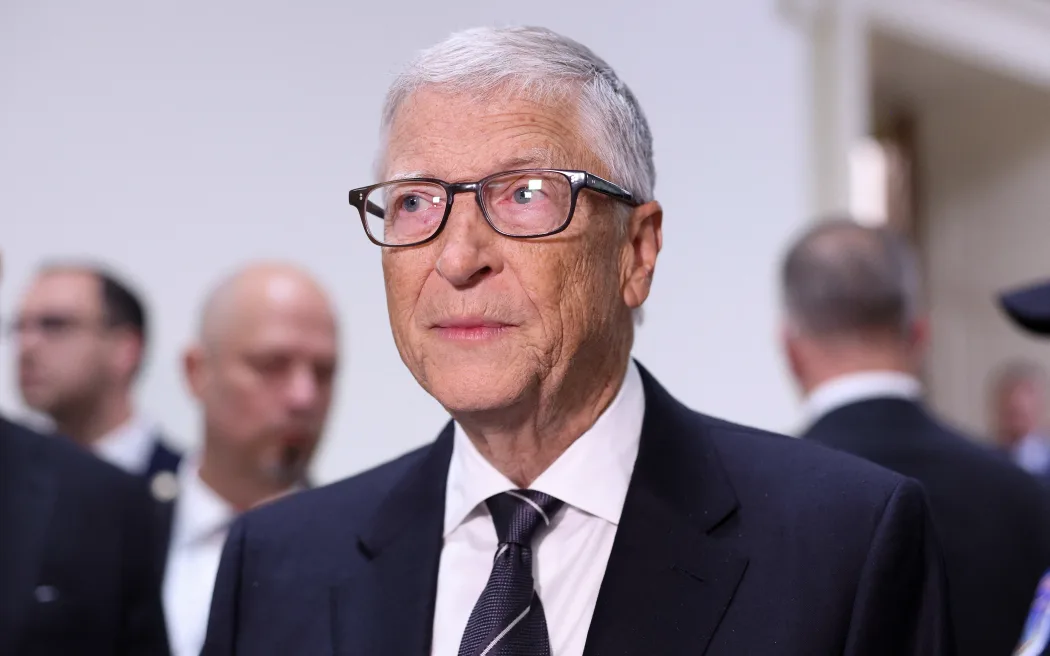
Bill Gates handed congressional investigators the names of wealthy figures Jeffrey Epstein assembled as prospective donors to his global health foundation, lawmakers confirmed Wednesday, in testimony that pulled one of the world’s richest men deeper into the long reckoning over the late financier’s network.
The names stayed behind closed doors.
Democrats on the House Oversight Committee, which has spent months working through the wreckage of the Epstein case, said the Microsoft co-founder identified the group during a voluntary, daylong interview on Capitol Hill — but declined to disclose them publicly. What members did reveal painted a picture of a billionaire who pursued Epstein’s fundraising promises for three years despite knowing the man carried a sex-crime conviction, then walked away only when the money never materialized.
“Gates was aware that Jeffrey Epstein could be convicted for a horrific crime, and continued to interact with him to seek money for his foundation,” Robert Garcia of California, the panel’s senior Democrat, told reporters after the session.
Gates, 70, arrived without a subpoena. In an opening statement, he insisted he never saw or suspected ongoing criminal conduct by Epstein, never visited his private island, his New Mexico ranch or his Florida residence, and never accepted the financier’s attempts to turn a business courtship into friendship. He told the committee he hopes Epstein’s survivors receive the justice they deserve.
Read also: Bill Gates: I Have No Desire To Die A Rich Man
But the most striking admission concerned leverage.
Gates testified that Epstein weaponized knowledge of his extramarital affairs — layering fabrications on top of real indiscretions — in an effort to force him back into contact after their relationship soured. The Microsoft founder has acknowledged affairs with two Russian women, while denying a series of lurid and unverified claims contained in draft emails attributed to Epstein among the millions of pages of Justice Department files released in January. Those drafts alleged Epstein arranged liaisons for Gates, claimed he contracted a sexually transmitted infection, and asserted he tried to covertly medicate his then-wife Melinda. Gates rejects all of it.
His name surfaced thousands of times in the January document dump, alongside photographs showing the two men together. One image appears to place Gates near an aircraft with Epstein’s pilot; Gates has previously acknowledged flying on the financier’s private jet.
The relationship began in 2011 — three years after Epstein’s Florida conviction for soliciting prostitution — and revolved, by Gates’s account, around the prospect of channeling new money into his global health work. He told the panel he stipulated from the start that Epstein would never hold a role in his foundation or earn a fee.
The arrangement collapsed in 2014. Epstein convened what he billed as a roomful of potential donors; Gates testified that the gathering exposed the entire enterprise as hollow, with no one prepared to commit. He said he concluded Epstein would never deliver, told him their dealings were over, and cut off all contact.
Republicans on the committee came away with a different emphasis. Tim Burchett of Tennessee described the questioning as intense and Gates’s answers as carefully hedged, but said the testimony reinforced his view of how Epstein operated — collecting prominent people, photographing himself beside them, and converting proximity into the appearance of power. Burchett added that Gates looked worn down “for a guy worth several billions.”
Read also: Melinda Gates Announces $1bn Donation In Support Of Women
The committee has now questioned a procession of figures from Epstein’s orbit, including former President Bill Clinton, former Secretary of State Hillary Clinton and Commerce Secretary Howard Lutnick. Ghislaine Maxwell, serving 20 years for her role in Epstein’s trafficking operation, appeared by video in February and refused to answer questions. Epstein himself died by suicide in a Manhattan jail cell in 2019 while awaiting trial.
Lawmakers pressed Gates on a question that has shadowed every powerful man tied to the financier: how a figure who built an empire on information could remain incurious about facts sitting in plain public view. Gates told his own foundation staff in February that he knew vaguely of an “18-month thing” restricting Epstein’s travel but never properly examined his background.
Emily Randall, a Washington Democrat, offered the committee’s sharpest verdict on that defense. Many of the men who dealt with Epstein, she said, saw only what they wanted to see.
Gates, by his own account, saw a donor pipeline. It produced nothing — except a decade of questions that followed him into a closed room in Washington this week.