

JURISDICTIONAL NOTICE
STATUS: U.S. First Amendment Protected.
Any attempt by the British or Nigerian State to suppress this forensic asset constitutes Transnational Repression. All interference will be tracked and submitted to the FBI for Global Magnitsky Sanctions.
♦♦♦♦♦♦♦♦♦♦♦♦♦♦♦♦♦♦♦♦♦♦♦♦♦♦♦♦♦♦♦♦♦♦♦♦♦♦♦♦♦♦♦♦♦♦♦♦♦♦♦♦
A forensic dissection of Flora Shaw’s colonial label, Decree No. 24, and the militarized elite cartel that turned Nigeria into a republic no president can redeem without restructuring.
True Restructuring: Regional Autonomy or National Pretense
A forensic definition of true restructuring: regional autonomy, fiscal responsibility, local security, and a center stripped of imperial excess.
Restructuring has been abused by politicians, feared by centralists, reduced by commentators, and weaponized by those who prefer confusion to reform. Yet the word still carries the central truth of Nigeria’s survival. A country built from imposed naming, fiscal merger, military command, and centralized revenue cannot be repaired by slogans. Real restructuring means the legal return of power, responsibility, revenue, security, and development authority to the levels of government closest to citizens. Anything less is adjustment. Anything cosmetic is delay. Nigeria does not need a softer version of the same cage. It needs a federation whose parts can breathe, compete, govern, and answer for themselves.
What Restructuring Is Not
The word has been deliberately dirtied. Centralists hear restructuring and pretend to hear dissolution. Beneficiaries of Abuja’s present order hear it and pretend to hear hatred. Professional patriots hear it and rush to defend unity as if unity were a receipt proving justice. None of that should confuse the matter. Restructuring asks a practical question: which level of government is best placed to raise revenue, secure communities, build roads, regulate markets, run schools, protect land, manage resources, and answer quickly when citizens suffer?
In a serious federation, that question is not treason. It is governance. A country as large and varied as Nigeria cannot keep running every major argument through the same narrow federal gate and then wonder why the gate is permanently crowded, corrupt, and slow.
Restructuring is not a coded demand for chaos. It is not ethnic hatred. It is not a plot to weaken the country for its own sake. It is not nostalgia alone for the First Republic. The word has been clouded because opponents benefit from making it sound dangerous. Real restructuring asks a harder question: where should power sit in a country of many peoples? If the center cannot police effectively, fund development responsibly, manage infrastructure efficiently, or preserve trust fairly, then power must move. A federation that cannot devolve becomes a disguised unitary state. Nigeria has lived under that disguise for decades.
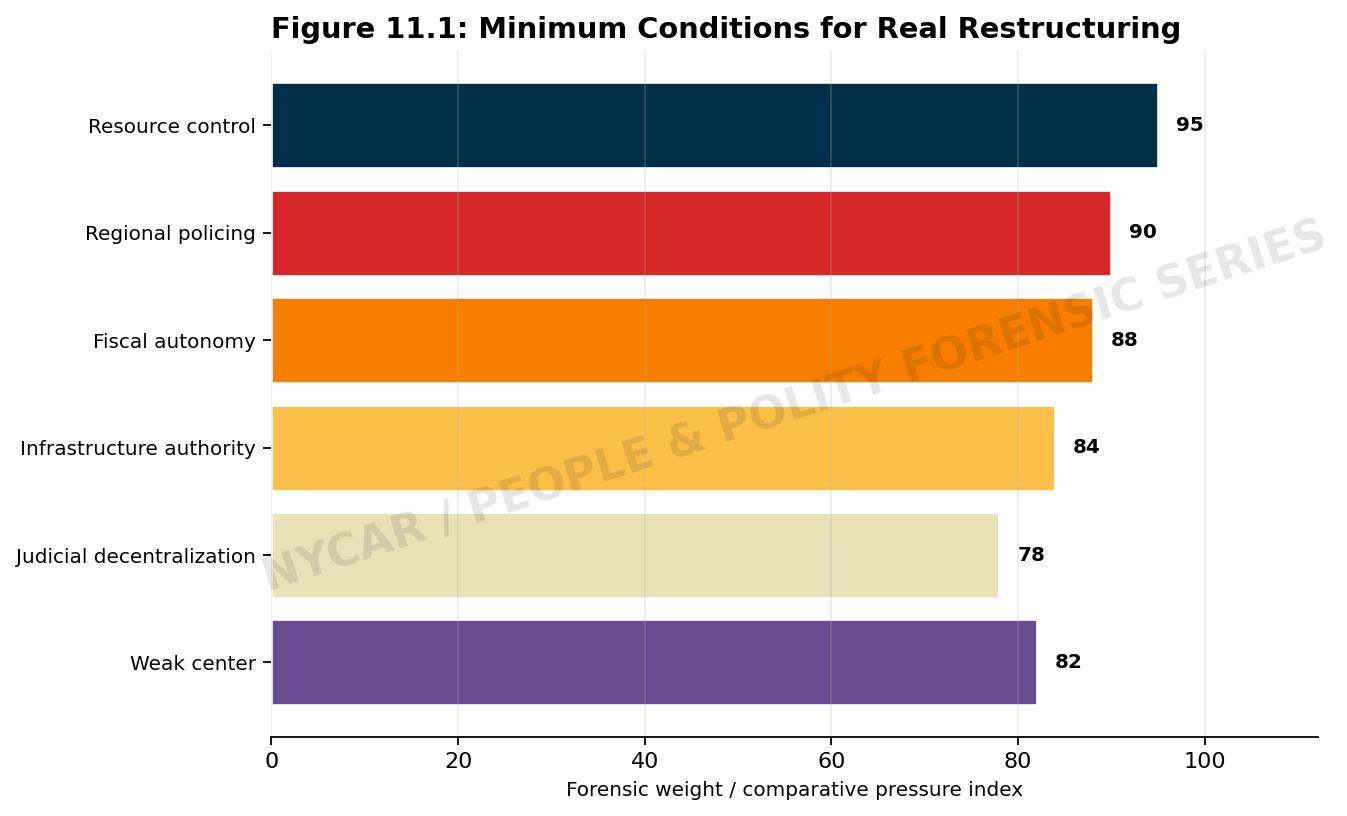
Figure 11.1: Minimum Conditions for Real Restructuring. Forensic argument map; not an official statistical dataset unless explicitly marked.
Read also: Nigeria: The Slave Name And The Restructuring Verdict — Part 10
The Minimum Terms
A genuine settlement requires several minimum terms. Resource control must be rebalanced so states and regions have real ownership stakes in the wealth produced within their territories. Policing must be devolved under strict constitutional safeguards. Tax powers must become serious enough to make governments answer to citizens. Infrastructure authority must move closer to those building ports, rail, power, industrial zones, and local corridors. Courts must be accessible, credible, and less dependent on a distant political center. The federal government must shrink into duties that truly require national coordination: defense, foreign affairs, currency, national standards, immigration, and limited interstate matters.
Evidence Exhibit 11A
| Claim | Evidence Type | Forensic Meaning | What It Proves |
| True restructuring must move real powers | Federalism scholarship and constitutional comparison | Cosmetic amendments cannot repair command rule | Devolution must be legal, fiscal, and security-based |
| Resource control needs equalization, not confiscation | Fiscal federalism theory | Solidarity can coexist with productivity | Fairness does not require central hoarding |
| A lean center can strengthen the country | Comparative federal systems | Federal restraint is not national weakness | A center that does less can do core duties better |
The 1963 Memory
The 1963 Constitution is not a perfect model to be copied without judgment, but it remains an important reminder that Nigeria once operated with stronger regions and a less suffocating center. Regional governments built universities, public services, agricultural initiatives, industrial projects, and civil services with a clearer relationship between revenue and responsibility. Competition among regions had dangers, including ethnic party dominance and uneven development. Still, the productive pressure of regional government forced ambition in ways allocation dependency later weakened. The lesson is not to recreate 1963 as museum politics. The lesson is to recover the federal principle soldiers buried.
Read also: Nigeria: The Slave Name And The Restructuring Verdict — Part 9
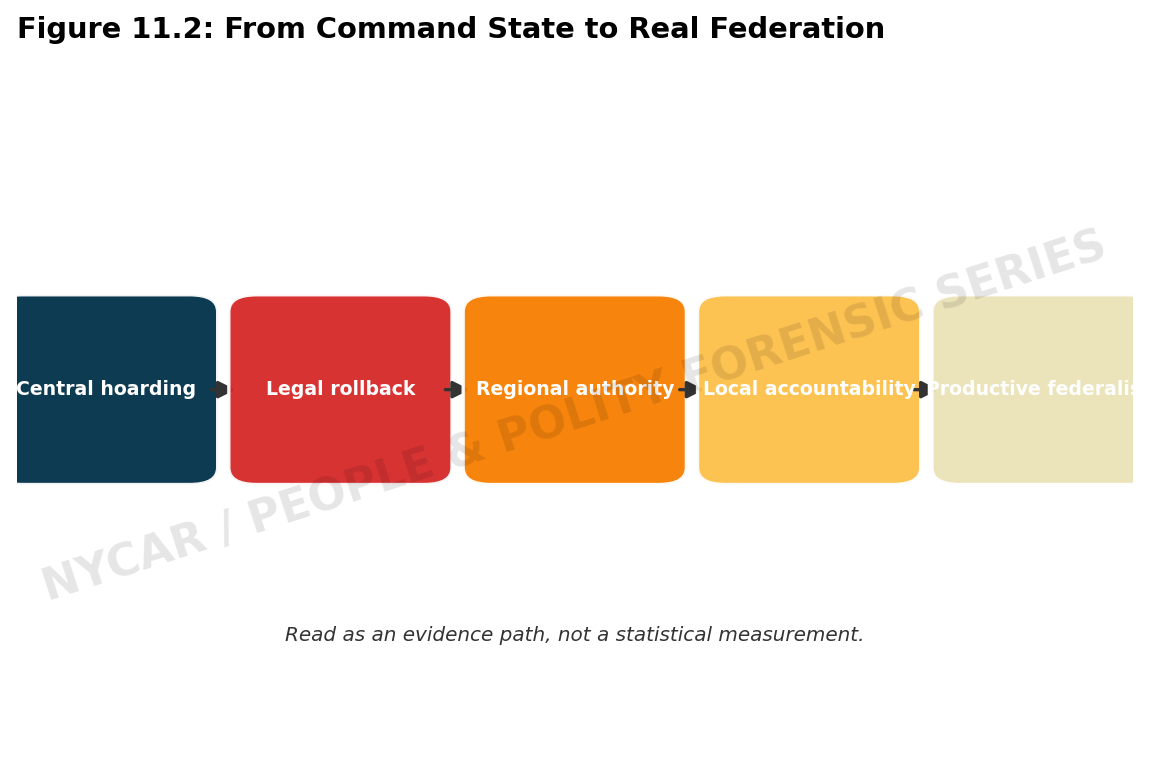
Figure 11.2: From Command State to Real Federation. Forensic argument map; not an official statistical dataset unless explicitly marked.
Resource Control and Equalization
Equalization should not become a mask for exploitation. A fair federation can help weaker regions without confiscating the future of producing communities. Solidarity is strongest when it is negotiated openly, limited by law, and tied to measurable development goals. It becomes predation when one region’s land, water, oil, gas, minerals, or ports are treated as national property only at the moment of extraction, while the environmental cost remains local and intimate.
Resource control is also a discipline. Once regions hold a clearer stake in what they produce, excuses shrink. Leaders can no longer blame Abuja for every empty industrial park, every dead farm settlement, every abandoned road, every unemployed graduate, every unpaid pension, and every budget built on fantasy. Devolution exposes incompetence. That is precisely why many elites fear it.
Resource control must be argued with care. A fair federation cannot allow resource-producing areas to be exploited while their communities remain polluted, poor, and politically mocked. It also cannot abandon less endowed areas to permanent decline. The answer is not central confiscation. The answer is derivation with a national equalization system funded by transparent contributions. Regions should keep enough of their resources to see production as destiny, not punishment. The center should receive enough to perform lean national duties. Equalization should support schools, health, infrastructure, and basic opportunity, not sustain political laziness. Solidarity must not become a license for extraction.
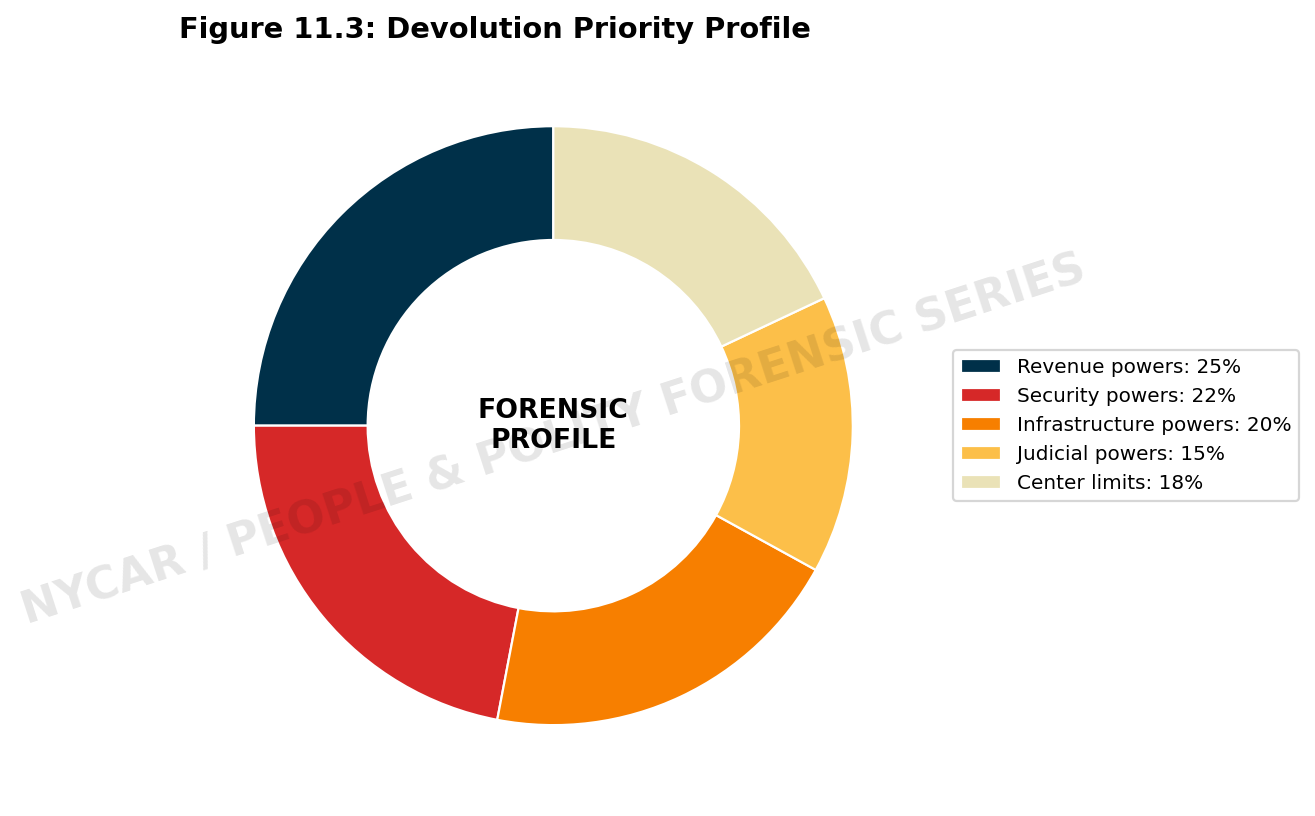
Figure 11.3: Devolution Priority Profile. Forensic argument map; not an official statistical dataset unless explicitly marked.
Security Devolution as Survival
No restructuring settlement can be serious without security devolution. State and regional policing should operate under constitutional guardrails: independent commissions, merit recruitment, rights standards, judicial review, federal intervention in extreme abuses, legislative oversight, professional training, and transparent funding. This design can prevent local tyranny while ending federal blindness. Communities should not wait for Abuja before responding to danger at their doorstep. A true federation trusts its parts enough to protect themselves, then holds them responsible when they violate the law. Centralized policing has failed the citizen. Devolved policing must now be built with discipline, safeguards, and courage.
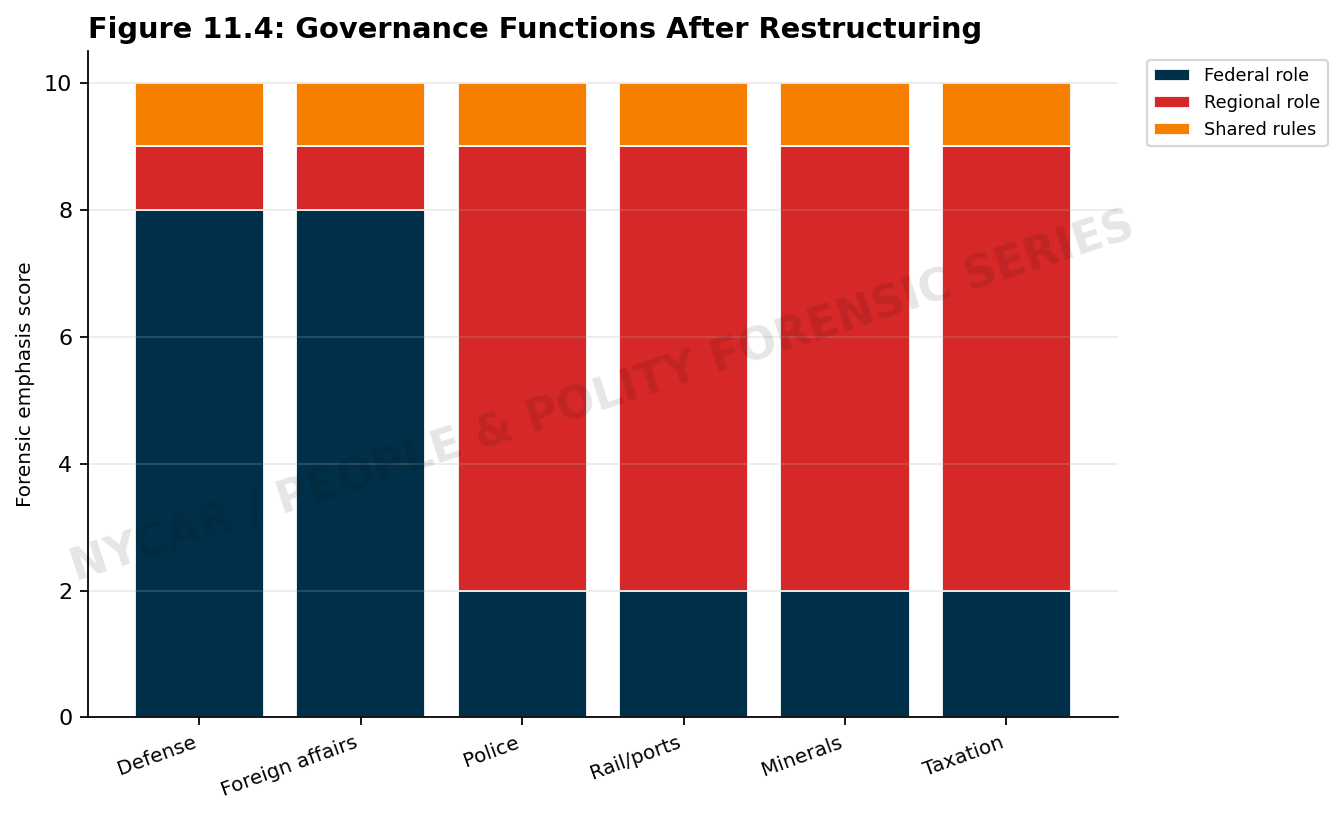
Figure 11.4: Governance Functions After Restructuring. Forensic argument map; not an official statistical dataset unless explicitly marked.
A Lean Center
A restructured Nigeria does not need a weak country. It needs a restrained center. Those are different things. A lean federal government can still defend borders, manage foreign affairs, regulate currency, coordinate national standards, and act where interstate or national interests require common authority. What it must stop doing is hoarding powers that suffocate regional initiative. Abuja should not be the supreme landlord of rail, power, mineral life, ports, policing, and local development. A center that tries to do everything ends by doing many things badly while blocking those close enough to do them better.
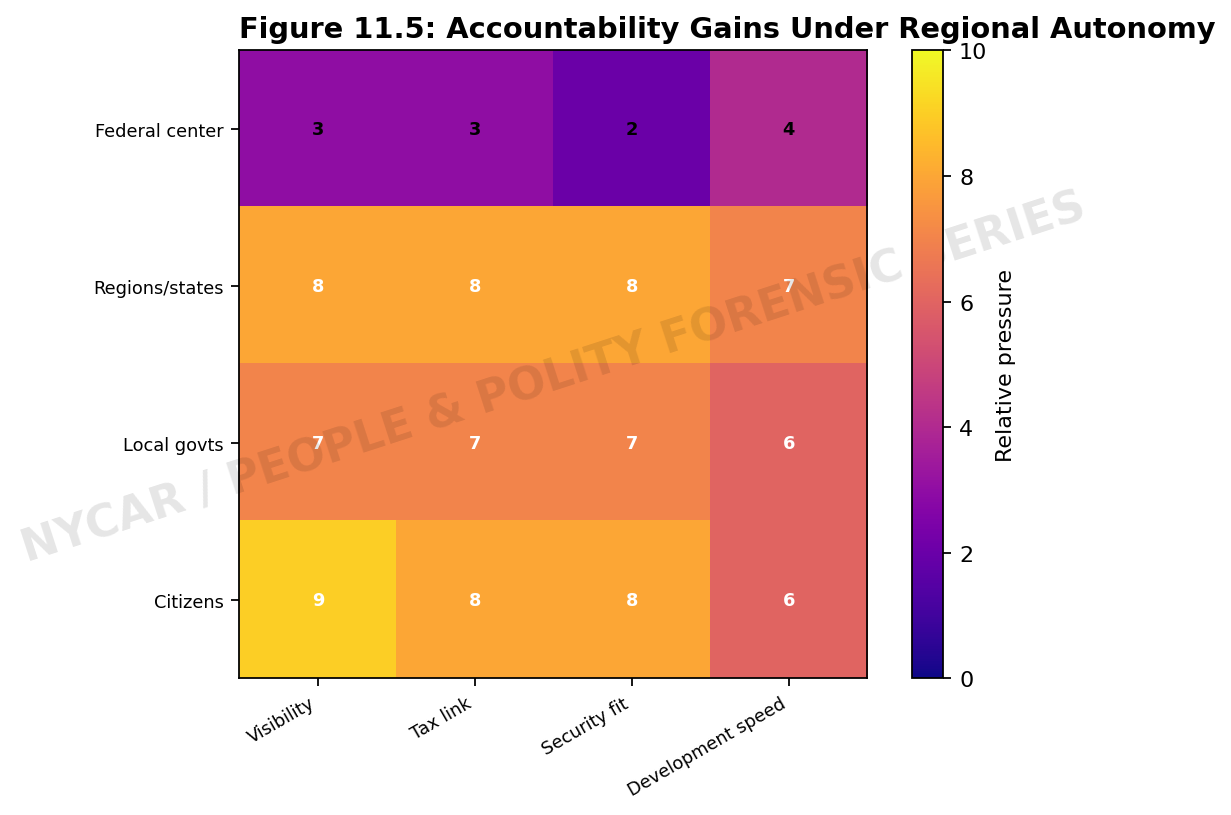
Figure 11.5: Accountability Gains Under Regional Autonomy. Forensic argument map; not an official statistical dataset unless explicitly marked.
Final Finding
Part 11 defines restructuring as the constitutional return of responsibility. It is not enough to ask Nigeria’s parts to love one another while denying them the power to govern their own development. Unity built on dependency is not unity. It is detention with a national anthem. Real restructuring would force every region to face its strengths, weaknesses, revenues, voters, security, schools, roads, industries, and political choices. It would end the lazy comfort of blaming Abuja for everything while still begging Abuja for everything. A country that fears honest federalism has already confessed that its unity rests on control. Nigeria must choose federation over command, or keep mistaking managed exhaustion for nationhood.