
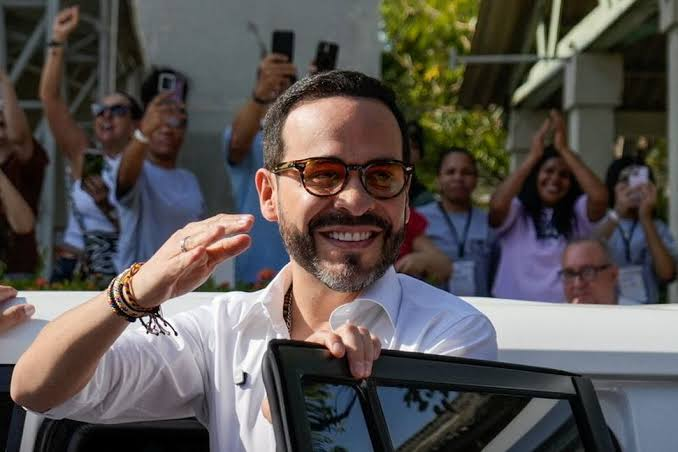
Colombia’s National Registrar credited far-right lawyer Abelardo De La Espriella with 49.7 percent of the vote against leftist Senator Iván Cepeda’s 48.7 percent in Sunday’s presidential runoff, with 99.9 percent of ballots counted. The gap amounts to roughly one percentage point.
That number conceals a complication that could still reshape the outcome. Cepeda’s campaign is formally contesting the initial count from 33,000 of Colombia’s 122,000 ballot boxes — more than a quarter of all polling stations nationwide — and has said it will await a full, ballot-by-ballot review before conceding anything.
De La Espriella has already declared victory. So have the country’s major business guilds, who issued congratulatory statements within hours of the preliminary results, and so, according to the candidate’s campaign, has President Donald Trump, who called to offer congratulations even as the disputed count remained open.
Read also: Colombia’s Border Under ELN Control Amid Failed Peace Talks
The president-elect, if the result holds, inherits a fractured Congress that gives him little room to govern as he campaigned. He ran on scrapping peace negotiations with armed groups still active a decade after Colombia’s landmark accord with the Revolutionary Armed Forces of Colombia, on a 90-day campaign of US-backed air strikes against dissident factions, and on tax cuts paired with expanded oil and gas production. A divided legislature will likely force him to negotiate down most of that platform before any of it reaches a vote.
He has built his public identity around business success. A review by the Colombian outlet La Silla Vacía found something more complicated: many of the companies tied to De La Espriella have been dissolved, carry debt, or have lost money overall.
Security drove the vote more than any single policy promise. Extortion and drug trafficking have climbed in several regions over the past two years, and leftist guerrilla factions and gangs descended from old right-wing paramilitary networks continue to contest territory the state does not fully control — a conflict now into its seventh decade. Voters in those areas broke heavily for De La Espriella, according to regional turnout figures cited by Colombian media, even as much of the country has grown more prosperous since the FARC disarmament.
Cepeda had positioned himself as the candidate who would extend outgoing President Gustavo Petro’s agenda, including continued talks with armed dissident groups and the social programs that defined Petro’s term as Colombia’s first leftist head of state. Petro’s own popularity sagged badly in his final stretch in office, and Cepeda struggled throughout the runoff to separate his candidacy from that record.
Speaking to supporters in Barranquilla, De La Espriella offered a brief, direct line: “I will govern for all Colombians.” Cepeda, addressing his own supporters in Bogotá, struck a more conditional note, telling them he remained open to dialogue and to agreements that would be “respectful, genuine” and reflected in concrete political action — language aimed less at concession than at keeping his coalition intact through the recount fight.
Read also: Colombian Drug Lord ‘Otoniel’ Jailed For 45 Years In US
More than 26.3 million of Colombia’s 41.4 million eligible voters cast ballots.
Wealthier neighborhoods in Bogotá and Medellín celebrated openly Sunday night; turnout patterns in poorer and rural regions, where security concerns ran highest, skewed the result in De La Espriella’s favor by wider margins than the national tally suggests.
Colombia’s vote extends a pattern across the region. Chile, Argentina, Costa Rica, Bolivia and Ecuador have each elected right-wing presidents in their most recent contests, marking a near-total reversal of the leftist wave that swept Latin America less than a decade ago. De La Espriella’s win, if it survives the recount, would close one of the wave’s last remaining strongholds.
Among the crowd of Cepeda supporters in Bogotá was Margarita Restrepo, who wore a photograph around her neck of her daughter, Carol Vanessa Restrepo, who disappeared in 2002 during a security operation ordered by then-President Álvaro Uribe. Uribe remains De La Espriella’s most prominent backer and Cepeda’s longtime political adversary. Restrepo told reporters she believed the country’s divisions had won again. Twenty-four years after her daughter vanished, the man who ordered the operation stood, once more, on the winning side.