
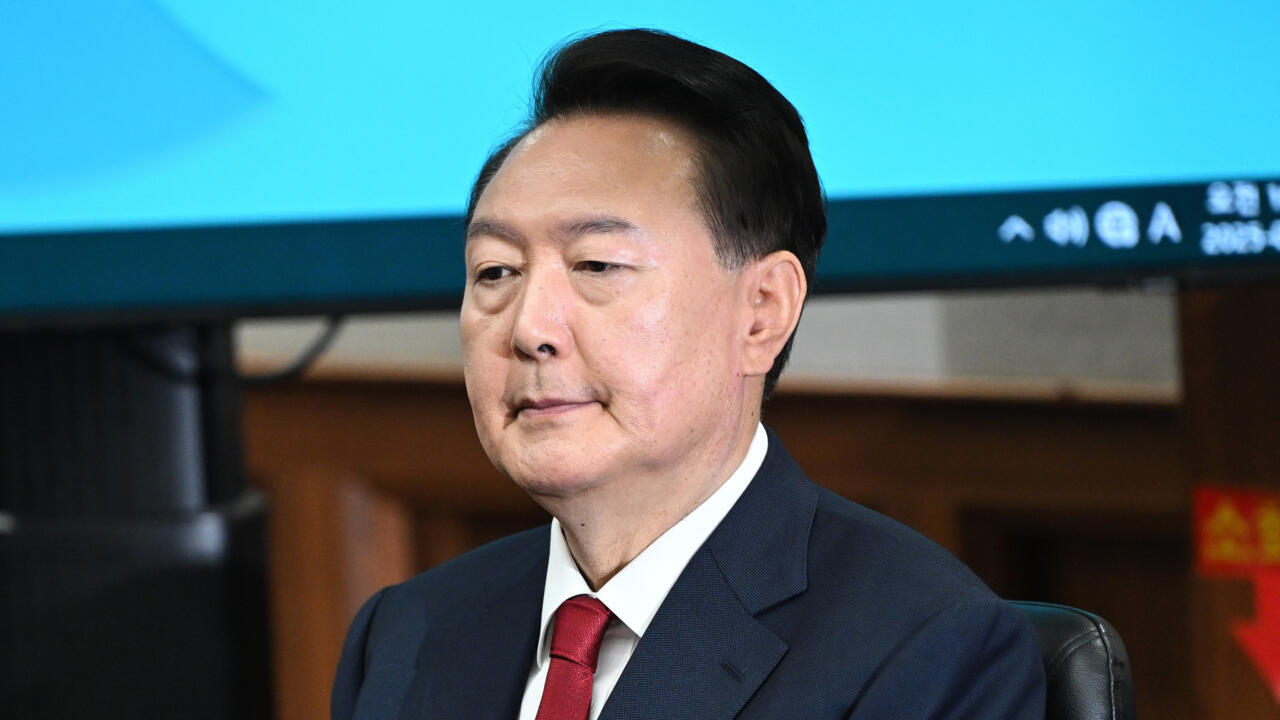
A South Korean court sentenced former President Yoon Suk Yeol to life in prison on Thursday after convicting him of leading an insurrection through his brief and failed imposition of martial law in December 2024, the gravest judicial outcome yet in a political crisis that has consumed the country for more than a year and tested the durability of its democratic institutions.
The ruling was delivered by Seoul Central District Court Judge Ji Gwi-yeon and broadcast live across South Korea’s major television networks. The sentence fell short of the death penalty prosecutors had sought, but it was the most severe available outcome that the court was willing to impose. Ji found that Yoon “directly and proactively planned the offense,” that it “resulted in enormous social costs,” and that “it has been difficult to find any indication that the defendant has expressed remorse.”
Yoon, 65, is now the first South Korean leader to receive a life sentence for insurrection in three decades. The last was Chun Doo-hwan, the former military strongman convicted in 1996 for seizing power in a 1979 coup and ordering the violent suppression of the Gwangju pro-democracy uprising. Chun was later pardoned.
The court concluded that Yoon’s intent had been to paralyze the National Assembly for a significant period, pointing to the language of the military decree he issued, his attempt to arrest senior political figures including the leaders of both the ruling and opposition parties, and the deployment of armed soldiers by helicopter to the parliament building. The very act of sending troops to parliament, the judge said, constituted rebellion. The court did not find sufficient evidence, however, to establish that Yoon had been planning the martial law declaration as far back as a year before the announcement.
Yoon had consistently denied wrongdoing throughout his trial. He maintained that as president he had the constitutional authority to declare martial law, and characterised the move as a short-term, symbolic act intended to raise public awareness of opposition lawmakers’ obstruction of government, not an attempt to seize power.
His lawyers dismissed the verdict as a formality, saying the trial had been “nothing more than a mere formality to reach a predetermined conclusion.” They signalled they would discuss an appeal with their client.
The case had lasted 443 days from Yoon’s martial law declaration to Thursday’s verdict, encompassing 43 court sessions and testimony from roughly 160 witnesses. The proceedings absorbed evidence from parallel trials of senior military and police officials who carried out the order, cases that were eventually consolidated with Yoon’s own.
Read Also: Ex-South Korean President, Yoon Yeol, Charged With Aiding Enemy
Former Defence Minister Kim Yong-hyun, who had previously taken responsibility for ordering soldiers to enact the decree, was found guilty of playing a major role in the insurrection and sentenced to 30 years. Four other former military and police officials received sentences ranging from three to 18 years. Former Prime Minister Han Duck-soo was sentenced to 23 years last month. Former Interior Minister Lee Sang-min received seven years last week.
The trial itself proceeded against an extraordinary backdrop of legal jeopardy accumulating around Yoon from multiple directions. He has been in custody since July 2025 and had already received a five-year prison term in a separate case for resisting arrest, fabricating the martial law proclamation, and bypassing a legally required full Cabinet consultation before declaring the measure. He still faces six additional trials, including one in which he stands accused of ordering drones into North Korean airspace to provoke a confrontation that could be used to justify martial law, a charge he denies.
Outside the court on Thursday, the fractures Yoon’s actions opened within South Korean society were raw and visible. Hundreds of supporters gathered to protest the prosecution as political persecution. Some wept openly after the verdict was announced. Simultaneous anti-Yoon demonstrations took place nearby, with some protesters having called for the death penalty. Yoon showed no emotion in court as the sentence was read.
National Assembly Speaker Woo Won-shik said after the ruling that Yoon “should now acknowledge his wrongdoing and offer a sincere apology to the people.” The ruling Democratic Party, which holds the presidency after winning elections following Yoon’s removal from office, accused the court of falling short by not imposing the maximum sentence. Party leader Jung Chung-rae called the verdict “a clear regress from the people’s revolution.”
Read Also: South Korea’s Ex-First Lady Jailed For Bribery
South Korea has not executed a death row prisoner since 1997, in what is widely regarded as a de facto moratorium on capital punishment. Even had prosecutors prevailed, the practical effect of a death sentence would have been the same.
The question of a future pardon hangs over the case. Several former South Korean presidents have been convicted, jailed, and subsequently pardoned after serving relatively short terms. Analysts have noted the precedent set by Chun Doo-hwan, who received a life sentence for insurrection and was eventually freed. Whether that pattern will repeat itself depends substantially on the political landscape that emerges from South Korea’s coming years, and on courts that have not yet finished with Yoon Suk Yeol.
His lawyers have the right to appeal. If they do, the case will proceed to the Supreme Court, a process that could take several months before a final verdict is reached.