
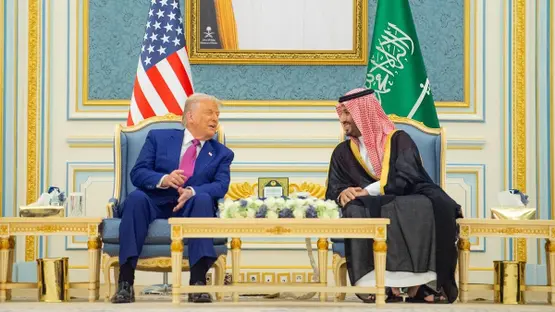
Crown Prince Mohammed bin Salman will travel to Washington on November 18th for talks with Donald Trump, marking the Saudi leader’s first White House visit in seven years as the American president intensifies pressure on Arab nations to normalize relations with Israel.
The meeting, confirmed Monday by a senior Trump administration official, comes amid speculation that the two countries could formalize a major defense agreement during the Saudi royal’s visit. The Financial Times reported two weeks ago that such a deal was under negotiation, though the unnamed White House official told Reuters that “there are discussions about signing something when the crown prince comes, but details are in flux.”
Trump has made expanding the Abraham Accords—the 2020 framework that established diplomatic ties between Israel and the United Arab Emirates, Bahrain, Sudan and Morocco—a centerpiece of his Middle East strategy. In a CBS 60 Minutes interview broadcast Sunday, he expressed confidence that Saudi Arabia would eventually join, despite Riyadh’s consistent position that normalization depends on establishing a clear pathway toward Palestinian statehood.
That precondition represents the primary obstacle to any Saudi-Israeli rapprochement. While Mohammed bin Salman, known widely as MBS, has signaled pragmatic interest in closer Israeli ties for strategic and economic reasons, domestic and regional political considerations make openly abandoning the Palestinian cause nearly impossible for Saudi leadership.
Read also: AI City: Saudi Arabia Courts Global Investors At Major Forum
The potential defense deal carries enormous financial stakes. During Trump’s May visit to Riyadh, the two countries agreed on an arms package worth nearly $142 billion—dwarfing even the multibillion-dollar weapons sales that characterized Trump’s first term, when he made Saudi Arabia the destination for his inaugural foreign trip as president in 2017.
That pattern—Trump prioritizing Saudi Arabia in his diplomatic engagement—reflects decades of close U.S.-Saudi cooperation rooted in energy markets, regional security architecture, and shared concerns about Iranian influence. The defense relationship forms the partnership’s backbone, with American weapons systems dominating Saudi military procurement and U.S. training shaping Saudi force development.
MBS last visited Washington in 2017 during Trump’s first presidency, when he toured multiple American cities as part of a charm offensive designed to showcase his modernization agenda. That visit occurred before the 2018 assassination of journalist Jamal Khashoggi at the Saudi consulate in Istanbul—a killing that U.S. intelligence concluded MBS likely ordered, severely damaging his international reputation.
Trump, however, has consistently defended the crown prince and prioritized the U.S.-Saudi relationship over human rights concerns that troubled his predecessor. The Biden administration briefly treated Saudi Arabia with coolness following Khashoggi’s murder, but strategic imperatives eventually forced a pragmatic reset.
November’s meeting will test whether Trump can leverage Saudi Arabia’s desire for advanced American weaponry and security guarantees into movement on normalization with Israel—or whether Riyadh’s Palestinian preconditions remain immovable regardless of inducements Washington offers.