
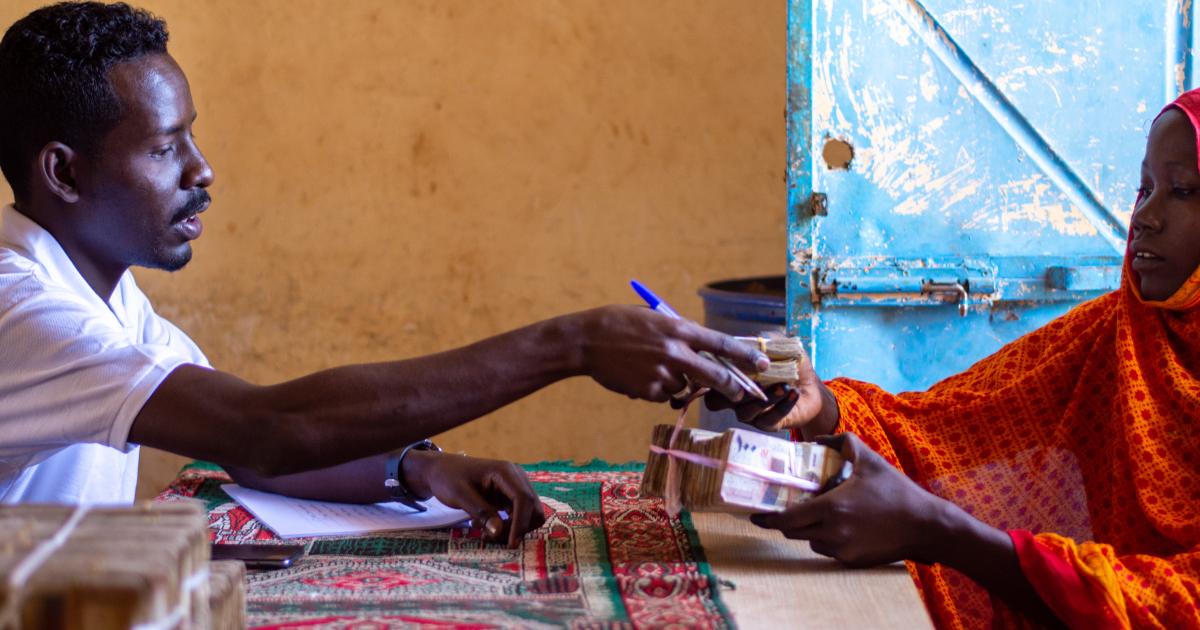
In today’s Sudan, survival has reverted to its most rudimentary form. With banks burned out, shuttered, or stripped bare after more than two years of conflict, people are staying afloat through improvised trade, informal credit, and whatever they can barter.
Ali, a civil servant in the besieged South Kordofan town of Dilling, said he has not touched physical cash in close to a year. The Rapid Support Forces have sealed off the area, cutting residents off from supplies and the formal economy. Under those conditions, everyday goods have become currency. Clothing, tools, furniture, and appliances are routinely traded for a few kilos of grain or a handful of fuel. Ali once gave up a hoe and a wooden chair just to get three bags of sorghum, the grain most households rely on.
The blackout that blankets large parts of the country has deepened the dependence on barter. In Dilling, motorcycle and tuk tuk operators accept soap or cooking oil as payment, while families often settle bills for repairs with corn, sugar, or flour. Even the simple act of owing money has changed. With no cash and no way to communicate, IOUs written in notebooks have become a lifeline.
The collapse began early in the war. Once fighting consumed Khartoum in April 2023, paramilitary fighters overran the Central Bank. The building was torched, then occupied for nearly two years, cutting the country off from the secure global banking network and erasing what was left of public trust in formal finance. Stores were looted, safes were emptied, and the value of the Sudanese pound imploded. A euro that once fetched 450 pounds now sells at around 3,500 on the street.
Sudan had been on the edge of a financial shift before the war. Sanctions were slowly being lifted, and digital payments — especially through the Bankak mobile app — were beginning to gain momentum in cities. Only a small slice of Sudanese citizens had traditional bank accounts, but the digital ecosystem was showing signs of the kind of growth seen in Kenya and Ghana.
Read also: Sudan Truce Plan Stalls As Rivals Refuse To Sign
That momentum has vanished. After two years of fighting between the army and the RSF, tens of thousands are dead, around twelve million people have been uprooted, and hunger has reached levels the United Nations describes as catastrophic. In places under RSF control, the absence of law has paved the way for widespread extortion and theft. Carrying cash can get you killed, said one shopkeeper in Omdurman, now back under army control.
For those who live in areas with some connectivity, Bankak remains the only link to salaries, remittances from abroad, or humanitarian stipends. Others trapped in siege zones, like Kadugli, have to improvise. Merchants extend credit on trust alone and record debts in notebooks until the app comes back online. Where telecom infrastructure has been destroyed, Starlink satellite terminals smuggled in from neighbouring countries fill the gap, rented out by the hour. Many of these terminals were seized or run by RSF fighters until the army banned their use late last year.
Accessing digital transactions still requires identification documents, a bank account, and a working phone, all luxuries in many rural communities. As a result, countless Sudanese rely on relatives or neighbours to receive transfers on their behalf, knowing they have no real remedy if the money disappears. The Bank of Khartoum has tried easing the requirements by allowing remote account openings and accepting expired IDs, but these measures barely scratch the surface of the crisis.
Adding to the chaos, army authorities introduced new banknotes in territories they reclaimed, creating a fragmented monetary landscape. Today, Sudan’s finances are split just as starkly as its geography: government-controlled regions in the north, east, and centre, and RSF-run zones in the west and south.
In this divided system, barter, trust, and the thin promise of future repayment have become the only functioning currency.