
South Korea has formally protested to China and Russia after their military aircraft entered the country’s air defense identification zone, prompting Seoul to scramble fighter jets as a precautionary measure, officials said Wednesday.
The complaint was delivered to the Chinese and Russian defense attaches in Seoul a day after seven Russian aircraft and two Chinese aircraft briefly entered South Korea’s air defense zone during a joint patrol. South Korean officials stressed that the aircraft did not violate national airspace.
The incident shows growing regional unease as military activity intensifies around disputed areas in Northeast Asia, even as the countries involved insist their actions comply with international law.
“Our military will actively respond to aircraft activities from neighboring countries in the Kadiz in compliance with international law,” South Korea’s defense ministry said in a statement when announcing the protest.
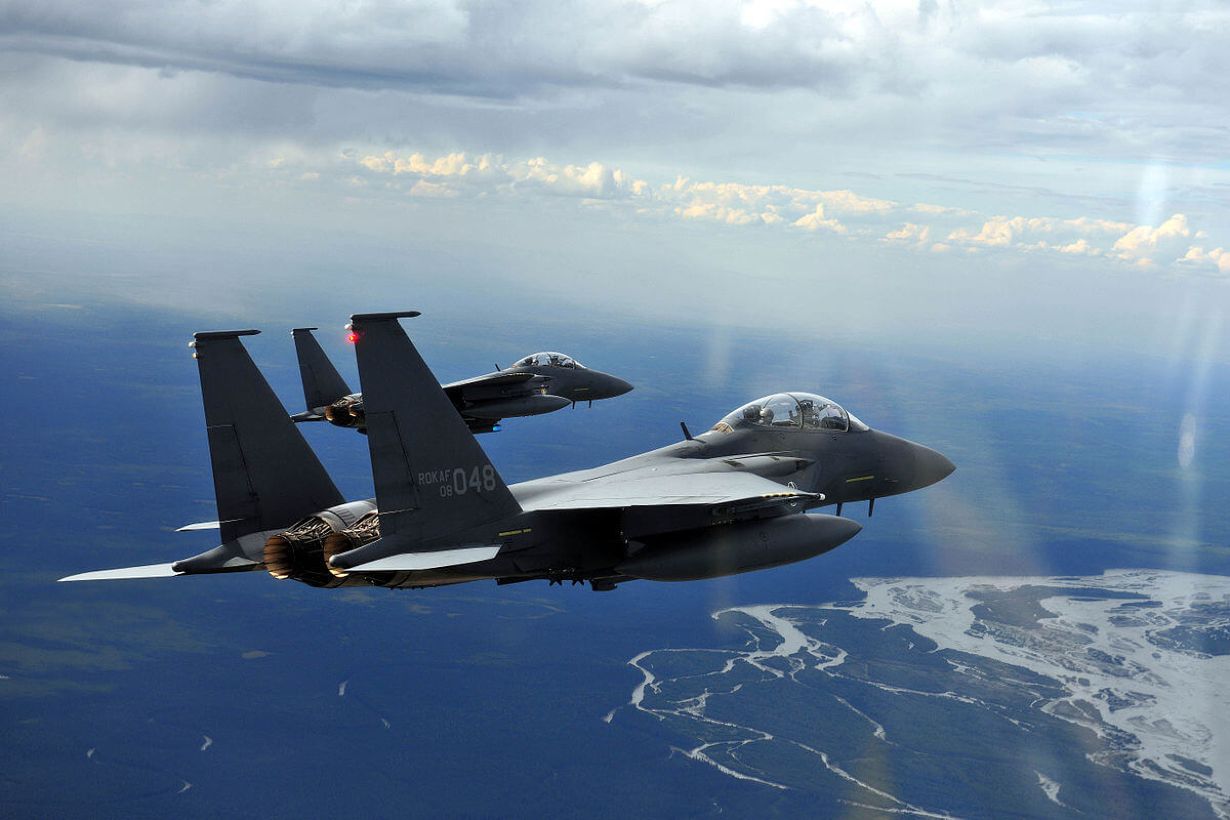
South Korea’s Joint Chiefs of Staff said fighter jets were dispatched to take tactical measures in case of emergencies after the foreign aircraft entered the zone on Tuesday.
According to military officials cited by South Korean media, Russian aircraft entered the Korea Air Defense Identification Zone near Ulleung Island and Dokdo, while Chinese aircraft entered the zone near Ieodo, a submerged rock southwest of the Korean Peninsula.
The aircraft later regrouped in airspace near Japan’s Tsushima Island before leaving the area, the officials said.
Air defense identification zones are areas where countries request that foreign aircraft identify themselves. They are not considered sovereign airspace under international law, though violations often trigger strong diplomatic reactions.
China confirmed on Wednesday that its air force had conducted a joint patrol with Russia over the East China Sea and parts of the Western Pacific.
A spokesperson for China’s national defense ministry said the exercise was part of an annual cooperation plan between Beijing and Moscow aimed at addressing regional challenges and maintaining peace and stability.
China and Russia have entered South Korea’s air defense zone without prior notification several times since 2019, usually during similar joint drills.
Russia does not recognize South Korea’s air defense zone, calling it unilaterally established and arguing that it does not create legal obligations for other states.
Read Also: China Radar Incident With Japan Draws US Criticism
The episode comes against the backdrop of unresolved territorial disputes in the region. South Korea and Japan both lay claim to Dokdo, a group of rocky islets administered by Seoul, while North Korea has also asserted claims.
Ieodo, known internationally as Socotra Rock, is claimed by South Korea and China and included in both countries’ air defense zones despite being submerged and not legally considered territory.
South Korean officials say they will continue monitoring regional military movements closely as joint drills by neighboring powers become more frequent.