
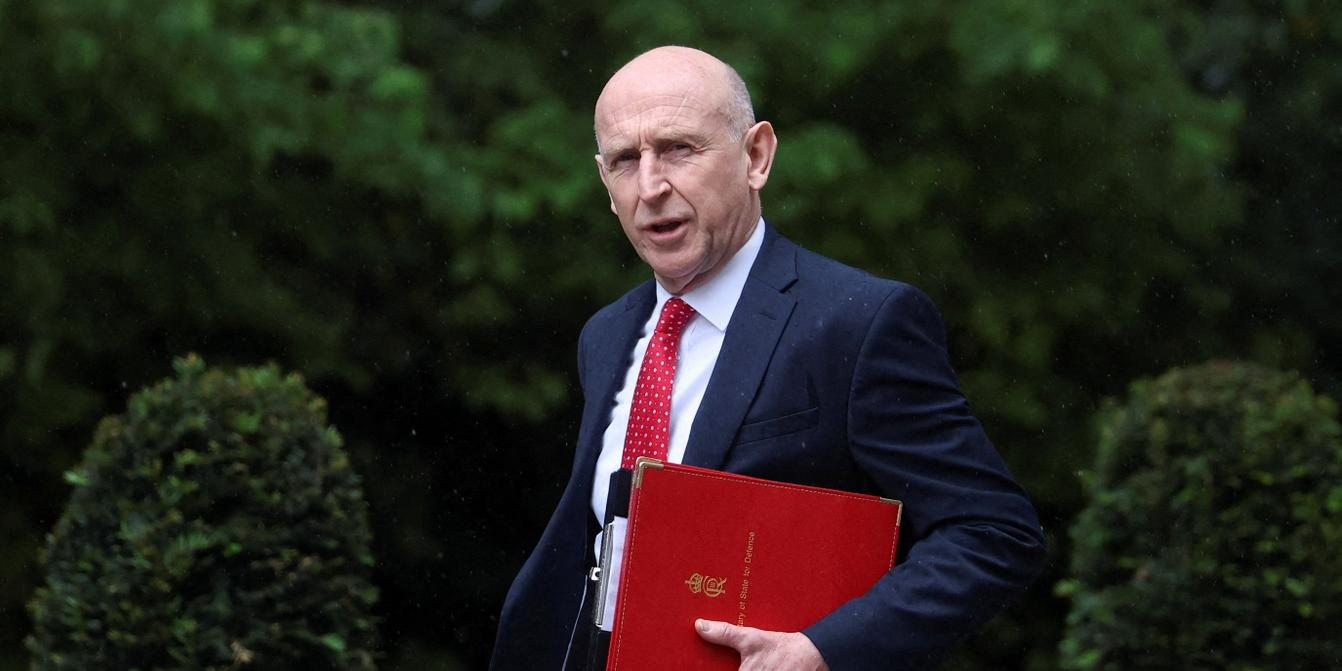
Two defence ministers walked out of the British government within hours of each other this week, and the second one did not leave quietly. Al Carns, who served as armed forces minister under Defence Secretary John Healey, resigned Thursday night and used a Friday morning media round to deliver a pointed critique of the government he had just left — attacking both the scale of military funding and the strategic logic behind how that money was to be spent.
Healey had gone first, quitting after weeks of internal warfare over a defence investment plan that the Ministry of Defence wanted funded at £18 billion over four years. The Treasury offered £13.5 billion, of which only £10 billion was new money. That gap was never bridged.
Carns made clear the money was only half his objection.
Speaking on BBC Radio 4’s Today programme, he said the government’s defence investment plan was oriented toward the wrong era of warfare — built around legacy systems and older capabilities rather than the technologies combat in Ukraine has proved decisive.
Read also: Starmer And Trump Speak After Days Of Public Acrimony
Some of those aging systems, he noted, were not even ordered by the current Labour government but inherited from Conservative procurement decisions made years earlier.
Replacing them, he said, would require difficult choices that the government had so far declined to make.
“I didn’t think the funding settlement was correct for defence, and I didn’t agree with the defence investment plan, which I thought was looking at how to fight the last war rather than the next one,” he told the BBC.
The double resignation — Healey followed by Carns — represents the most damaging 24 hours Keir Starmer’s government has faced on national security, an area the prime minister had positioned as a central test of Labour’s credibility. Healey’s departure letter drew blood. The former defence secretary wrote that Starmer had been unable and the Treasury unwilling to commit the resources the country needed at a moment of rising threats. The formulation was precise enough to hurt: it assigned failure to both the prime minister and his chancellor simultaneously.
Business Secretary Peter Kyle moved to contain the damage on Friday, arguing on Sky News that funding defence recklessly would undermine the economic growth the government is simultaneously trying to generate. Pouring money into the military in a way that destabilized public finances, he said, would amount to fool’s gold. He insisted the defence investment plan would be published before next month’s NATO summit.
That deadline carries its own pressure. NATO allies are watching British defence commitments closely against a backdrop of European rearmament, and Starmer has staked significant diplomatic capital on positioning Britain as a serious security partner. Arriving at a summit without a settled defence plan — following the public collapse of two ministers — would complicate that argument considerably.
Read also: Starmer Faces Calls To Quit As Second Aide Resigns
Carns did not confine his Friday appearances to defence policy. Asked on LBC whether he would consider running for the Labour leadership if a contest materialized, he declined to close the door. He is good at both rugby and football, he told interviewer Nick Ferrari, and is “always up for playing.” The hedged language was transparent enough to read as an effective yes — conditional on the vacancy appearing.
That vacancy could open sooner than anticipated. The government faces a parliamentary by-election in Makerfield next week, and if Greater Manchester Mayor Andy Burnham wins the seat, he immediately becomes a credible challenger to Starmer’s position. Burnham has declined to pre-empt events, but his entry into Westminster would transform the leadership arithmetic inside the Labour Party overnight.
The defence spending row has been building for months, with the Ministry of Defence and Treasury locked in a dispute that spilled repeatedly into cabinet-level conflict. Ministers had reportedly been fighting over the plan long enough that the internal damage to government cohesion was already significant before either resignation landed. Carns acknowledged the dysfunction without quite naming it. He said he respected Starmer as a good and honest man — then described a government in which ministers were fighting each other to secure funding for the most basic function any government is supposed to perform.
“We are fighting amongst each other to get more money for the key unifying principle of any government, which is to protect this nation,” he said.
At the centre of his substantive argument is a debate that Ukraine has forced onto every European defence ministry: whether existing procurement plans reflect the battlefield of 2024 onward, or the assumptions of a generation ago. Carns’s answer, delivered from outside the government, is that Britain is spending — even at the Treasury’s reduced figure — on the wrong things. Drones, electronic warfare, long-range precision munitions, and the integrated systems that Ukraine has used to hold back a larger conventional force have reshaped what military investment means. The British plan, in his assessment, has not caught up.
Whether that critique survives contact with the actual classified defence assessments Carns was privy to as minister is something the public cannot fully judge. What is visible is that the man responsible for armed forces policy until Thursday night believes his own government is preparing for a war that already ended.