
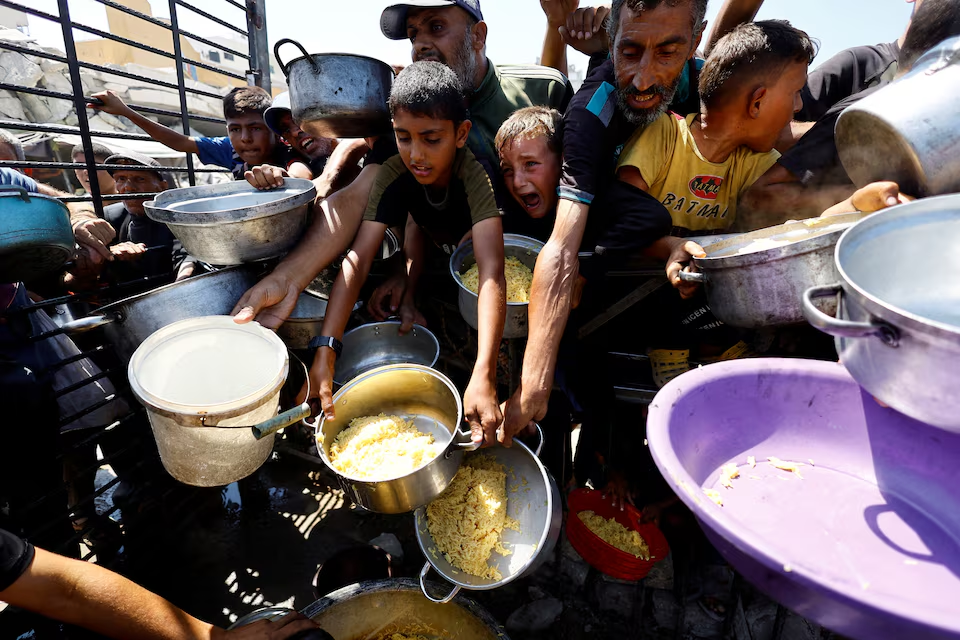
A leading global hunger monitor said on Friday that Gaza is no longer classified as being in famine, citing improved access for humanitarian and commercial food deliveries following an October ten ceasefire in the war between Israel and Hamas.
The updated finding from the Integrated Food Security Phase Classification marks a significant shift from its previous assessment four months ago, when it warned that more than five hundred thousand people in Gaza were experiencing famine level conditions. Despite the improvement, the group stressed that the humanitarian situation remains extremely fragile.
In its latest report, the IPC said increased aid flows had helped push back famine thresholds, but warned that any disruption could quickly reverse those gains.
“Under a worst case scenario that includes renewed fighting and a halt to food deliveries, the entire Gaza Strip would be at risk of famine through mid April twenty twenty six,” the report said. It added that this risk underscored the severity and persistence of the crisis.
United Nations Secretary General Antonio Guterres echoed that concern, saying the progress was unstable.
“Far more people are able to access the food they need to survive,” Guterres told reporters. “But the gains are perilously fragile, and needs are growing faster than aid can get in.”
Israel, which controls all entry points into Gaza, rejected the IPC assessment. The Israeli military agency COGAT said between six hundred and eight hundred aid trucks have entered the enclave daily since the ceasefire began, with food accounting for roughly seventy percent of supplies.
Hamas has disputed those figures, saying significantly fewer trucks have arrived.
In a statement, COGAT accused the IPC of presenting a misleading picture, arguing that the report relied on incomplete data and failed to reflect the full scale of assistance entering Gaza. Israel’s Foreign Ministry added that food prices in the territory have dropped sharply since July, which it said indicated improved availability.
Aid groups continue to argue that deliveries remain insufficient and that key supplies are still being blocked. Israeli officials maintain that enough food is entering and that distribution problems inside Gaza are the main obstacle.
The IPC is a partnership of United Nations agencies, aid organizations, and regional bodies backed by the European Union, Germany, Britain, and Canada. It has formally confirmed famine only five times in the past fifteen years, including in Somalia, South Sudan, Sudan, and Gaza earlier this year.
Read Also: Hamas Confirms Raed Saad Killing In Gaza Strike
For famine to be declared, at least twenty percent of the population must face extreme food shortages, one in three children must be acutely malnourished, and daily deaths from starvation or related disease must reach two per ten thousand people.
While Gaza no longer meets those criteria, the IPC said large parts of the population remain in emergency level food insecurity, leaving millions dependent on continued access to aid.