
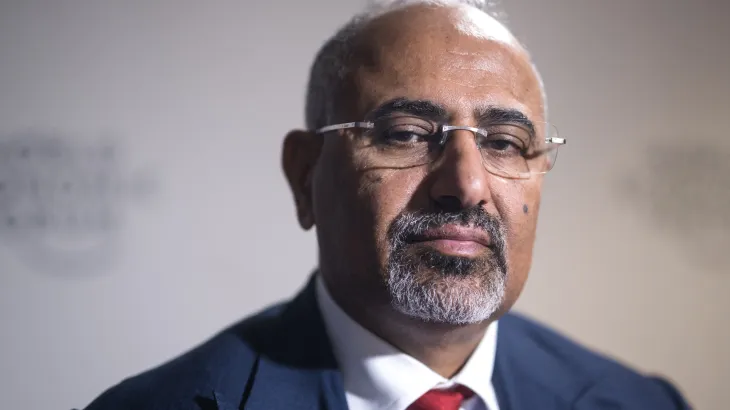
Fresh fighting has flared in southern Yemen after the Saudi Arabia led coalition carried out air strikes in Dhale governorate, accusing southern separatists of preparing a new military escalation instead of committing to talks in Riyadh.
The coalition said the strikes followed the failure of Aidarous al Zubaidi, leader of the Southern Transitional Council, to board a plane scheduled to take him from Aden to Saudi Arabia for negotiations aimed at calming tensions with Yemen’s internationally recognised government. According to the coalition, al Zubaidi disappeared shortly before departure and relocated to an undisclosed location.
Saudi officials claim intelligence later showed that forces loyal to the STC had been mobilised from Aden late at night, moving with armoured vehicles, weapons, and ammunition toward Dhale. In response, coalition aircraft launched what they described as preemptive strikes in the early hours of Wednesday, saying the action was intended to prevent a broader confrontation and halt what they viewed as a deliberate attempt to reignite conflict in the south.
The STC rejected the coalition’s account, urging Saudi Arabia to immediately stop the air raids. The group said it had lost contact with its delegation that was meant to be in Riyadh and insisted that al Zubaidi never fled. Instead, the council claimed he remained in Aden, supervising security and military affairs in the city.
The Southern Transitional Council has long pushed for the revival of an independent southern Yemen. Although it initially aligned itself with the Saudi backed government against the Houthi movement controlling the north, relations collapsed in December when the STC launched an offensive against government forces. That push shattered years of political stalemate and briefly allowed the separatists to seize large areas of southern territory, including the strategic provinces of Hadramout and Mahra.
Read also: Saudi UAE Yemen Tensions Escalate After Mukalla Strike
Those gains alarmed Riyadh, particularly because both provinces lie close to Saudi Arabia’s border and together account for a significant portion of Yemen’s landmass. Saudi air strikes soon followed, and government forces, supported by coalition aircraft, later regained control of the areas.
While the STC recently signaled willingness to attend Saudi sponsored talks, the latest episode has deepened mistrust. The coalition confirmed that an STC delegation traveled to Riyadh without al Zubaidi. Shortly afterward, Rashad al Alimi, head of Yemen’s Presidential Leadership Council, announced al Zubaidi’s removal from the body, accusing him of treason and ordering a legal investigation.
The renewed tension underscores how fragile Yemen’s southern front remains, even as the country continues to grapple with a wider war that has dragged on for years, with shifting alliances, regional rivalries, and no clear political settlement in sight.