
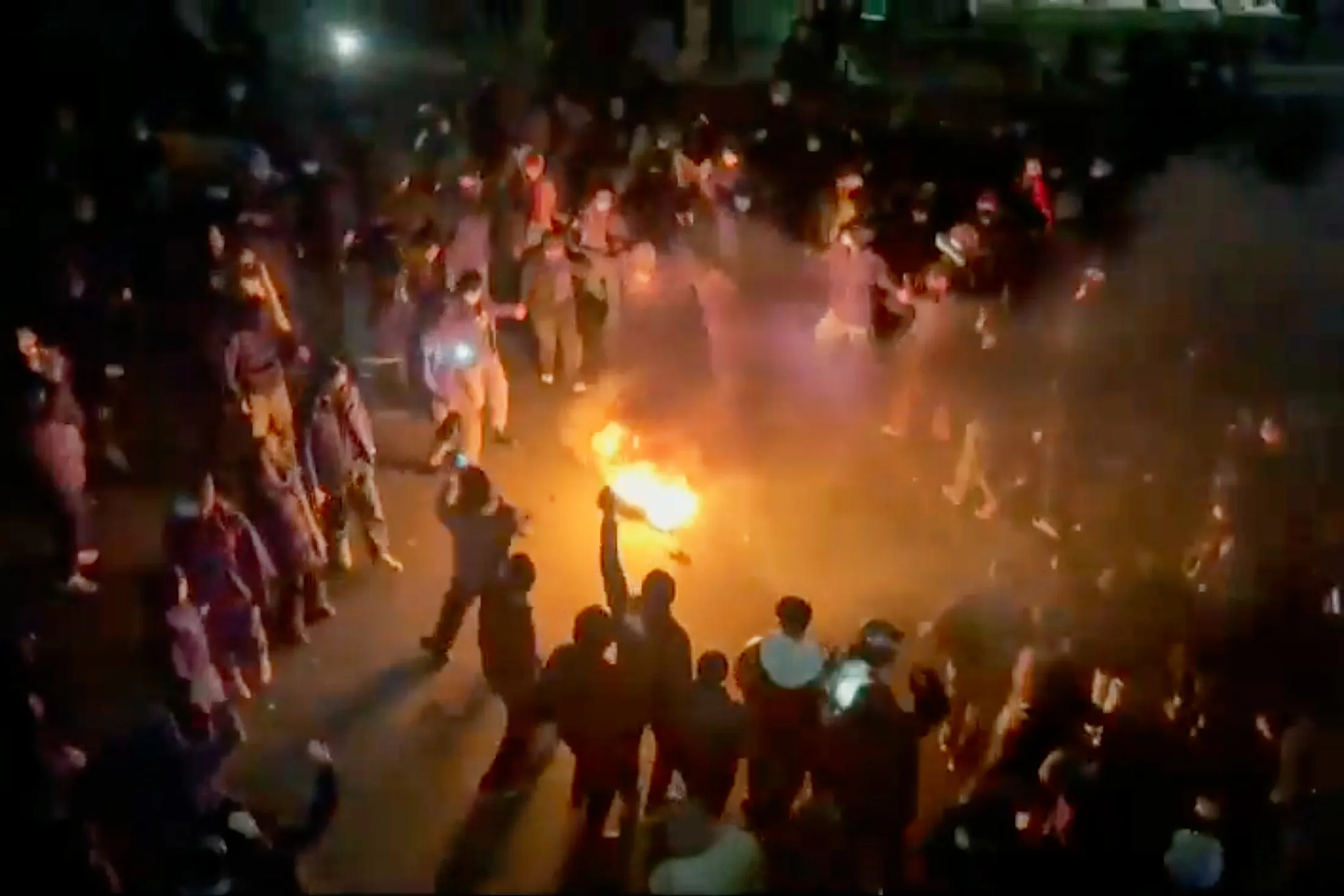
Iran is grappling with its most intense wave of protests since 2022, with at least 500 people reported dead, according to U.S.-based rights group HRANA. The unrest, initially triggered by rising prices at Tehran’s Grand Bazaar on December 28, quickly expanded into a broader revolt against the clerical establishment that has ruled since the 1979 Islamic Revolution. HRANA reported the verified deaths of 490 protesters and 48 security personnel, while more than 10,600 arrests have been made in just two weeks, though the figures have not been independently confirmed.
The U.S., under President Donald Trump, has signaled a willingness to intervene. Speaking aboard Air Force One, Trump said, “The military is looking at it, and we’re considering some very strong options,” including possible strikes, cyber operations, expanded sanctions, and support for anti-government activists. He noted that Iranian leaders had reached out for negotiations, but warned that Washington might act before any talks take place. Parliament Speaker Mohammad Baqer Qalibaf, a former Revolutionary Guards commander, cautioned that U.S. bases, ships, and Israel would be legitimate targets in the event of an attack.
Read also: Trump: US Military Weighing ‘Very Strong Options’ For Iran
A nationwide internet blackout, ongoing since Thursday, has hindered reporting from inside the country. Trump said he intends to consult Elon Musk about restoring access via Starlink satellite service. Social media videos from Tehran and Mashhad depict night marches, chanting crowds, smoke rising from fires, debris-strewn streets, and explosions. State television broadcast footage of body bags at Tehran’s coroner office and organized funerals for security personnel in Isfahan, Kermanshah, Gachsaran, and Yasuj.
Iranian President Masoud Pezeshkian has accused Israel and the U.S. of orchestrating unrest, calling for vigilance against what he described as “terrorists” among the demonstrators. Authorities have mobilized nationwide rallies condemning foreign interference and declared three days of mourning for those killed.
Internationally, U.N. Secretary-General Antonio Guterres urged maximum restraint, while Iran summoned the British ambassador over statements tied to the unrest. Discussions between Trump and Israeli Prime Minister Benjamin Netanyahu reportedly addressed potential U.S. involvement. In the U.S., supporters of Iranian protesters staged rallies, including in Los Angeles, where one incident involved a truck entering a demonstration.
Exiled opposition figure Reza Pahlavi praised the courage of those on the streets, urging demonstrators to continue their fight. The protests expose deep economic grievances while signaling growing opposition to Iran’s entrenched political hierarchy, even as the regime consolidates its response.