
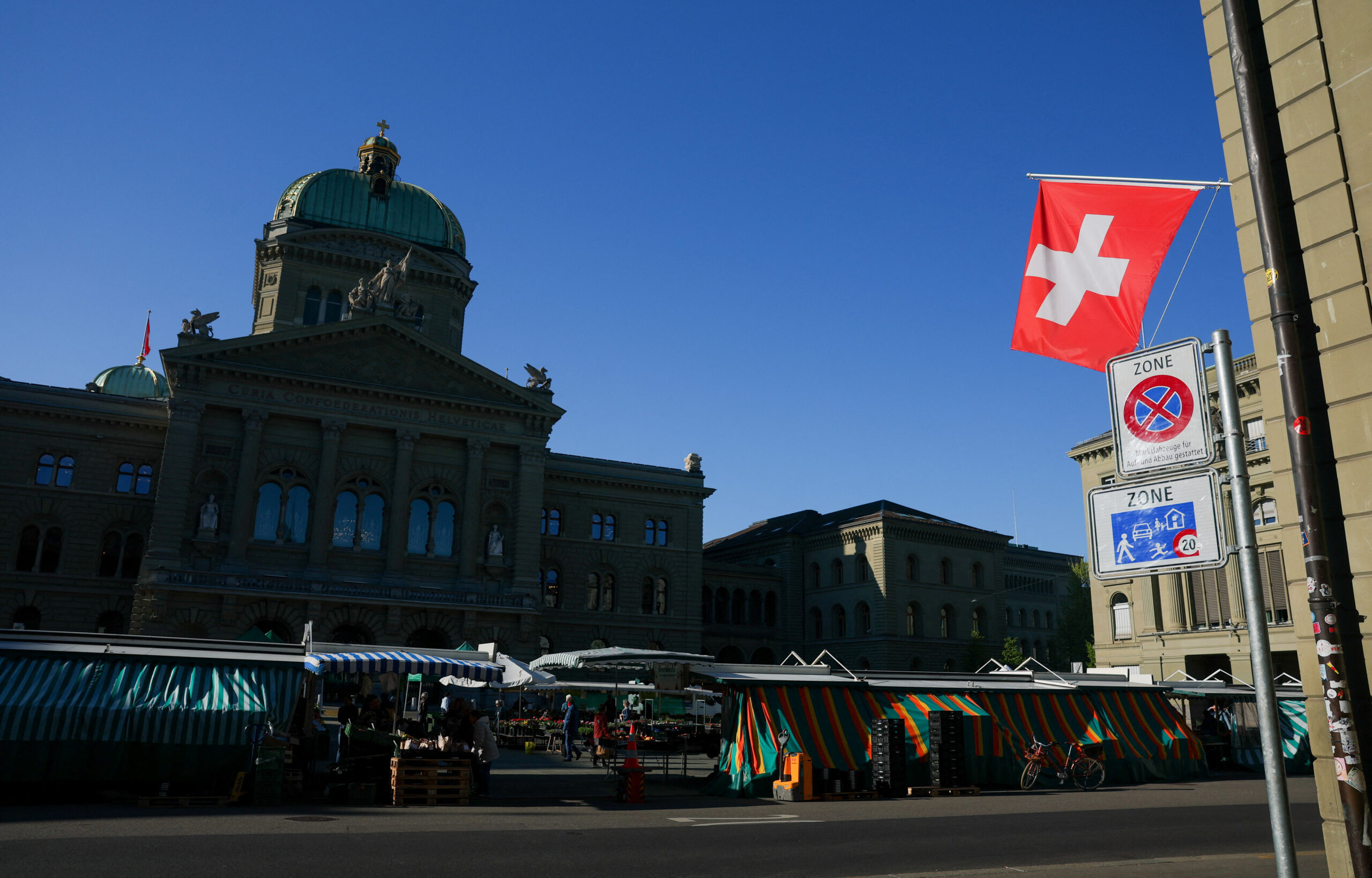
A trade agreement years in the making cleared its diplomatic hurdles only to collapse in the Swiss legislature Wednesday night, killed by a parliamentary coalition that had almost no other issue in common.
Switzerland’s lower house voted 96 to 86, with nine abstentions, to reject the accord with the South American trade bloc Mercosur — a result that placed Swiss farming conservatives and the parliamentary left on the same side of a trade question for reasons that had almost nothing to do with each other. Right-leaning lawmakers carried the interests of Switzerland’s heavily protected agricultural sector into the chamber and voted accordingly. Left and Green politicians arrived with a different set of objections: labor standards in South America, and the continuing destruction of the Amazon rainforest in Brazil, the bloc’s dominant economy. The coalition held, and the deal fell.
The agreement now moves to Switzerland’s upper chamber, where its fate is uncertain. If the Senate approves it, the legislation returns to the lower house for another vote — a procedural path that preserves the accord’s technical survival while doing little to resolve the political conditions that just killed it.
Switzerland’s agriculture sector is among the most insulated in the developed world, sustained by subsidy structures and tariff protections that predate the country’s modern trade policy architecture. Swiss farmers have long exerted disproportionate influence over trade negotiations that touch their sector, and a trade agreement opening the domestic market to Mercosur beef, poultry, and grains represented a direct challenge to the price floors that keep Swiss producers competitive. That the farming lobby would mobilize against the deal was predictable from the moment negotiations concluded.
Read also: Switzerland To Host Ukraine-US Talks On Trump Peace Plan
What made Wednesday’s vote more structurally significant was the left flank that joined them.
For progressive lawmakers, Mercosur’s record on labor rights and environmental compliance carried weight that the deal’s projected economic benefits could not offset. Brazil, which accounts for the bulk of Mercosur’s economic output, has been at the center of sustained international concern over deforestation rates in the Amazon — a flashpoint that has shadowed the bloc’s trade negotiations with Europe for years. The EU’s own agreement with Mercosur, concluded after more than two decades of intermittent talks, drew protests from French farmers and environmental groups on similar grounds, complicating ratification in several member states. Switzerland’s parliamentary left drew on that same well of objection.
The result was a governing majority assembled from two political traditions that rarely cooperate, unified by a single judgment: that this particular trade architecture, with these particular partners, on these particular terms, was not worth the cost.
That logic may not survive the upper chamber.
Switzerland’s Senate reflects a different political balance, and the agreement’s backers — primarily drawn from the center and pro-business right — have not abandoned it. The accord’s commercial case is not trivial: Mercosur represents a combined market of more than 260 million consumers, anchored by Argentina, Brazil, Paraguay, and Uruguay. For a small, export-dependent economy with limited domestic demand, access to that market carries real economic value across precision instruments, pharmaceuticals, and industrial goods — sectors where Swiss exporters have structural advantages that preferential tariffs could meaningfully amplify.
Read also: Ukraine Peace Framework Talks Intensify as US Pushes Proposal
The question the Senate will have to answer is whether those gains are worth the fight over agriculture and environmental compliance that the lower house has now declared it does not want to have. Swiss trade policy has historically prioritized its agricultural constituency over pure commercial optimization, even when the economic calculus pointed elsewhere. Wednesday’s vote did not resolve that tension. It restated it.
There is also the question of what a second lower-house vote would look like if the upper chamber forces one. The margin Wednesday — ten votes, in a chamber that splits routinely along tighter lines than that — was not so commanding as to suggest that a second round, with different political conditions or additional concessions extracted from Mercosur partners, could not produce a different result. Trade deals have survived worse parliamentary passages.
What they rarely survive is the specific combination that assembled against this one: the farmers who would lose market protection and the environmentalists who want the Amazon left alone, persuaded for one evening that the problem they were solving was the same.
Mercosur governments have not commented on the Swiss vote. The bloc’s agreement with the European Union remains the larger and more consequential ratification process underway.