
A diplomatic breakthrough two days old fell apart Friday before negotiators ever sat down. The talks meant to implement a fragile U.S.-Iran peace framework were called off after Hezbollah rocket fire and Israeli airstrikes in south Lebanon left at least 18 people dead — a reminder that the deal Washington and Tehran signed covers a nuclear program but cannot touch the battlefield that keeps reigniting around it.
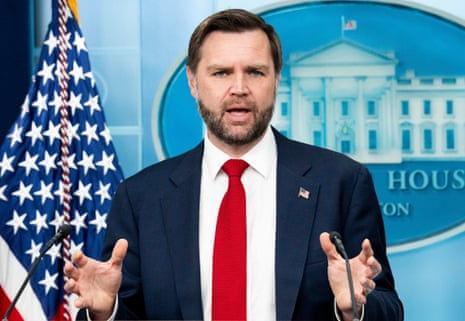
JD Vance, the vice president leading negotiations for the Trump administration, was scheduled to fly to the Swiss village of Obbürgen Friday to open technical talks under a memorandum of understanding signed just two days earlier. His staff and a group of journalists had already gathered at Joint Base Andrews. Dozens of administration officials were in Switzerland preparing for his arrival. None of it mattered by Thursday night.
A White House spokesperson confirmed late Thursday that Vance was not departing, citing the unpredictable logistics of the negotiations without elaborating further.
What collapsed the trip was 80 miles from the table where the deal was supposed to be implemented. Hezbollah fired several rocket salvoes at Israeli forces near Nabatieh in south Lebanon Thursday night, saying it was targeting troops advancing toward the foothills surrounding the city — a position Israeli forces had been pushing toward before the original U.S.-Iran ceasefire took hold. Israel answered with a wave of airstrikes on Nabatieh and the surrounding area. Lebanon’s health ministry put the toll at 18 dead and 33 wounded. By Friday morning, Israel had launched additional strikes, accusing Hezbollah of breaching the truce; Hezbollah threw the same accusation back and claimed its fighters destroyed three Israeli tanks, a claim Israel has not confirmed.
Iran was never going to sit down under those conditions.
Iran’s semi-official Tasnim news agency signaled before the cancellation that Iranian negotiators wanted to see the United States actually implement the interim terms before further talks proceeded, and that Tehran’s delegation traveling to Geneva was not confirmed.
Al-Mayadeen, a network aligned with Hezbollah, reported that Iran was holding back its delegation specifically because of Israel’s continued military campaign in Lebanon. Israel is not a party to the U.S.-Iran agreement and has kept its distance from it entirely — which is precisely the problem. Tehran is being asked to negotiate the future of its nuclear program while a war it considers connected to that same conflict continues on a front it does not control and the deal does not cover.
Read also: Switzerland To Host Ukraine-US Talks On Trump Peace Plan
The MOU itself survived the chaos. Iran’s supreme leader, Ayatollah Mojtaba Khamenei, said Thursday he had approved the agreement despite his reservations, even as he warned that the negotiations ahead would not be easy. He accused Trump of signing the deal out of desperation. “If the American side wants to be too demanding, we will not accept it,” he said in a written message. The same day, U.S. forces lifted their naval blockade of Iranian ports, though American warships remained in the region and shipping through the Strait of Hormuz stayed muted regardless.
The agreement gives negotiators 60 days to settle the status of Iran’s nuclear program, paired with a $300 billion reconstruction fund and other financial incentives — unless both sides agree to extend the clock. None of those terms address what happens in south Lebanon, where the war that has now killed more than 3,900 people did not end so much as relocate.
Hezbollah pulled Lebanon into the regional war in March, attacking Israel in what it described as retaliation for the killing of Iran’s supreme leader by U.S. and Israeli forces. The Israeli ground invasion and bombing campaign that followed has killed at least 32 Israeli soldiers and three civilians in return. On Thursday, Israel declared a “security zone” spanning hundreds of square miles of Lebanese territory — a move Lebanese officials say demands the complete Israeli withdrawal that Iran insists the MOU already requires. Israel has refused to commit to pulling out, a position that has drawn direct criticism from both Trump and Vance.
Read also: Mercosur Deal With Switzerland Blocked In Lower House
Vance did not hide his frustration Thursday. He described a pattern of near-breakthroughs derailed by violence, telling reporters that explosions in civilian areas of Beirut had repeatedly undercut progress just as agreement seemed close, costing the lives of people with no connection to Hezbollah. He called the pattern unacceptable.
Iran’s chief negotiator, Mohammad Ghalibaf, offered his own warning Friday, saying any breach of the agreement would be met with what he called a decisive response.
The war across the region has killed at least 7,000 people, driven energy prices higher and unsettled global markets since March. Sixty days were allotted to resolve the nuclear question at its center. Two of them were consumed before anyone reached the table.