
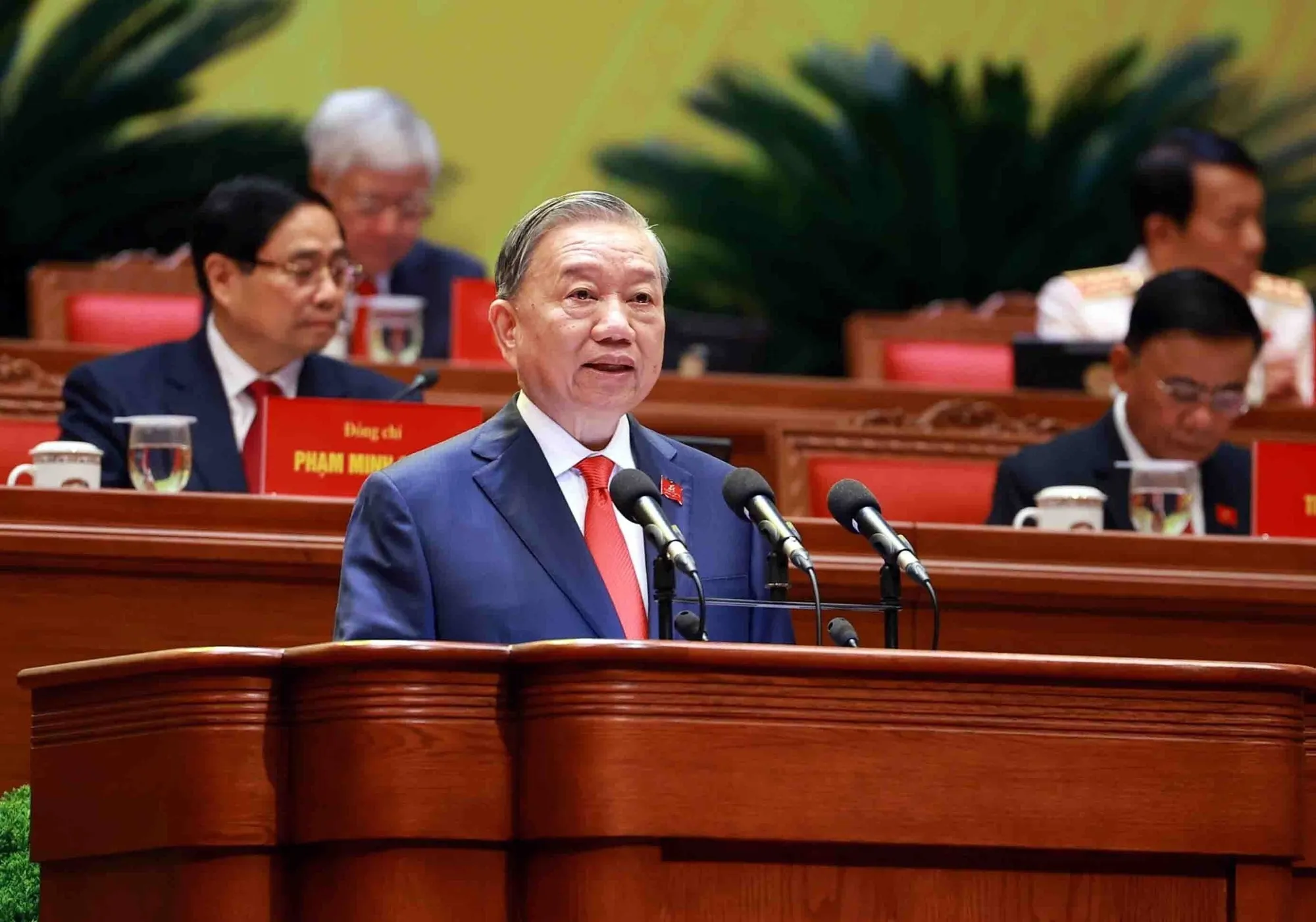
Vietnam’s ruling Communist Party has reappointed To Lam as its top leader for another five year term, reinforcing political continuity as the country pushes for faster economic expansion.
State media reported on Friday that Lam was unanimously elected general secretary at the conclusion of the party’s national congress, a closed door gathering that sets Vietnam’s political direction for the next half decade. The vote was cast by 180 members of a newly formed central committee, according to the Vietnam News Agency.
The role of general secretary is the most powerful position in Vietnam’s one party system, overseeing the government, military, and security apparatus. Lam, 68, has held the post since mid 2024.
During his first months in office, Lam moved quickly to reshape Vietnam’s bureaucracy, pushing reforms aimed at speeding up decision making and cutting administrative barriers. Those changes delivered strong economic growth but also triggered criticism after tens of thousands of civil servants lost their jobs.
Officials familiar with internal party discussions said Lam worked early to consolidate backing from rival factions, including senior military figures, as resistance grew over the pace of reform.
Concerns also emerged that his economic agenda favored large private conglomerates over state owned companies. Ahead of the congress, Lam issued a directive reaffirming the “leading role” of state enterprises, including defence and telecoms group Viettel, which is controlled by the military.
Le Hong Hiep, a senior fellow at the ISEAS Yusof Ishak Institute, said Lam is known for careful planning and political timing. He noted that Lam rose to the party’s top post while serving as public security minister, during a period when his predecessor Nguyen Phu Trong faced prolonged health problems.
Lam’s reappointment is widely seen as a signal of continuity for foreign investors, who often point to political stability as a key reason for Vietnam’s appeal as a manufacturing and export hub.
Lam is also expected to seek the presidency, with an announcement likely in the coming weeks. Combining the two roles would mark a departure from Vietnam’s traditional system of collective leadership.
Read Also: Vietnam’s Lam Pursues Presidency In China-Style Power Grab
Hiep cautioned that concentrating power could carry risks. He said such a structure “could pose risks to Vietnam’s political system,” which has long relied on internal checks and shared authority.
Earlier this week, Lam told congress delegates that Vietnam should aim for annual economic growth above 10 percent throughout the decade. The pledge was delivered in a formal session beneath a statue of revolutionary leader Ho Chi Minh.
The target is significantly higher than forecasts from the World Bank, which expects Vietnam’s economy to grow by about 6.5 percent this year and next.