
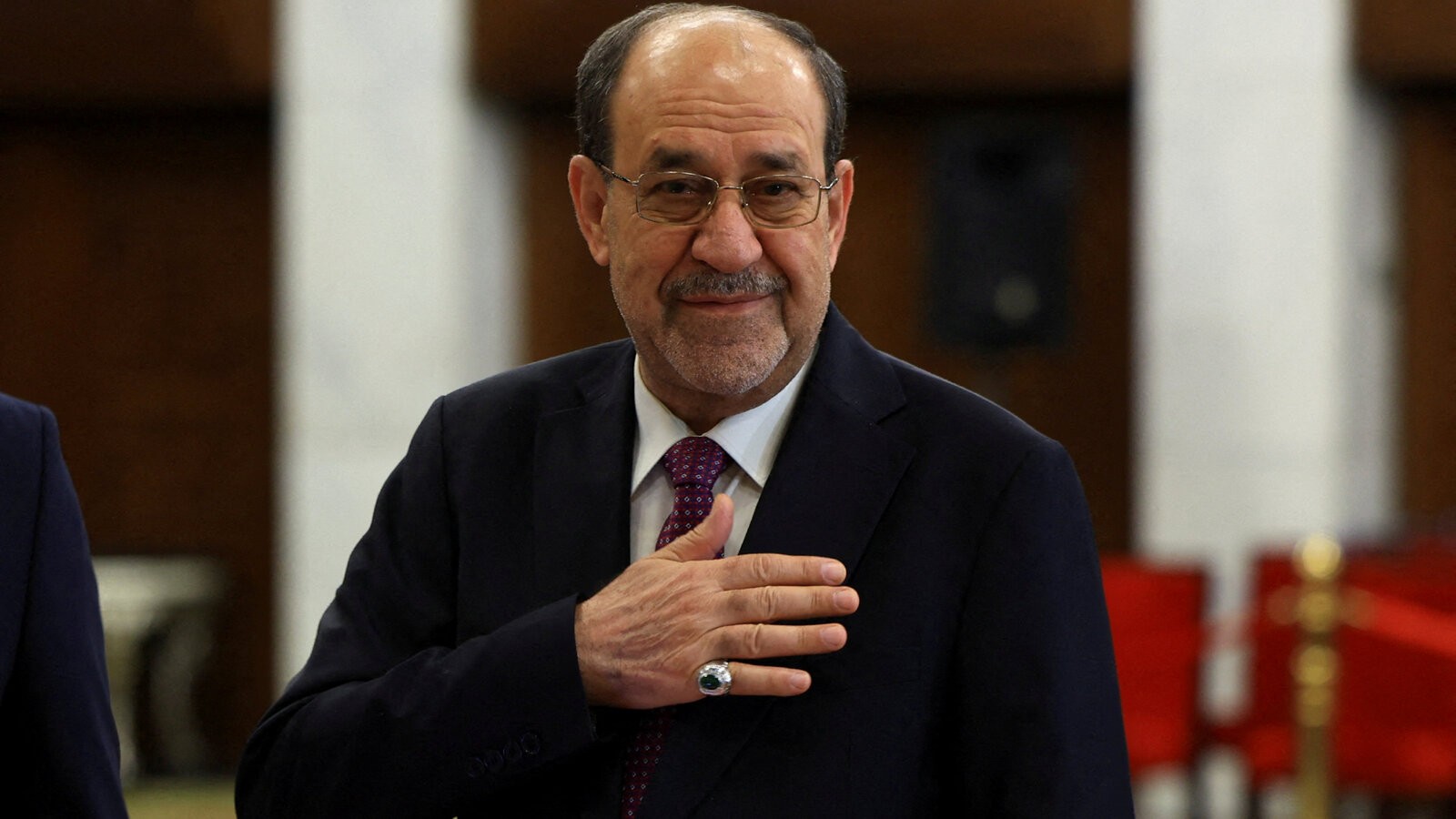
President Donald Trump has warned that the United States could withdraw its support for Iraq if former Prime Minister Nouri al Maliki returns to power, injecting new uncertainty into Baghdad’s already fragile political process.
Trump made the comments after Maliki was selected over the weekend by a coalition of Shia led political groups as their nominee for prime minister, a move that has raised concerns in Washington due to Maliki’s past record in office and his close ties to Iran.
In a post on Truth Social, Trump described Maliki as a “very bad choice” and blamed his previous leadership for years of instability. “Last time Maliki was in power, the country descended into poverty and total chaos,” Trump wrote, adding that Iraq would have “zero” chance of success without continued US backing.
Maliki served as Iraq’s prime minister from 2006 to 2014, a period marked by deep sectarian divisions, widespread violence, and growing political repression. His tenure ended after Islamic State fighters swept across large parts of northern and western Iraq, capturing major cities and exposing weaknesses in the country’s security forces.
The former leader was endorsed on Saturday by the Coordination Framework, a powerful alliance of Shia parties that includes factions with close ties to Iran. Under Iraq’s political system, the nominee must still be formally nominated by the country’s president before seeking parliamentary approval, though the presidency largely holds a ceremonial role.
Read Also: Nations Trading With Iran Hit By Tariffs As Crisis Deepens
Iraq’s parliament had been expected to elect a new president on Tuesday, a key step in the government formation process, but the vote was postponed after lawmakers failed to agree on a candidate, according to parliamentary officials.
Washington has long voiced concern over Iran aligned groups expanding their influence in Iraq’s political and security institutions. Several Shia parties within the Coordination Framework maintain political and military links to Tehran, raising fears that a Maliki led government could tilt Iraq further toward Iran’s orbit.
US Secretary of State Marco Rubio raised those concerns during a phone call on Sunday with current Prime Minister Mohammed Shia al Sudani. According to a readout of the call, Rubio stressed “that a government controlled by Iran cannot successfully put Iraq’s own interest first.”
Trump echoed that position in his comments, warning that the United States would “no longer help” Iraq if Maliki were to regain power, despite years of American military, financial, and diplomatic investment in the country since the 2003 invasion.
Read Also: Journalist Dies In Cross-Border Strike, Hezbollah Reports
Trump’s remarks are consistent with his pattern of publicly weighing in on foreign elections and leadership contests. During his presidency, he openly backed right wing candidates in several countries, including Poland, Romania, and Honduras, where a US supported leader was inaugurated earlier this week.
Earlier this month, US forces also detained Venezuelan leader Nicolás Maduro for trial in New York, a move that further underscored Washington’s willingness to take aggressive action against governments it views as hostile.
Maliki himself rose to prominence in the aftermath of the US led invasion of Iraq in 2003, which toppled Saddam Hussein and ended decades of authoritarian rule marked by the repression of Shia Muslims. However, critics argue that Maliki’s centralisation of power and harsh crackdowns on political opponents helped fuel sectarian resentment.
By the time he stepped down in 2014, Islamic State militants had seized vast territories and several major cities, plunging Iraq into one of its darkest security crises.
The political deadlock in Baghdad is likely to continue in the coming days as parties negotiate over the presidency and the future shape of the government. It remains unclear whether Maliki’s nomination can secure enough support in parliament or whether internal divisions within the Shia alliance could derail his return.