
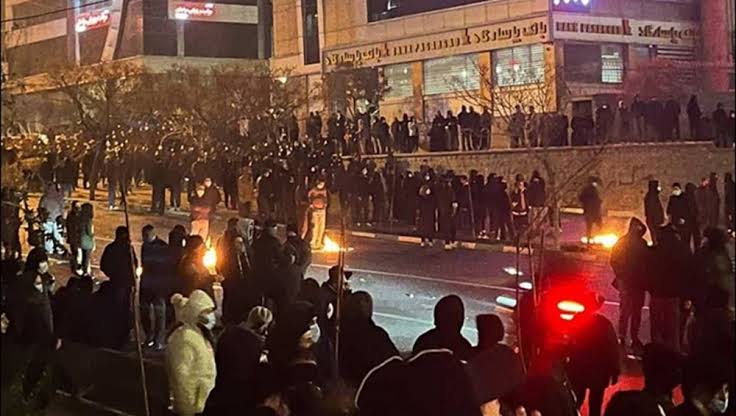
Iranian authorities have conducted a series of overnight raids targeting citizens suspected of taking part in recent nationwide protests, detaining dozens of individuals across the country, according to activists and witnesses.
In one incident early on Jan. 16, security agents arrived at the Nakhii family home at around 2 a.m., witnesses said, arriving in six vehicles.
They woke two sisters, Nyusha and Mona Nakhii, and compelled them to provide the passwords to their phones before taking them into custody, a friend of the family told The Associated Press on condition of anonymity due to safety concerns. The women were accused of participating in protests that erupted the previous week.
The arrests come amid a sustained crackdown by the Iranian government following demonstrations calling for the end of the country’s theocratic rule.
Reports from major cities and smaller towns indicate that authorities have carried out raids on homes and workplaces in an effort to identify participants and suppress further dissent.
“The authorities continue to identify people and detain them,” said Shiva Nazarahari, an organizer with the Committee for Monitoring the Status of Detained Protesters, an activist group operating outside Iran.
According to Nazarahari, the group has confirmed the identities of more than 2,200 detainees using direct reports from family members and a network of contacts on the ground.
Those arrested include 107 university students, 82 minors as young as 13, 19 lawyers, and 106 medical professionals.
Read Also: Netanyahu To Meet Trump As Iran Nuclear Talks Intensify
The detentions have affected a broad spectrum of Iranian society, encompassing students, medical practitioners, lawyers, teachers, actors, business owners, athletes, and filmmakers, as well as reformist figures with ties to President Masoud Pezeshkian.
Detainees are frequently held incommunicado, prevented from contacting relatives or legal counsel for periods ranging from days to weeks, leaving families uncertain of their whereabouts.
Tracking the scope of the arrests has been hindered by an internet blackout imposed by Iranian authorities, which has restricted communications and limited the flow of information from inside the country.
Estimates from activist groups suggest that the number of individuals detained could exceed 50,000, though The Associated Press has been unable to independently verify that figure.
Nazarahari said authorities have been relying on multiple forms of surveillance to identify protest participants.
The review reportedly includes footage from municipal street cameras, private business surveillance systems, and drone recordings, which are used to trace demonstrators to their residences or workplaces. Those identified are subsequently subject to arrest.
Families of those detained have reported difficulty in obtaining information from authorities.
Human rights organizations have repeatedly expressed concern over the lack of transparency and due process. Some relatives have resorted to contacting activist networks outside Iran to determine the status of missing family members.
The protests that prompted the crackdown were part of a broader wave of civil unrest in Iran.
Demonstrations emerged in multiple cities, with participants voicing grievances over governance, social restrictions, and economic conditions. Security forces responded with a combination of dispersal tactics and arrests, aiming to contain the unrest and deter further mobilization.
Read Also: Iran Envoy In Oman To Discuss Nuclear Deal With U.S.
The United Nations and other international bodies have previously criticized Iran for its handling of domestic dissent, particularly in relation to the treatment of minors and other vulnerable populations. Reports from the Committee for Monitoring the Status of Detained Protesters indicate that children and teenagers have been caught up in the detentions, including some as young as 13.
In addition to the Nakhii sisters, activists have highlighted numerous cases of individuals taken from homes in pre-dawn raids, illustrating a pattern of targeted enforcement. Many of those detained have professional or educational backgrounds that place them in public-facing roles, which authorities appear to have considered when conducting surveillance and arrests.
Human rights organizations emphasize that the lack of independent access to detainees, combined with the internet restrictions, complicates verification of conditions in custody and the legal basis for arrests.
There is limited information available regarding charges or court proceedings for those held, and authorities have not publicly disclosed details about most detainees.
The Iranian government has not issued a comprehensive statement on the number of individuals detained during this round of enforcement.
Officials have generally described the arrests as part of standard law enforcement operations, targeting individuals who violated public order or engaged in illegal demonstrations, though details remain sparse.
International human rights groups continue to monitor the situation, compiling lists of detainees and documenting reported abuses. “Authorities are systematically using surveillance tools to track people and detain them,” Nazarahari said, noting that the documentation process involves verifying accounts from families and cross-referencing information from various sources within Iran.
As of now, it remains unclear how many of the arrested individuals have been formally charged, released, or remain in custody.
The arrests represent the latest stage in the Iranian government’s response to the unrest that has swept multiple regions, signaling continued enforcement activity in the days ahead.