
Iran presented a formal written proposal to United States negotiators in Geneva on Thursday during the third round of indirect nuclear talks, the most detailed submission Tehran has placed before Washington since the current process began three weeks ago, as the USS Gerald R. Ford, the largest aircraft carrier in the US Navy, entered Israeli waters and the Trump administration continued deploying F-22 fighter jets to the region in what officials described as preparations for potential military operations.
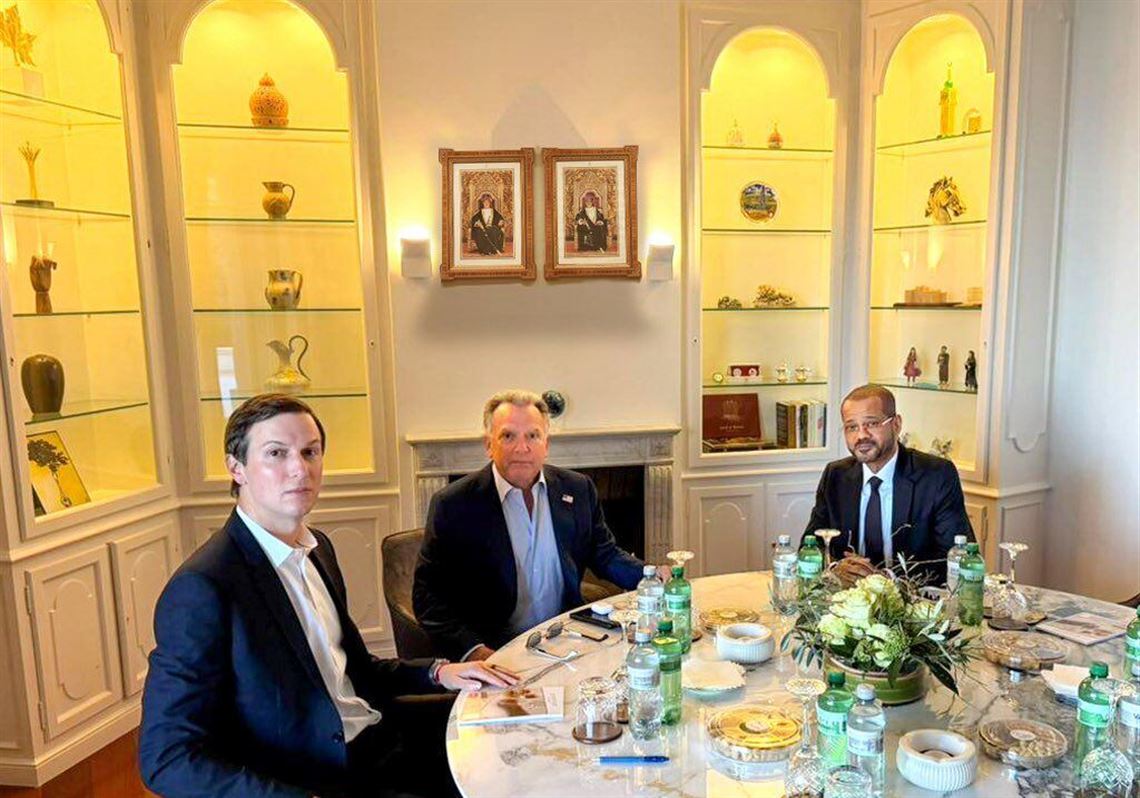
Omani Foreign Minister Badr Albusaidi met separately with the American team led by Special Envoy Steve Witkoff and Jared Kushner before the formal talks began, during which Iran’s proposal was discussed alongside US questions regarding technical aspects of the nuclear programme and the guarantees required for any agreement. The Omani foreign minister said talks were proceeding with seriousness and in a constructive spirit, and that both sides had demonstrated “unprecedented openness to new and creative ideas.”
IAEA Director General Rafael Grossi attended the Geneva session, as he had the previous round, reviewing technical and monitoring aspects of Iran’s nuclear programme. The Iranian delegation led by Foreign Minister Abbas Araqchi included experts and specialists in nuclear issues, sanctions relief, legal matters, and economic affairs. Iran’s foreign ministry spokesman said Tehran entered the talks “with full readiness and seriousness” and confirmed the session would focus exclusively on the nuclear file and sanctions relief, explicitly excluding the ballistic missile programme that US Secretary of State Marco Rubio had identified on Wednesday as a “big, big problem” that would eventually need to be addressed.
The disconnect between Washington’s stated scope and Tehran’s defined limits remained one of the sharpest structural obstacles in the negotiating process. Rubio told reporters in Saint Kitts on Wednesday that Iran’s refusal to discuss missiles was “a major problem,” arguing the weapons were designed to strike American territory and US bases in the region.
“If you can’t even make progress on the nuclear programme, it’s going to be hard to make progress on the ballistic missiles as well,” he said. Iran’s position, reiterated consistently by Araqchi across all three rounds, is that missiles are a conventional defence matter entirely separate from the nuclear file, and that introducing them into the nuclear negotiation would be a procedural provocation designed to ensure failure.
Read Also: Modi Arrives In Israel For Talks On Defence And Iran Crisis
Araqchi said ahead of the talks: “We have a historic opportunity to strike an unprecedented agreement that addresses mutual concerns and achieves mutual interests. A deal is within reach, but only if diplomacy is given priority.”
He vowed Iran would “under no circumstances ever develop a nuclear weapon” but insisted on the country’s right to peaceful nuclear technology, the formulation that encapsulates the fundamental tension in every round of talks. Washington views uranium enrichment inside Iran as a potential pathway to a weapon. Tehran regards enrichment as an inalienable right under the Treaty on the Non-Proliferation of Nuclear Weapons.
“There would be no victory for anybody, it would be a devastating war,” Araqchi told India Today in an interview filmed Wednesday before he flew to Geneva. “Since the Americans’ bases are scattered through different places in the region, then unfortunately perhaps the whole region would be engaged and involved, so it is a very terrible scenario.”
The military context in which Thursday’s session took place was the most concentrated since the June 2025 strikes on Iran’s nuclear facilities. The USS Gerald R. Ford, which had left port near the Greek island of Crete on Thursday morning, arrived off the northern Israeli coast by Friday. A second carrier strike group, the USS Abraham Lincoln, remained deployed in the Gulf. The Trump administration confirmed separately that approximately a dozen F-22 Raptor fighter jets had been sent to Israel, the first time Washington had deployed combat aircraft to the country for potential wartime operations. The Pentagon declined to comment on operational details.
Iran has warned that any US strike would prompt retaliatory attacks on American military bases throughout the Middle East, where tens of thousands of troops are deployed. Tehran has also threatened to close the Strait of Hormuz, the narrow waterway through which a significant share of the world’s oil supply passes. Saudi Arabia, according to two sources quoted by Reuters on Wednesday, has been quietly increasing oil production and exports as a contingency against the supply disruption a strike might cause.
Read Also: Iran Nears Deal For Chinese Supersonic Anti‑Ship Missiles
Trump had set a 10-to-15-day deadline for a deal on February 19, a window that expired by the time Thursday’s session opened.
He had not publicly announced any military decision, and Rubio on Wednesday said “the president’s made no decision on that.” Witkoff told Fox News on Saturday that Trump was “curious as to why they haven’t capitulated” given the level of military pressure being applied, adding: “He understands he has plenty of alternatives.”
Within Iran, Thursday’s session took place against a backdrop of severe domestic pressure on the leadership. Nationwide protests erupted in January, driven by economic deterioration under tightened sanctions, and were suppressed through arrests and reported use of force. Supreme Leader Ali Khamenei, in his 36th year of rule, faces what analysts describe as the most acute crisis of his tenure.
Iranian President Masoud Pezeshkian sought to use Thursday as an occasion to restate the theological boundary of the dispute.
“Khamenei has banned weapons of mass destruction, which clearly means Tehran won’t develop nuclear weapons,” he said, citing the fatwa Khamenei issued in the early 2000s. Iran’s parliament speaker Mohammad Bagher Ghalibaf was blunter about the condition attached to any diplomatic engagement: “If you choose the table of diplomacy, a diplomacy in which the dignity of the Iranian nation and mutual interests are respected, we will also be at that table.”
The first round of talks was held in Muscat on February 6. The second was in Geneva on February 17. Araqchi said afterwards that the two sides had reached a tentative understanding on the broad principles that would guide further discussions, though no substantive agreement had been reached.
The sides remain divided on fundamental questions including the scope and sequencing of sanctions relief and whether Iran retains any domestic enrichment capacity under a final agreement. The third round produced Iran’s first formal written proposal, whether it narrows those gaps or confirms them will determine whether a fourth round is scheduled or whether the administration concludes that the diplomatic track has been exhausted.
No outcome of Thursday’s session had been announced by late afternoon.