
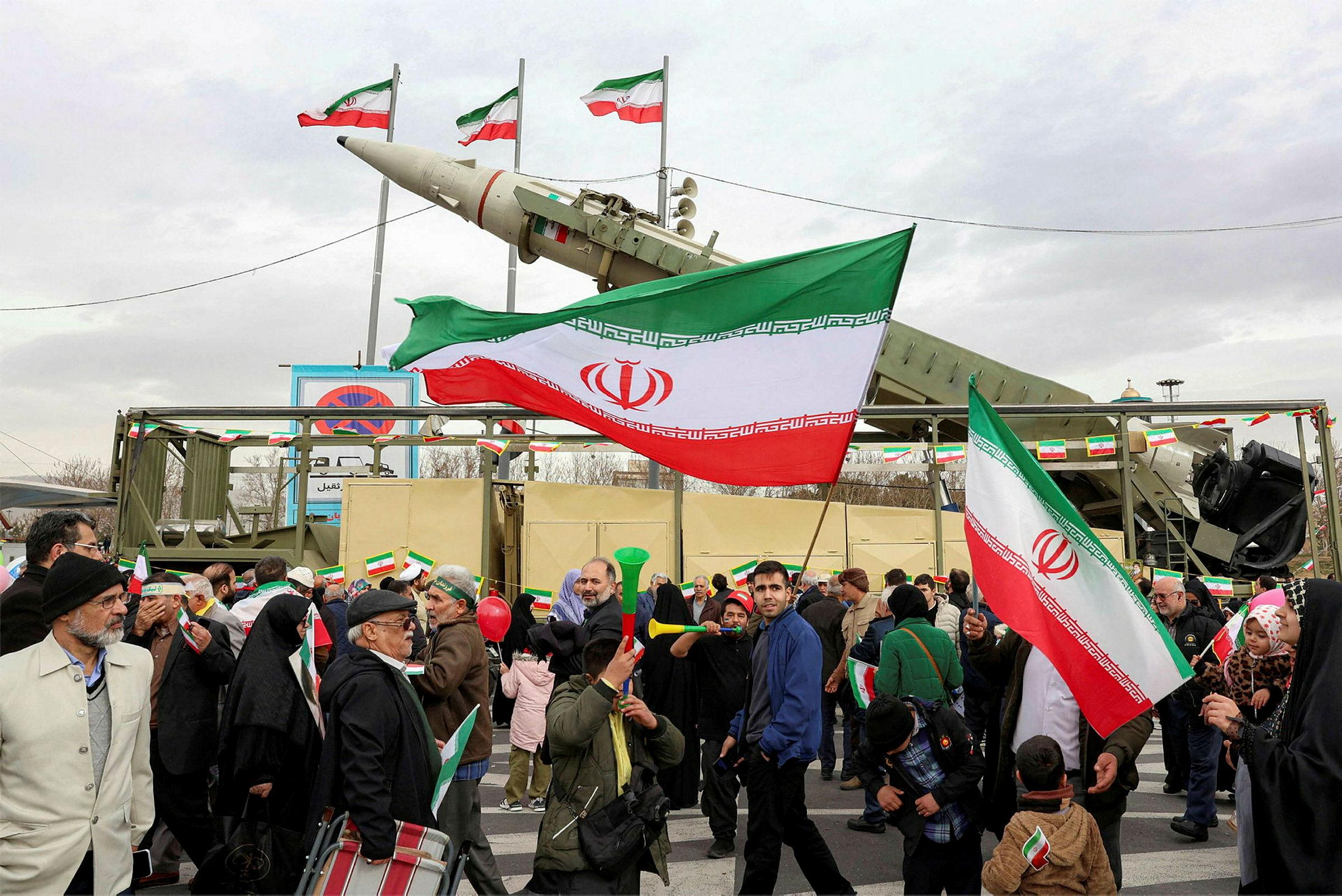
Iran is said to be close to reaching a final agreement with China to buy advanced anti-ship cruise missiles, according to officials and security sources with knowledge of the talks, as the U.S. lines up a significant naval presence in the vicinity of Iranian waters amidst rising tensions.
The impending sale involves the Chinese CM-302 supersonic missile, which reportedly has a range of about 290 kilometers and is intended to evade ship-based defenses by flying low and fast.
Military analysts have indicated that the missile would be a significant boost to Iranian naval strike power, potentially posing a threat to U.S. forces deployed in the Gulf region and surrounding areas.
The talks, which began at least two years ago, gained momentum after a brief military conflict between Israel and Iran in June of last year, according to six people familiar with the talks, who spoke on condition of anonymity.
They said that top Iranian military and government officials visited China last summer as the talks entered their final stages.
Among them was Massoud Oraei, Iran’s deputy defense minister, whose trip has not been previously reported.
“This is a complete game-changer if Iran has supersonic capability to attack ships in the area,” Danny Citrinowicz, a former Israeli intelligence officer who is currently a researcher at Israel’s Institute of National Security Studies, told Reuters.
Read Also: Iran Signals Deal Within Reach As US Military Pressure Mounts
Reuters could not independently confirm the number of missiles Iran plans to buy, the price being discussed, or whether China will follow through with the sale at this point in the current tensions in the region.
“Currently, Iran has military and security agreements with its allies, and it is an appropriate time to take advantage of these agreements,” an Iranian foreign ministry official told Reuters.
China’s Ministry of Foreign Affairs issued a statement after the publication of this report that it was not aware of any discussions for the sale of missiles to Iran. The Chinese defense ministry did not return a request for comment.
The White House chose not to comment on the reported talks. A U.S. official said that President Trump again issued a warning that “either we will make a deal or we will have to do something very tough like last time,” in reference to the ongoing tensions with Iran.
The CM-302 missile system, made by China Aerospace Science and Industry Corporation (CASIC), is regarded as one of the most advanced anti-ship missiles available on the market worldwide.
The system, which can be launched from ships, aircraft, and ground vehicles, has the ability to attack both maritime and land-based targets.
According to Pieter Wezeman, a senior researcher at the Stockholm International Peace Research Institute, the acquisition of these missiles would strengthen an Iranian arsenal that was weakened during the recent Middle East conflict last year. CASIC did not comment on the matter.
This would be considered one of the most advanced transfers of military equipment to Iran from China, and it could violate United Nations sanctions that were originally issued in 2006.
These sanctions were suspended in 2015 as a part of a framework for a nuclear deal, and then reinstated in September last year.
This potential acquisition comes at a time of heightened military and diplomatic ties between Beijing and Tehran. China, along with Russia, has been conducting military exercises with Iran and has been resistant to US pressure regarding the imposition of sanctions.
In September, during a military parade in Beijing, Chinese President Xi Jinping told Iranian President Masoud Pezeshkian that “China supports Iran in safeguarding sovereignty, territorial integrity and national dignity.”
In October, China, along with Russia and Iran, issued a letter on October 18 criticizing the imposition of sanctions.
Read Also: Iran Talks To Proceed With Trump Playing Behind-The-Scenes
According to security sources, the talks on the missiles are a sign of a strategic alliance between Tehran and Beijing, and Moscow, as Tehran seeks to rely on these two nations due to US pressure.
The talks on the missiles were announced at a time when the US was mobilizing a substantial military presence in the region.
The USS Abraham Lincoln and USS Gerald R. Ford, two aircraft carriers, are reportedly moving into striking distance of Iran, along with their respective strike groups. These two aircraft carriers have a total of over 5,000 personnel and 150 aircraft between them.
Trump has issued a 10-day deadline for Iran to reach an agreement over its nuclear program, warning of potential military action if diplomacy fails. U.S. officials have indicated that contingency plans could involve sustained operations lasting several weeks.
Beyond the CM‑302, sources said Iran is also negotiating to acquire Chinese surface-to-air missile systems, man-portable air defense systems (MANPADS), anti-ballistic weapons, and anti-satellite capabilities.
Chinese transfers to Iran historically peaked in the 1980s but tapered in the late 1990s under international scrutiny. U.S.
Officials have in recent years accused Chinese entities of providing missile-related materials to Iran, though they have not publicly alleged that complete missile systems were supplied.