
Taiwan’s legislature authorized $9 billion in US arms contracts Friday despite refusing to approve the broader $40 billion defense budget those purchases are meant to support, a procedural maneuver that underscores how economic confidence has collided with political gridlock over military spending.
Parliament’s opposition majority, which controls enough seats to block President Lai Ching-te’s eight-year spending plan, complained the proposals lack detail and said lawmakers cannot sign what one described as “blank cheques.” Yet the same body green-lit contract signatures to prevent missed deadlines on weapons deals already negotiated with Washington, separating procurement authority from budget approval in a way that keeps arms flowing while the broader fight continues.
Lai argued Saturday that Taiwan’s booming economy makes the investment affordable, citing American emphasis on collective defense and burden-sharing as justification for the scale of commitment he seeks. Taiwan’s GDP expanded at its fastest pace in 15 years during 2025, driven by semiconductor demand for artificial intelligence applications that has positioned the island as the dominant producer of advanced chips.
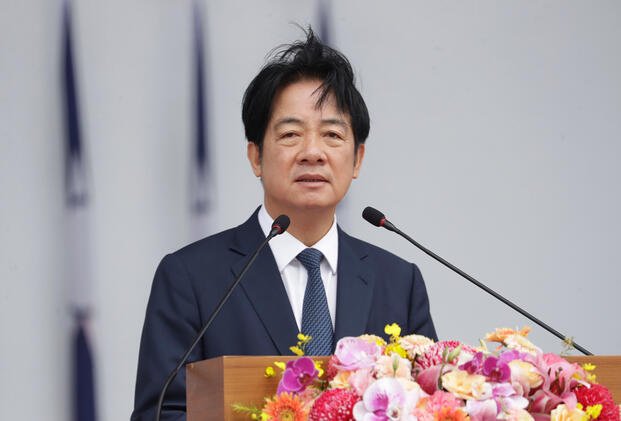
“With Taiwan’s economic growth, we can absolutely afford it,” Lai said during a speech marking the 30th anniversary of Taiwan’s first direct presidential election. “If we look at the United States’ National Security Strategy, the U.S. emphasises collective defence and burden-sharing.”
His remarks came on the anniversary of 1996 missile tests China conducted in waters around Taiwan hoping to influence that election’s outcome, a historical parallel Lai invoked to underscore what he described as persistent threats to the island’s democratic system.
Read also: China’s NPC Ends With Reduced Economic Growth Target
The Trump administration has pressed allies to increase defense spending, pressure Lai has embraced enthusiastically even as domestic opposition questions whether proposed expenditures reflect genuine strategic planning or responsiveness to American demands without clear operational justification.
Lai said Taiwan would deploy artificial intelligence to establish real-time defense systems while promoting domestic military manufacturing.
He framed the budget not just as security spending but as industrial policy that would generate economic returns. “In other words, our defence budget is not only a budget for national defence, but also a budget for economic and industrial development,” he said.
China regards Taiwan as its territory and has never renounced using force to bring the island under its control. Lai rejects Beijing’s sovereignty claims, saying only Taiwan’s people can determine their future—a position that has drawn Chinese military exercises and regular deployments of warships and aircraft around the island.
Beijing held its most recent war games encircling Taiwan in December. Chinese forces now operate near the island almost daily, testing defenses and demonstrating capability to impose a blockade if leadership in Beijing decides the situation requires escalation.
Read more: US Navy P-8A Transits Taiwan Strait Ahead of Trump China Trip
Whether opposition lawmakers will eventually approve the full $40 billion request or negotiate it down remains uncertain. The Friday authorization for contract signatures suggests pragmatic recognition that weapons procurement timelines do not wait for political disputes to resolve, even as fundamental questions about spending levels and strategic direction remain unanswered.
Taiwan’s economic surge has created fiscal space for military investment that would have been unthinkable during leaner years when budgets strained to fund basic modernization.
Semiconductor sales that power AI development globally have filled government coffers while making the island strategically valuable to countries dependent on chip supplies, complicating calculations for both Taipei and Beijing about how conflict would affect stakeholders beyond the strait.
How much of that wealth should flow to defense, and whether proposed spending reflects assessed threats or diplomatic signaling toward Washington, has become the central question opposition parties are pressing Lai to answer before releasing funds. Their insistence on detailed plans before approving blank-check authority represents a check on executive power even as geopolitical pressures mount for faster, larger military buildup.
The Trump administration’s public emphasis on burden-sharing has given Lai political cover domestically to propose expenditures that might otherwise face fiercer resistance, though it has also exposed him to criticism that he prioritizes American expectations over Taiwan’s actual defense requirements.
Balancing those pressures while navigating parliamentary opposition will determine how quickly and completely his military expansion plans proceed.