
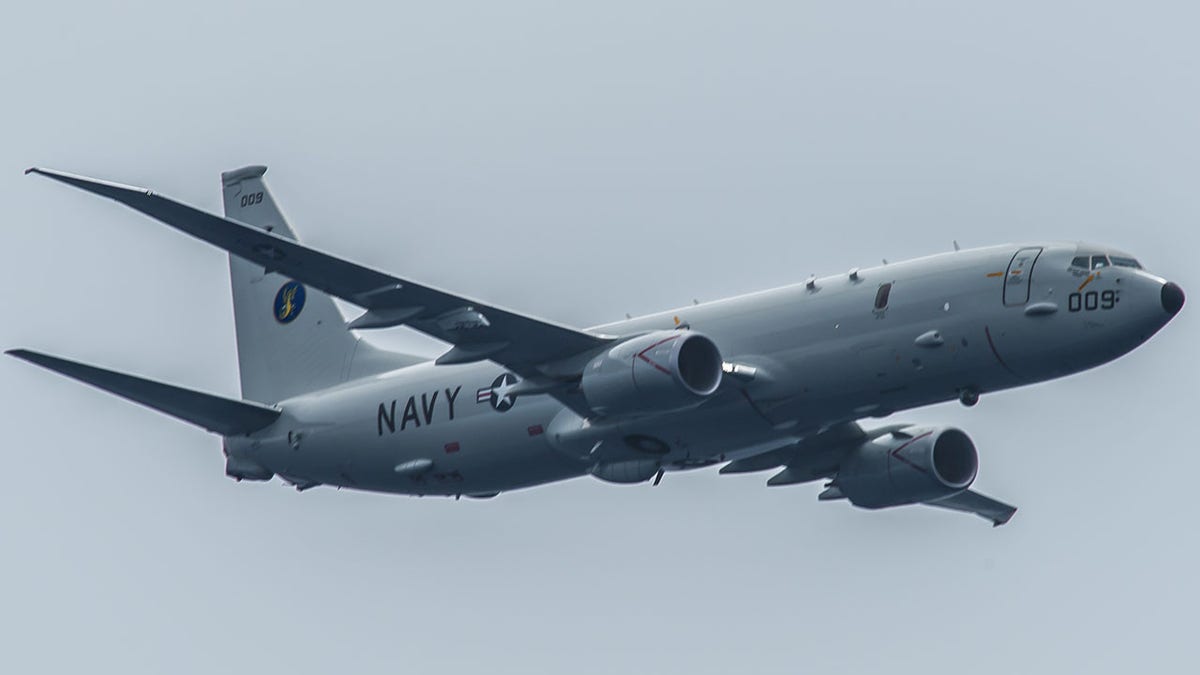
A US Navy P-8A Poseidon maritime patrol aircraft flew through the Taiwan Strait on Wednesday in international airspace, the US 7th Fleet confirmed, a transit that carries heightened diplomatic weight given that President Donald Trump is scheduled to visit Beijing for a summit with Chinese leader Xi Jinping in less than three weeks.
Colonel Li Xi, spokesperson for China’s Eastern Theater Command, said Chinese forces dispatched interceptors to “monitor and warn” the American aircraft, adding that its troops would remain on “high alert” to defend the country’s sovereignty and security. Beijing routinely responds to US military transits of the strait with public objections and close-in monitoring operations. It has so far not issued a formal diplomatic protest over the latest overflight.
“By operating within the Taiwan Strait in accordance with international law, the United States upholds the navigational rights and freedoms of all nations,” the 7th Fleet said in a statement.
The aircraft transited through a corridor that Washington and Taipei describe as international airspace, beyond the territorial seas of any coastal state. Taiwan’s Defense Ministry said the aircraft transited from north to south through the strait and that no anomaly was detected around the island during the operation.
The legal dispute at the heart of every such transit remains unresolved. China claims Taiwan as its own territory and asserts jurisdiction over the strait accordingly. Washington officially acknowledges Beijing’s position without endorsing it, and has consistently maintained that the waterway constitutes international airspace and sea lanes open to all nations. Taiwan’s government, which administers the island independently and rejects Beijing’s sovereignty claim, supports the US position.
The P-8A Poseidon is a long-range maritime patrol and reconnaissance platform capable of anti-submarine warfare and can carry laser-guided anti-ship missiles, making its presence in the strait a matter of practical as well as symbolic significance to both sides.
Trump is confirmed to travel to China from March 31 to April 2 for a three-day summit with Xi Jinping focused on trade, Taiwan, and the broader strategic relationship between the world’s two largest economies. It will be the first official presidential visit to Beijing by a sitting US president since Trump’s own trip in November 2017 during his first term, when he was received at the Forbidden City in a ceremony that US officials at the time described as unprecedented. The visit was confirmed by the White House following a meeting between the two leaders on the sidelines of the Asia-Pacific Economic Cooperation forum in Busan, South Korea in October 2025.
Read Also: Trump To Visit China Amid Supreme Court Reversal Of Tariffs
Taiwan is expected to dominate a substantial portion of the summit agenda. During a February 5 telephone call, Xi told Trump that Taiwan was “the most important issue” in bilateral relations and urged Washington to handle arms sales to Taipei with “prudence.” Xi said Beijing would never allow Taiwan to be separated from China, according to the Chinese government’s readout. The US State Department has said publicly that Washington’s commitment to Taiwan continues and that US policy has not changed.
Two pending arms sale packages for Taiwan — worth up to approximately $14 billion and including missiles and missile defence technology — have stalled in the State Department ahead of the summit, with the White House having instructed agencies not to advance the notifications to Congress while the Beijing trip is being prepared. When asked in February about the delayed sales, Trump said he was “talking to” Xi about the packages and would make a determination “pretty soon.”
The Taiwan Relations Act of 1979 requires the United States to provide the island with sufficient defensive arms, and successive administrations have proceeded with sales over Chinese objections.
China has signalled it intends to use the summit to push for changes in US declaratory policy on cross-strait relations and to press for limits on American security cooperation with Taipei. Beijing has in recent months imposed economic sanctions on Japan following public comments by Prime Minister Sanae Takaichi suggesting Tokyo could play a role in any Taiwan Strait conflict, a move analysts have described as a warning to other regional partners about the costs of publicly signalling military solidarity with Washington over Taiwan.
The PLA conducted extensive military exercises in late 2025, following the announcement of an $11 billion US arms package to Taiwan in December, placing Chinese forces closer to Taiwan’s main island than in previous drills. Chinese coast guard vessels have also increased operations in disputed areas of the South China Sea, adding further friction to the bilateral relationship heading into the summit.
Read Also: Trump To Ease Oil Penalties As Iran Conflict Shakes Markets
Analysts tracking the summit’s prospects note that the US Supreme Court’s recent decision to strike down Trump’s sweeping tariff regime has altered his negotiating leverage with Beijing, potentially reducing the economic pressure he could bring to bear in exchange for Chinese concessions on trade or strategic issues. Trump has described his plans for the trip as “a wild one” and expressed expectations of a ceremonial reception surpassing his 2017 visit.
The P-8A transit is the latest in a pattern of US military operations in the broader Indo-Pacific that have continued in parallel with diplomatic preparations for the summit. An earlier 2026 Taiwan Strait transit involving the guided-missile destroyer USS John Finn and oceanographic survey ship USNS Mary Sears drew a similar response from the PLA Eastern Theater Command, whose spokesperson said Chinese forces had monitored and tracked both vessels to ensure “effective response and management.”
The US 7th Fleet, which is headquartered at Yokosuka Naval Base in Japan, said the overflight demonstrated “the United States’ commitment to a free and open Indo-Pacific.” No further transits have been publicly announced ahead of the Trump-Xi summit. The State Department has not publicly addressed whether the frequency of Taiwan Strait operations will be adjusted during the run-up to the Beijing talks.