
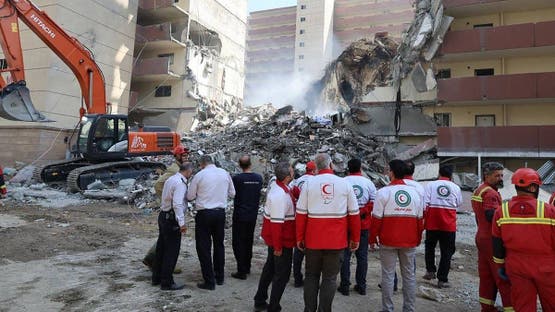
Israel’s targeted strike in Tehran that reportedly killed a senior Iranian official tied to the country’s military-linked energy operations marks a significant escalation in the shadow contest between the two states, underscoring the growing convergence of economic infrastructure and security strategy in regional conflict dynamics.
According to a statement issued by the Israeli military, the individual killed—Mohammadreza Ashrafi—held a senior role within the oil division of Iran’s Islamic Revolutionary Guard Corps (IRGC). His responsibilities were said to include overseeing commercial activities connected to the Guard’s oil headquarters, a structure described by Israeli authorities as generating billions of dollars annually. These revenues, the statement asserted, play a critical role in financing the IRGC’s operational capacity as well as supporting allied non-state actors across the Middle East.
Read Also: Planet Labs Announces Blackout On Iran War Satellite Footage
The strike, which reportedly took place in Tehran on Friday, reflects a continuation of Israel’s long-standing strategy of targeting individuals and networks it considers central to Iran’s regional influence. While previous operations have often focused on nuclear scientists, military commanders, or weapons infrastructure, the emphasis in this instance on commercial operations linked to oil revenue signals an expanded scope—one that recognizes the financial underpinnings of military capability.
Israeli officials framed Ashrafi’s role as strategically significant, arguing that his oversight of oil-related commerce contributed directly to the operational reach of groups such as Hezbollah, Hamas, and the Houthis. These organizations, widely regarded as Iranian-aligned, have been central to ongoing regional tensions, including conflicts in Lebanon, Gaza, and Yemen. By targeting a figure associated with the financial architecture supporting these groups, Israel appears to be broadening its campaign from direct military assets to the economic systems that sustain them.
The reported killing of Ashrafi follows closely on the heels of another high-profile operation, which Israeli sources say eliminated Jamshid Eshaghi, identified as the commander of the armed forces’ oil headquarters. The proximity of these two events suggests a coordinated effort aimed at disrupting a specific segment of Iran’s military-economic network. Such targeting raises questions about the extent of intelligence penetration and operational reach available to Israel within Iranian territory.
From a strategic standpoint, the focus on oil-related structures is notable. Iran’s energy sector has long served as both an economic lifeline and a geopolitical instrument. Within this framework, the IRGC has been widely reported to maintain parallel economic channels, leveraging oil revenues to fund activities that extend beyond the formal state apparatus. Disrupting these channels, therefore, has implications not only for Iran’s domestic economy but also for its capacity to project influence across the region.
The broader regional context amplifies the significance of these developments. The Middle East remains characterized by overlapping conflicts and alliances, with state and non-state actors engaged in a complex web of confrontations. Israel’s actions can be interpreted as part of an effort to contain what it perceives as an expanding Iranian footprint, particularly in areas where proxy groups operate with varying degrees of autonomy.
For Iran, the strike represents a direct challenge to its internal security and sovereignty. Conducting such an operation within Tehran carries symbolic weight, highlighting vulnerabilities in areas traditionally considered secure. It also raises the prospect of retaliation, either directly or through allied groups, thereby increasing the risk of further escalation.
The economic dimension of the incident is equally significant. By targeting individuals linked to oil commerce, Israel is effectively acknowledging the role of financial flows in sustaining military operations. This approach aligns with a broader trend in contemporary conflict, where economic assets and infrastructure are increasingly viewed as legitimate targets within the logic of strategic competition.
The implications extend beyond the immediate actors. Global energy markets, already sensitive to geopolitical disruptions, may react to signs of instability involving a major oil-producing country. While the scale of the current incident is unlikely to produce immediate market shocks, sustained targeting of energy-linked infrastructure or personnel could introduce new variables into pricing and supply dynamics.
From a governance perspective, the incident highlights the challenges faced by states operating under conditions of external pressure and internal complexity. Iran’s dual-use structures—where economic and military functions intersect—create both resilience and vulnerability. While such arrangements can enhance operational flexibility, they also expose critical nodes to targeted disruption.
For observers in Africa and other regions, the episode offers insight into the evolving nature of modern conflict. The integration of economic and military strategies is not unique to the Middle East; it reflects a broader shift in how states and non-state actors pursue influence. Control over resources, revenue streams, and logistical networks has become as important as traditional battlefield capabilities.
The international response to the strike will be closely watched. Diplomatic reactions are likely to vary, reflecting differing alignments and interests. Some states may view the operation as a legitimate act of self-defense within a broader security context, while others may see it as a destabilizing escalation that undermines regional stability.
Read Also: Lewandowski Late Goal Delivers Barcelona Win Over Atletico
What remains clear is that the boundaries between economic activity and military strategy are increasingly blurred. The targeting of Mohammadreza Ashrafi illustrates how individuals operating within commercial frameworks can become central figures in geopolitical contests when their activities intersect with security objectives.
As tensions persist, the risk of miscalculation grows. Each targeted action carries the potential to trigger responses that extend beyond the immediate context, drawing in additional actors and complicating efforts to manage conflict. In this environment, the interplay between strategy, intelligence, and diplomacy becomes critical.
The reported strike in Tehran thus represents more than an isolated incident. It reflects a broader pattern of engagement in which economic infrastructure, military capability, and geopolitical rivalry are tightly interwoven. How this pattern evolves will shape not only the trajectory of Israel-Iran relations but also the stability of the wider region in the months ahead.