
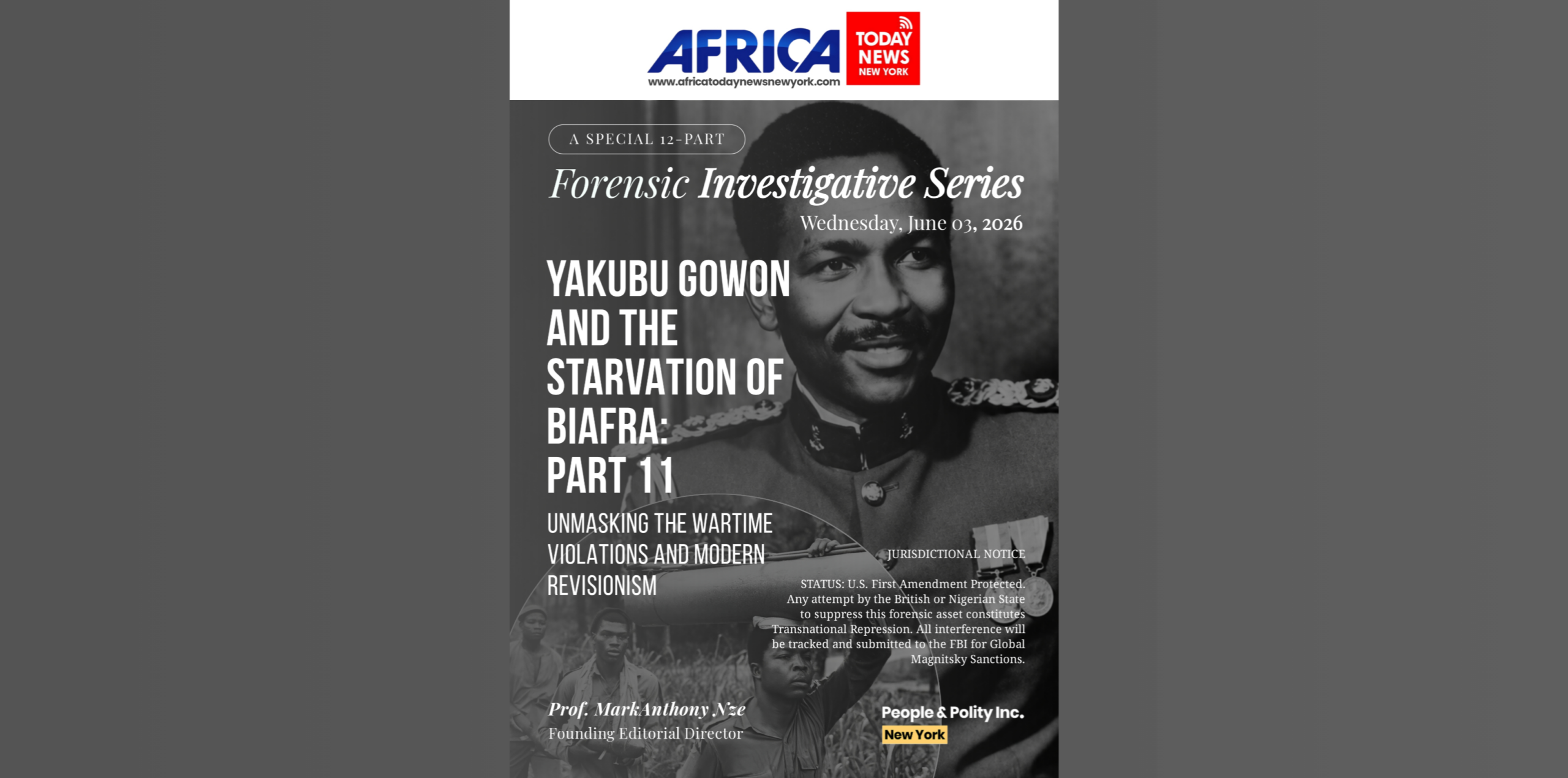
JURISDICTIONAL NOTICE
STATUS: U.S. First Amendment Protected.
Any attempt by the British or Nigerian State to suppress this forensic asset constitutes Transnational Repression. All interference will be tracked and submitted to the FBI for Global Magnitsky Sanctions.
♦♦♦♦♦♦♦♦♦♦♦♦♦♦♦♦♦♦♦♦♦♦♦♦♦♦♦♦♦♦♦♦♦♦♦♦♦♦♦♦♦♦♦♦♦♦
Unmasking the Wartime Violations and Modern Revisionism
The Revisionist Blueprint
How Gowon’s memoir and state-friendly narratives try to convert blockade, starvation, relief obstruction, and post-war punishment into duty, necessity, and national healing.
The Memoir as a Defence Exhibit
Gowon’s late autobiographical account cannot be treated as innocent memory. A memoir by a wartime head of state is not simply recollection. It is a defence exhibit. It selects what to emphasize, what to soften, what to omit, and what to place under the safer language of duty, circumstance, and national survival. The old commander does not return to the page empty-handed. He returns with a brief for himself.
The danger is not that Gowon tells his version. The danger is that age, courtesy, and the costume of elder statesmanship may be mistaken for truth. Time has a way of softening perpetrators who outlive their victims. The child who starved cannot publish a counter-memoir. The mother who buried three children cannot footnote the official record. The clinic that collapsed under malnutrition cannot write a chapter on policy intent. Forensic history must therefore read Gowon’s memoir the way a court reads testimony from an interested party: carefully, coldly, and against the record.
Image Exhibit 1 — Starved girl / kwashiorkor case during the Nigerian-Biafran War
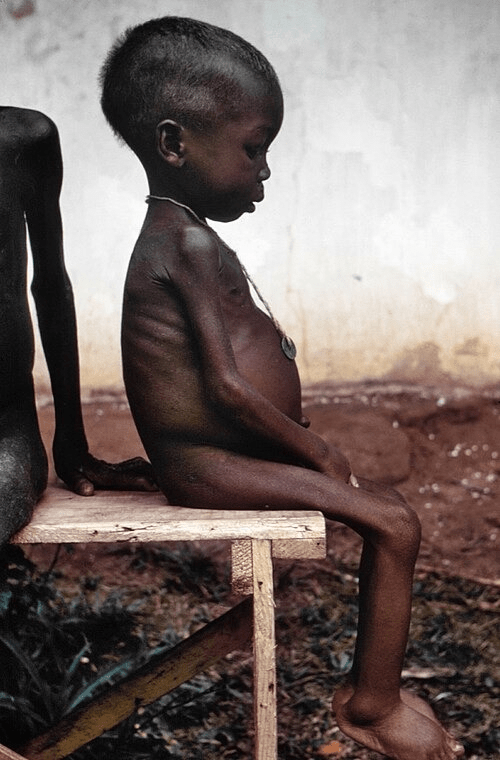
Credit: CDC/Public Health Image Library (PHIL), PHIL ID 6901 / Wikimedia Commons. Public domain. Source page: https://commons.wikimedia.org/wiki/File:Starved_girl.jpg
Duty Is Not an Answer
Duty is one of the most useful words in the vocabulary of power. It sounds disciplined. It suggests burden. It allows a leader to present himself as a servant of necessity rather than an author of choices. But duty is not an answer to starvation. Duty must be interrogated. Duty to whom? By what method? At what civilian cost? With what alternatives rejected? Under what knowledge of harm?
Gowon may speak of preserving Nigeria. The record asks how Nigeria was preserved. Through decrees. Through territorial redesign. Through blockade. Through relief control. Through starvation pressure. Through post-war economic constriction. Through a reconciliation slogan that covered more than it repaired. Duty cannot cleanse the means. A state’s survival is not a moral defence if the state survives by making children carry the price.
Image Exhibit 2 — Height and weight measurements of Biafran refugees, 1968
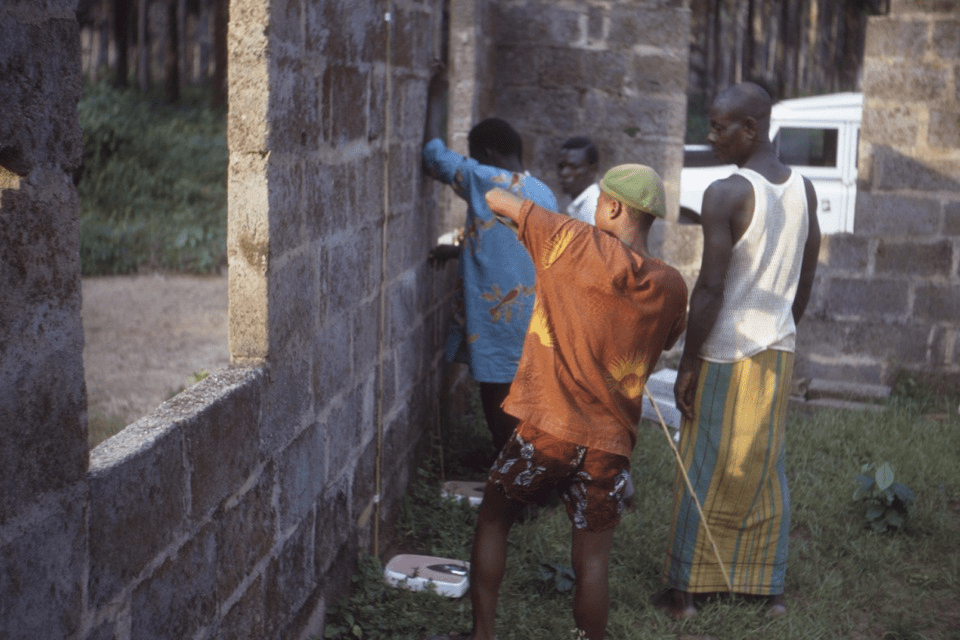
Credit: CDC/Public Health Image Library (PHIL), PHIL ID 7150 / Wikimedia Commons. Public domain. Source page: https://commons.wikimedia.org/wiki/File:1968_8_Nigeria_CDC.png
Revisionism Works by Changing Names
Revisionism rarely begins by denying every fact. That would be too crude. It works by changing names. Blockade becomes containment. Starvation becomes hardship. Relief obstruction becomes security concern. The £20 policy becomes administrative normalization. British support becomes diplomatic realism. UN failure becomes procedural complexity. A war of civilian deprivation becomes an unfortunate but necessary defence of unity.
That renaming is the final violence. It does not kill the body; it attacks the record. It asks the public to accept the state’s vocabulary instead of the victim’s evidence. It turns suffering into context, policy into burden, and brutality into the unavoidable cost of nationhood. Gowon’s memoir must be examined inside that machinery because memoir can become the last stage of the original act: the stage where power attempts to edit the moral file.
Read also: Yakubu Gowon And The Starvation Of Biafra: Part 9
The Starvation Cannot Be Abstracted
The most dangerous revisionist move is abstraction. Once the child disappears, the argument becomes easier for the state. The reader is asked to think about constitutional unity, federal authority, rebellion, postcolonial stability, Cold War pressures, oil, foreign diplomacy, and the burdens of command. All of those matters have historical importance. None of them cancels the child.
The child is the fact that interrupts the statesman’s language. The swollen belly does not become less probative because the president says he acted under pressure. The blocked relief route does not become humane because the memoir mentions unity. The mother without milk does not become a footnote because the old regime now asks for balance. History must keep the body in the room.
Image Exhibit 3 — Kwashiorkor legs / protein-deficiency manifestations, 1968
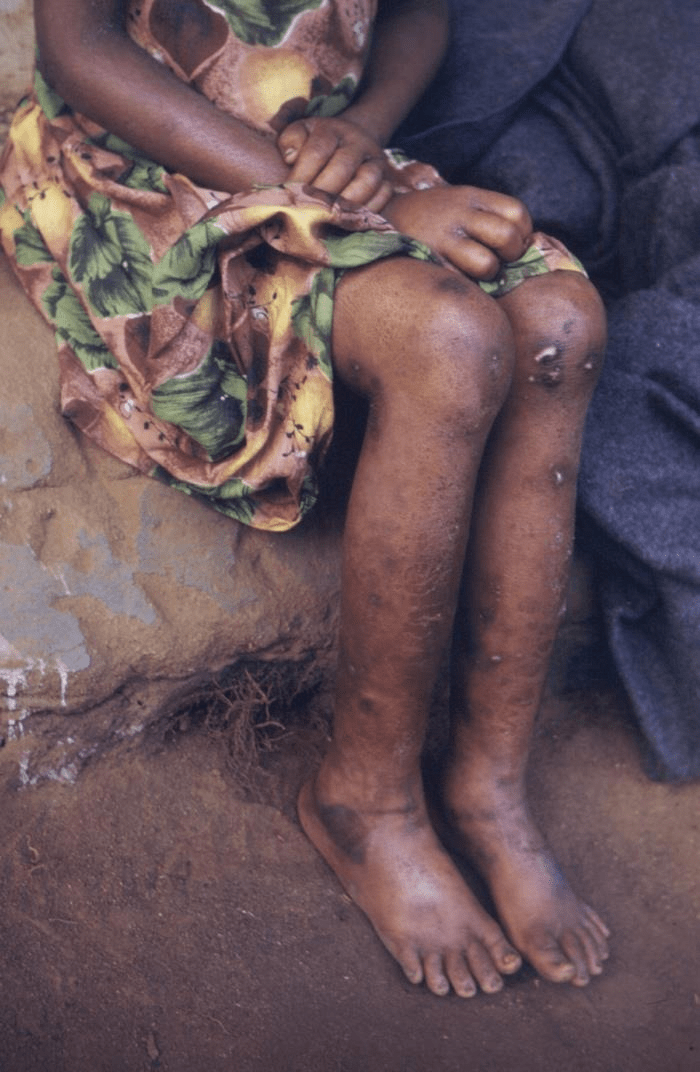
Credit: CDC/Public Health Image Library (PHIL), PHIL ID 7156. Public domain. Source page: https://wwwn.cdc.gov/phil/Details.aspx?pid=7156
Britain and the Shared Revision
British revisionism is usually more elegant than Nigerian revisionism because it hides behind archives, statecraft, and the careful grammar of competing interests. Britain did not have to confess complicity; it only had to preserve ambiguity. It could say Nigeria was a recognized state. It could say secession was dangerous. It could say oil was a legitimate concern. It could say relief mattered. It could say the war was complex. Complexity became the British method of avoiding the simpler charge: London helped sustain the side enforcing the perimeter while the children starved.
Gowon’s modern self-defence and Britain’s archival caution belong to the same post-war ecosystem. One softens the federal method from inside Nigeria’s memory. The other softens external support from inside the language of diplomacy. Together they attempt to convert a starvation record into a difficult historical episode. That conversion must fail.
Read also: Yakubu Gowon And The Starvation Of Biafra: Part 10
The Memoir Meets the Exhibits
A memoir must be forced to stand beside the exhibits. Beside the blockade. Beside the relief restrictions. Beside the Red Cross dilemma. Beside kwashiorkor. Beside British arms and oil. Beside Soviet aircraft. Beside UN failure. Beside the £20 policy. Beside abandoned property. Beside the later legal prohibition on starvation of civilians as a method of combat.
Once placed beside those exhibits, the memoir loses its privilege. It becomes one document among many, and not the cleanest one. It does not get to be the judge of its own evidence. Gowon’s account may explain his mind. It cannot erase the bodies.
Closing Charge
Part 11 proves that modern revisionism is the afterlife of state violence. Gowon’s memoir is not merely a book. It is a late-stage attempt to discipline memory, to make the federal war sound cleaner than the record, and to replace the victims’ evidence with the leader’s vocabulary.
The answer is not rage. The answer is cross-examination. Every claim of duty must be set beside starvation. Every claim of unity beside blocked relief. Every claim of necessity beside the child’s body. Every claim of reconciliation beside the economic settlement. That is where revisionism fails: not in argument, but in the presence of the evidence it cannot survive.
Forensic Charts — Part 11
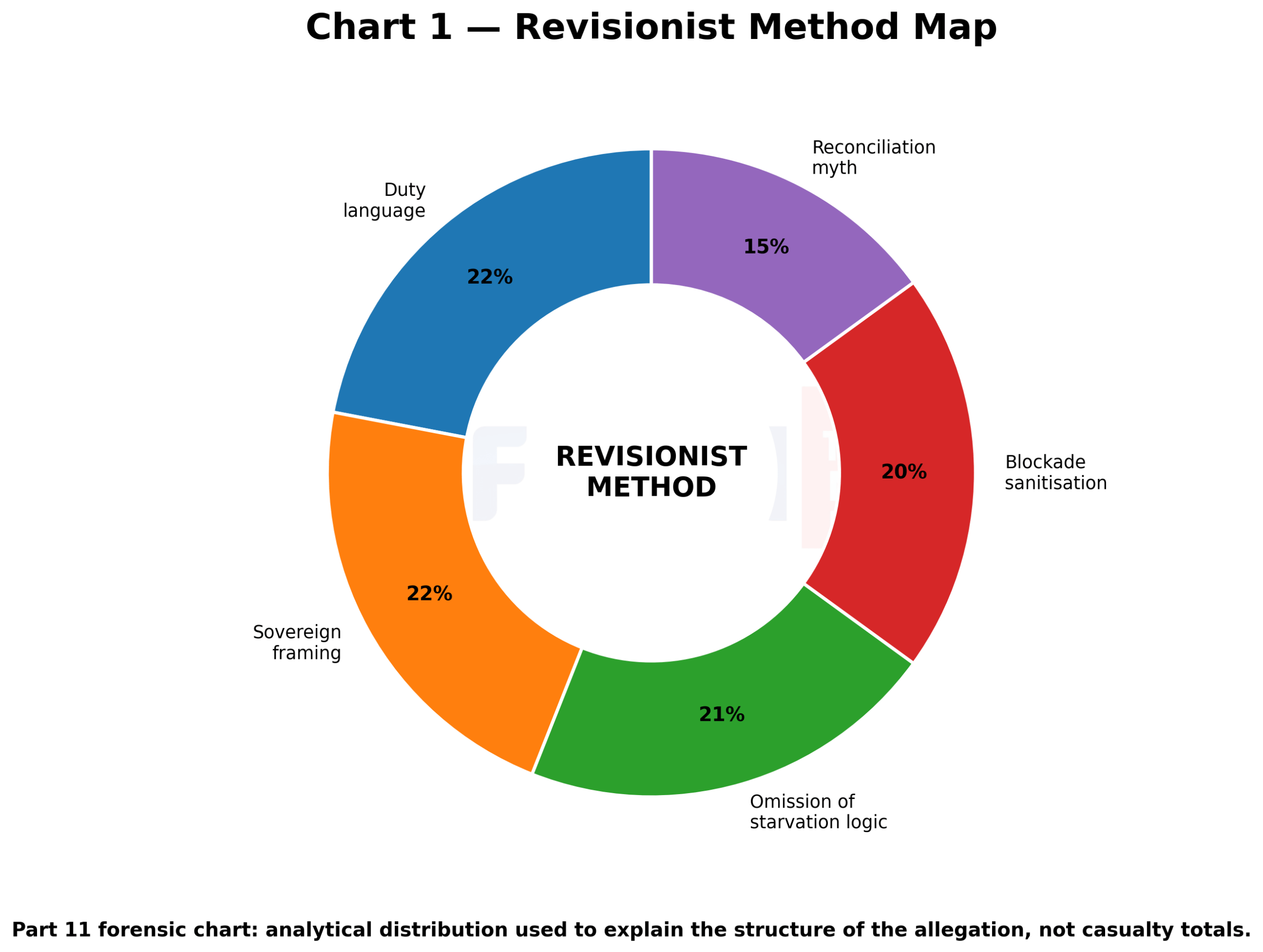
This chart identifies the tools of modern revisionism: duty language, sovereign framing, omission of starvation logic, blockade sanitisation and reconciliation mythology. It shows how memoir and state-friendly narration can move evidence out of sight without directly denying every fact.
Chart 2 — Memoir Claims Tested Against the Record
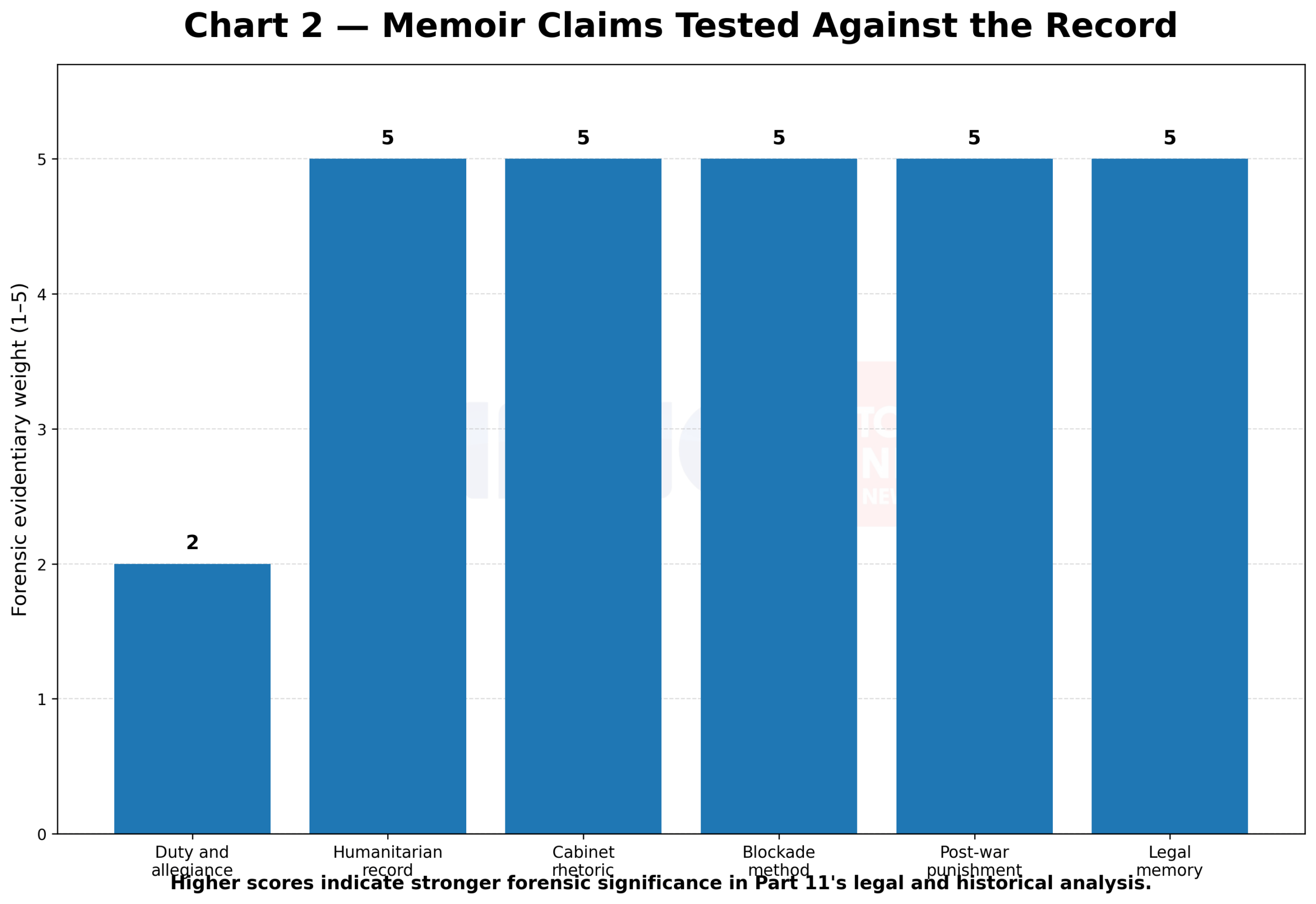
The bar chart weighs Gowon’s later language against the evidentiary record. Humanitarian documentation, cabinet rhetoric, blockade method, post-war punishment and legal memory carry heavier evidentiary weight than the self-exculpatory language of duty and allegiance.
Chart 3 — How Memory Is Laundered
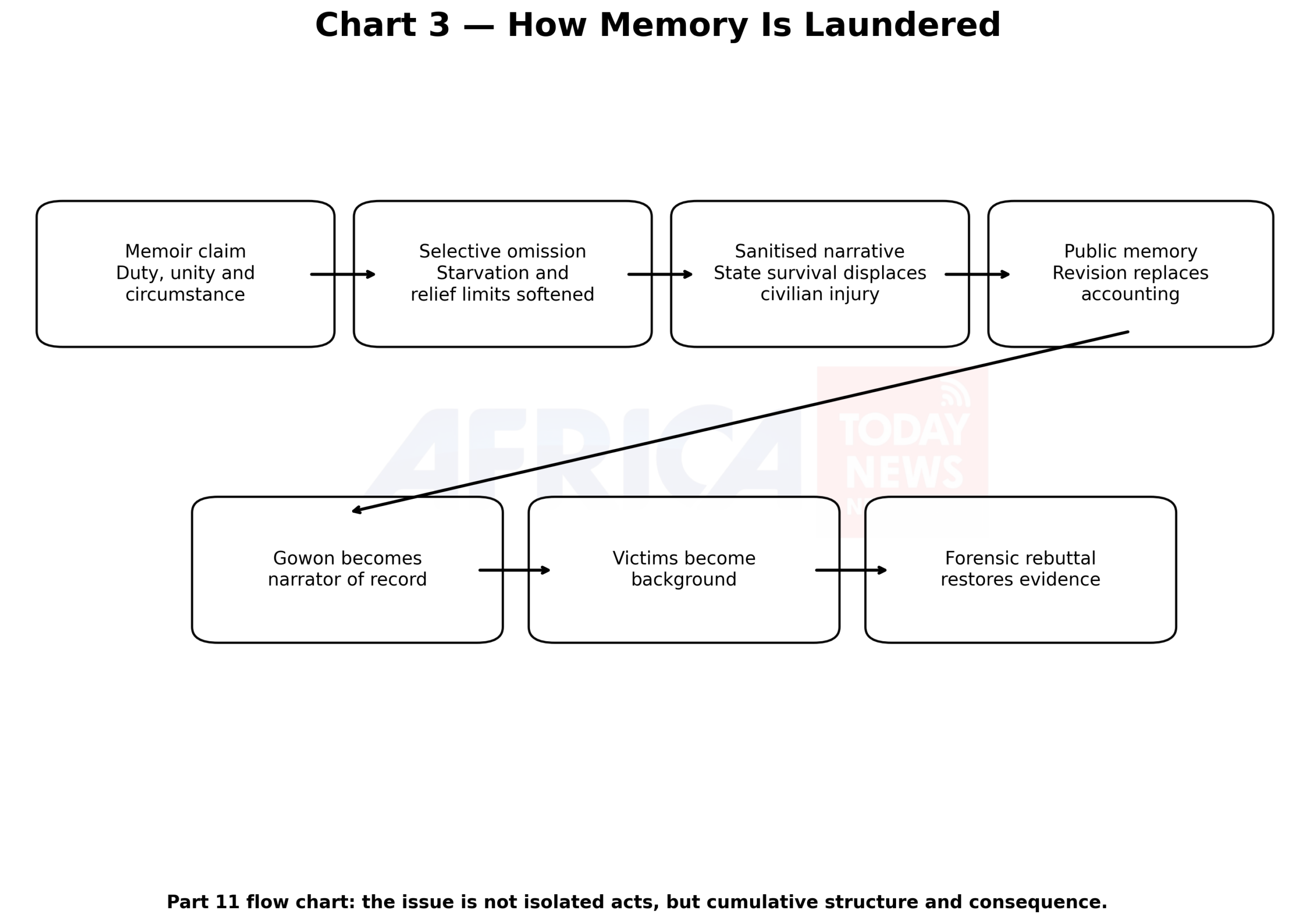
The flow chart traces the method of laundering: claim duty, omit the ugliest evidence, replace civilian injury with state survival, then allow public memory to inherit the cleaned version. The forensic rebuttal restores the evidence Gowon’s revisionism seeks to subordinate.
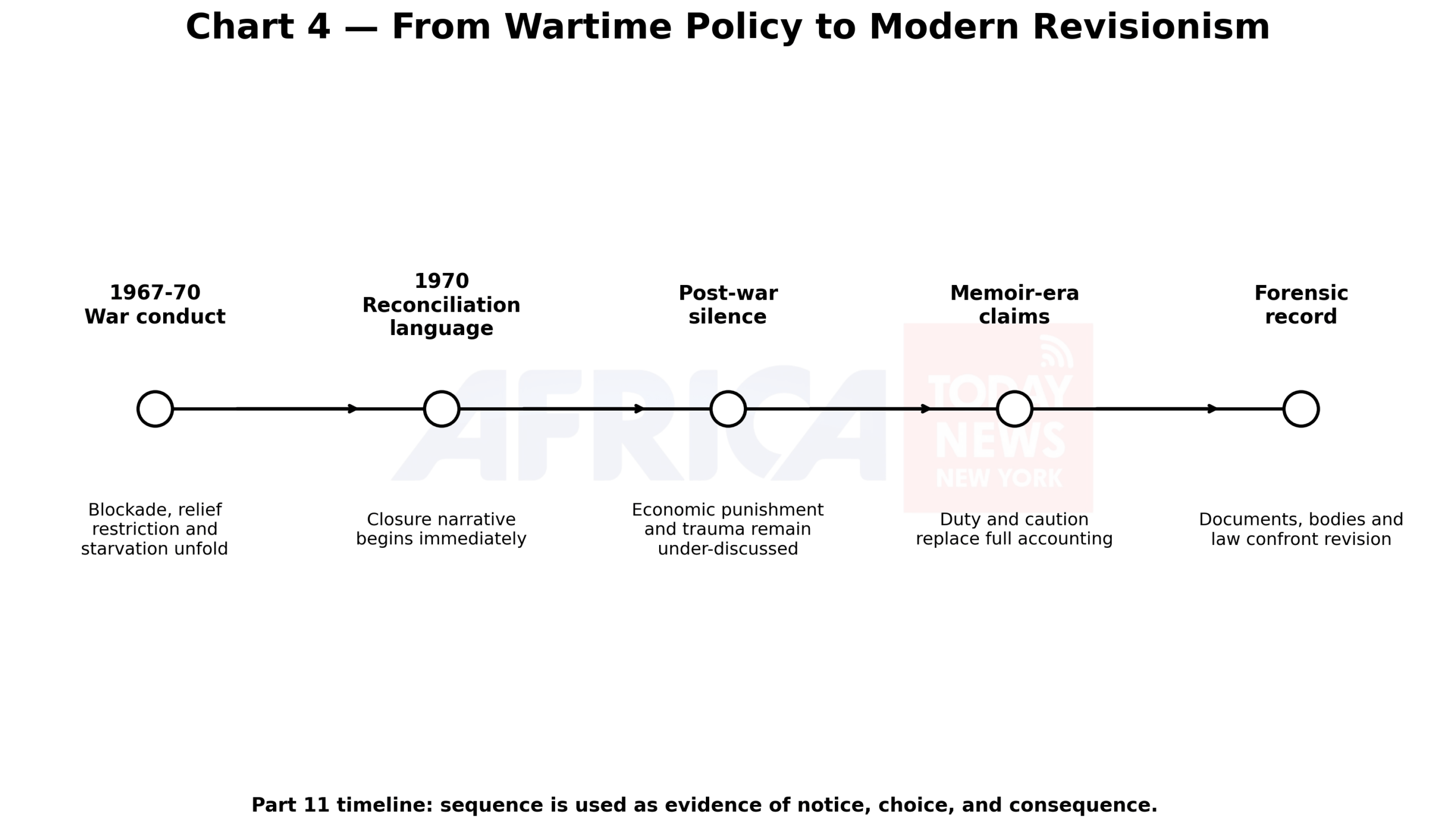
The timeline shows that revisionism is not separate from the original violation. Wartime conduct produced the evidence; reconciliation language softened it; silence protected it; memoir later repackaged it; the forensic record now confronts it.
Historical Sources, Legal Authorities, and Evidentiary Record — APA 7th Edition
Achebe, C. (2012). There was a country: A personal history of Biafra. Penguin Press.
Heerten, L. (2017). The Biafran War and postcolonial humanitarianism: Spectacles of suffering. Cambridge University Press.
O’Sullivan, K. (2014). Humanitarian encounters: Biafra, NGOs and imaginings of the Third World in Britain and Ireland, 1967–70. Journal of Genocide Research, 16(2–3), 299–315.
Stremlau, J. J. (1977). The international politics of the Nigerian Civil War, 1967–1970. Princeton University Press.
Uche, C. (2008). Oil, British interests and the Nigerian Civil War. The Journal of African History, 49(1), 111–135.