
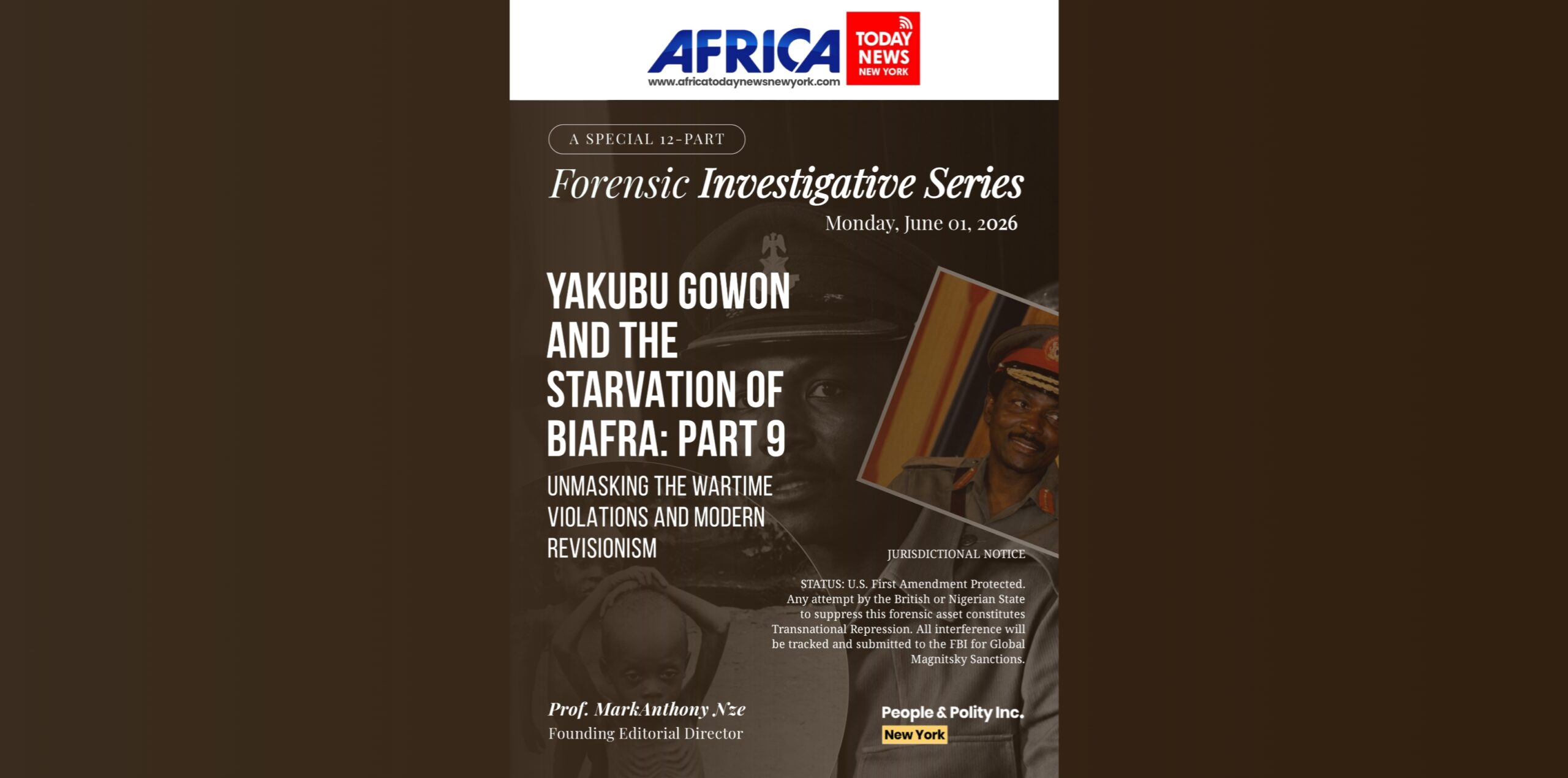
JURISDICTIONAL NOTICE
STATUS: U.S. First Amendment Protected.
Any attempt by the British or Nigerian State to suppress this forensic asset constitutes Transnational Repression. All interference will be tracked and submitted to the FBI for Global Magnitsky Sanctions.
♦♦♦♦♦♦♦♦♦♦♦♦♦♦♦♦♦♦♦♦♦♦♦♦♦♦♦♦♦♦♦♦♦♦♦♦♦♦♦♦♦♦♦♦♦♦
Unmasking the Wartime Violations and Modern Revisionism
A legal account of how blockade, cabinet rhetoric, relief restriction, foreign support, and civilian collapse converged into a policy environment where hunger did not merely accompany the war; it helped prosecute it.
The Failure of the United Nations
How sovereignty, OAU deferral, procedural caution, and institutional restraint allowed starvation to continue while the world had enough knowledge to act.
The United Nations Did Not Lack Notice
The failure of the United Nations during the starvation of Biafra was not a failure of imagination. By 1968 and 1969, the world had seen enough. The pictures were no longer private. The reports were no longer whispers. Missionaries, relief workers, journalists, medical observers, church networks, diplomats, and international campaigners had carried the evidence outward from the enclave. Children with swollen bellies and wasted limbs had already become the international face of a war that Lagos preferred to describe as domestic order. The UN did not need omniscience. It had notice.
The legal and moral problem begins there. Notice changes responsibility. Once an institution knows that civilians are starving behind a blockade, the question is no longer whether the situation is tragic. The question becomes whether procedure will be used to confront the harm or to survive the embarrassment of not confronting it. Biafra exposed the United Nations at its weakest point: a body built in the language of human dignity but still structurally obedient to sovereignty when the killing occurs inside a recognized state.
Image Exhibit 1 — Red Cross refugee relief-camp terrain, Nigeria/Biafra, 1968
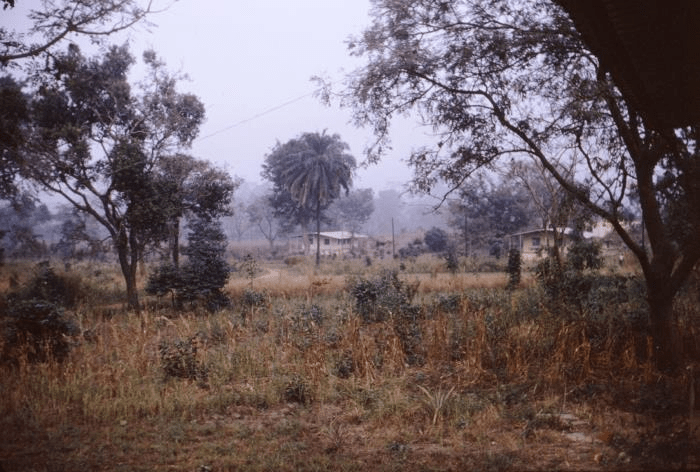
Credit: CDC/Public Health Image Library (PHIL), PHIL ID 7166 / Wikimedia Commons mirror. Public domain. Source page: https://wwwn.cdc.gov/phil/Details.aspx?pid=7166
Sovereignty Became the Door That Stayed Closed
Gowon’s government understood the value of the word “internal.” Once the war could be described as a domestic rebellion, Lagos gained the first advantage. It could argue that the conflict belonged to Nigeria’s sovereign jurisdiction. It could treat foreign criticism as interference. It could force humanitarian access through federal consent. It could place Biafra in the weaker legal position of an unrecognized secessionist entity while claiming for itself the full vocabulary of statehood.
The United Nations accepted too much of that frame. It did not have to endorse Gowon’s blockade to become useful to it. Institutional caution can be useful to perpetrators without becoming formal approval. The Security Council did not turn the famine into the kind of international crisis that matched its civilian scale. The General Assembly did not force the moral issue into the center of the postcolonial order. Member states hid behind regional management, non-interference, and the fear that Biafra might encourage their own secessionist claims. The starving child paid the price for diplomatic anxiety.
Image Exhibit 2 — Refugee-camp hospital exterior, Biafra relief setting, 1968
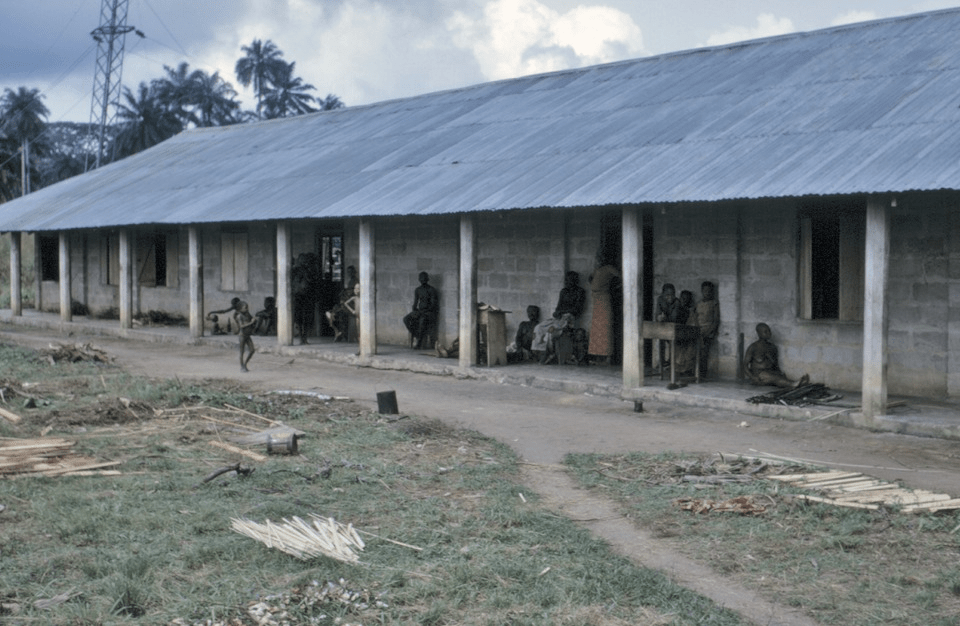
Credit: CDC/Public Health Image Library (PHIL), PHIL ID 7161 / Wikimedia Commons. Public domain. Source page: https://commons.wikimedia.org/wiki/File:Refugee_camp_hospital.png
The OAU Deferral
The Organization of African Unity became the preferred place to park the conscience of the world. African states were understandably hostile to the redrawing of borders after colonialism. Many of them feared that recognition of Biafra would detonate their own internal fractures. That fear was politically real. It was not, however, a lawful reason to abandon civilians to starvation. Territorial integrity is not a burial permit.
By deferring to regional handling and the OAU’s strict attachment to inherited borders, the international system made a dangerous bargain: preserve the map first, examine the bodies later. Gowon’s regime benefited from that arrangement. Britain benefited from it as well. London could support federal Nigeria while pointing to the regional doctrine of territorial integrity. The UN could avoid direct confrontation by treating the crisis as politically sensitive. The result was a humanitarian catastrophe processed through procedure until the procedure itself became part of the injury.
Read also: Yakubu Gowon And The Starvation Of Biafra: Part 8
Procedure as Complicity
Procedure is not neutral when it protects the continuation of harm. A meeting not held, a debate softened, a mandate narrowed, a referral made elsewhere, a resolution not pursued, an investigation not demanded, a corridor not enforced—these are not empty spaces. In a famine, absence becomes material. Children do not wait for diplomatic comfort. Clinics do not heal with procedural caution. Relief flights do not become safer because a council finds the situation complicated.
The United Nations did not command Gowon’s blockade. It did something more bureaucratic and more familiar: it allowed the state committing the pressure to keep the legal advantage of recognition while the trapped civilian population struggled for visibility. That was enough. In a conflict where food, medicine, and access were already controlled, international hesitation strengthened the perimeter. It told Lagos that sovereignty would remain a shield. It told Britain that support for the federal side would not trigger a decisive institutional reckoning. It told Biafran civilians that the world could know and still stand back.
Image Exhibit 3 — Makeshift airport in Calabar used for relief logistics, probably 1968
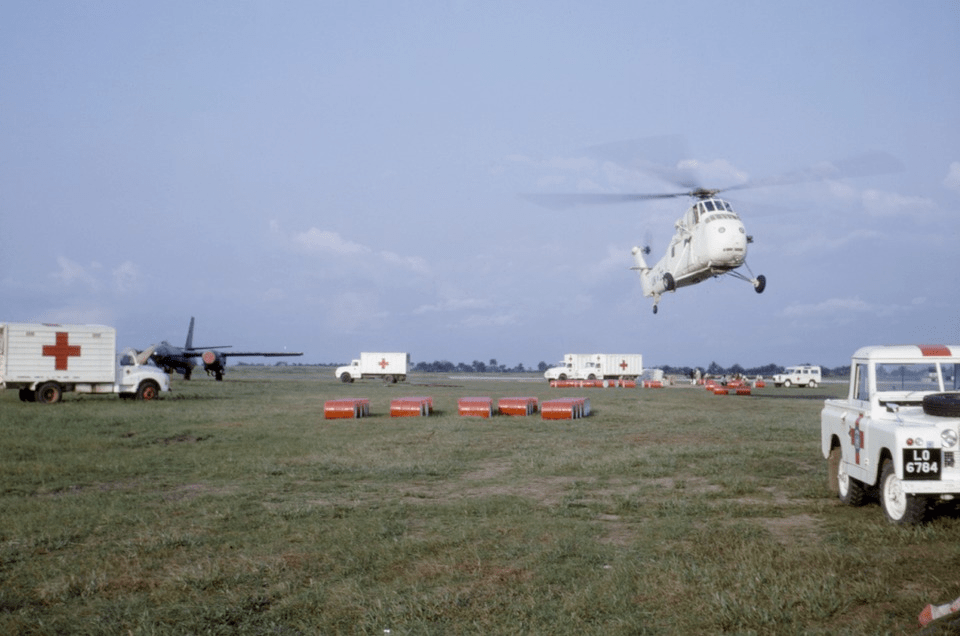
Credit: CDC/Public Health Image Library (PHIL) / Wikimedia Commons. Public domain. Source page: https://commons.wikimedia.org/wiki/File:Makeshift_airport_in_Calabar,_Nigeria,_probably_1968.png
Britain’s Cover Inside the Global System
Britain’s role in Part 9 is not peripheral. Whitehall did not merely watch the UN hesitate; it operated inside the international hesitation. Britain’s preference for federal Nigeria, its arms policy, its oil interests, and its diplomatic posture helped reinforce the very sovereign frame that made UN action harder. The more the conflict was treated as an internal Nigerian matter, the easier it became for London to preserve support while speaking the language of concern.
That is the fraud of polite diplomacy. A government can express sorrow over children starving and still protect the political conditions that allow the starvation system to continue. Britain did not need to oppose every relief appeal openly. It only needed to keep the federal legitimacy intact, keep the crisis classified as Nigerian, and resist any international move that might convert humanitarian outrage into coercive pressure on Lagos. The killing work was done by blockade. The shielding work was done by doctrine.
Read also: Yakubu Gowon And The Starvation Of Biafra: Part 7
Closing Charge
Part 9 proves that the United Nations failed Biafra not because it lacked the words of humanity, but because it lacked the courage to make those words operational against a recognized state. Gowon’s regime used sovereignty as a barricade. Britain reinforced that barricade from outside. The OAU guarded the sanctity of inherited borders. The UN allowed procedure to stand where protection should have stood.
No serious institution can claim innocence by saying it did not starve the child itself. The higher test is what it did after it knew the child was being starved. On that test, the record is brutal. Biafra was not only abandoned by food routes. It was abandoned by the international order that watched the routes close and still called its caution diplomacy.
Image Exhibit 4 — Second refugee-camp terrain view, Nigeria/Biafra relief context, 1968
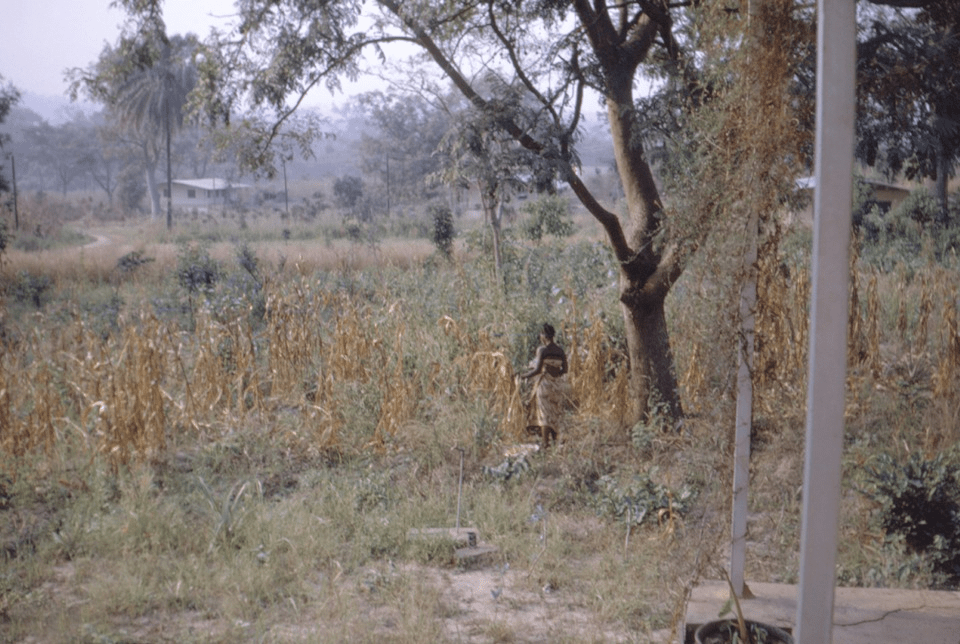
Credit: CDC/Public Health Image Library (PHIL) / Wikimedia Commons. Public domain. Source page: https://commons.wikimedia.org/wiki/File:1968_refugee_camp_2.png
Forensic Charts — Part 9
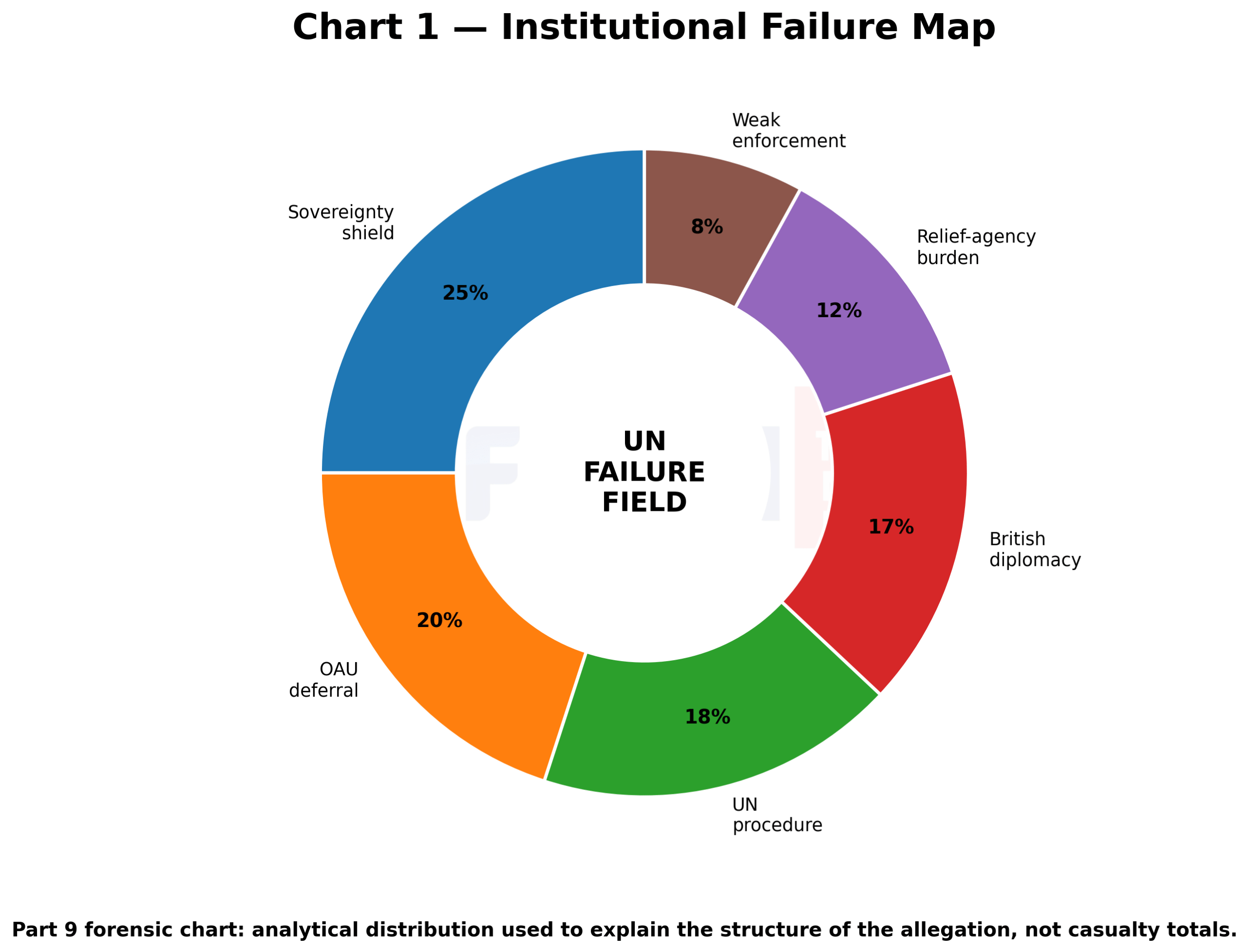
This chart maps the institutional pressure field around Biafra: sovereignty, OAU deferral, UN procedure, British diplomacy, relief-agency burden, and weak enforcement. It shows that failure was not one omission; it was a system of restraint that protected Gowon’s federal advantage while civilians remained trapped.
Chart 2 — Visibility Versus Protective Action
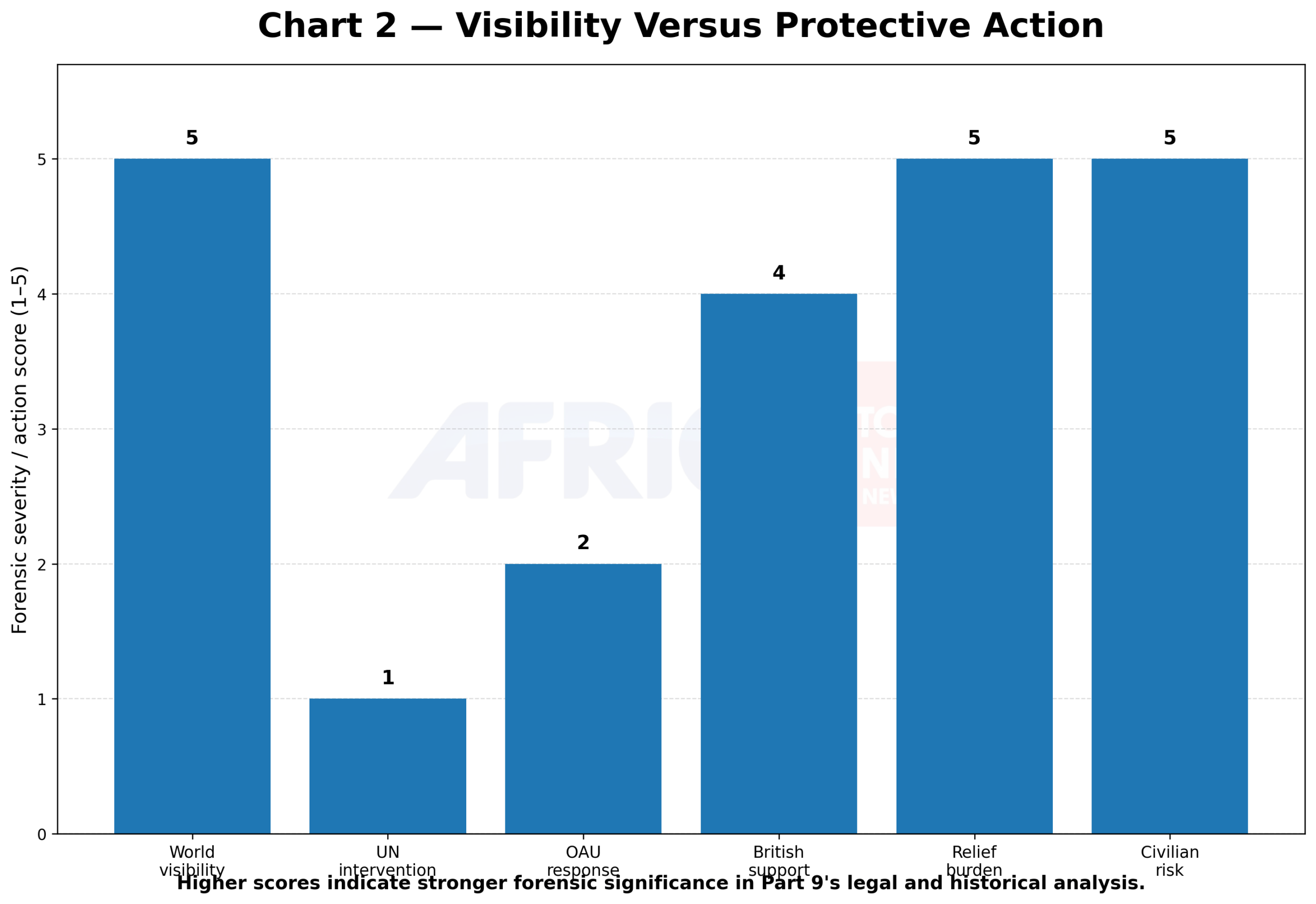
The bar chart contrasts what the world could see with what institutions actually did. Visibility and civilian risk are at maximum because famine had become public; UN intervention and OAU response remain low because institutional action never matched the scale of notice.
Chart 3 — Notice Became Procedure Instead of Protection
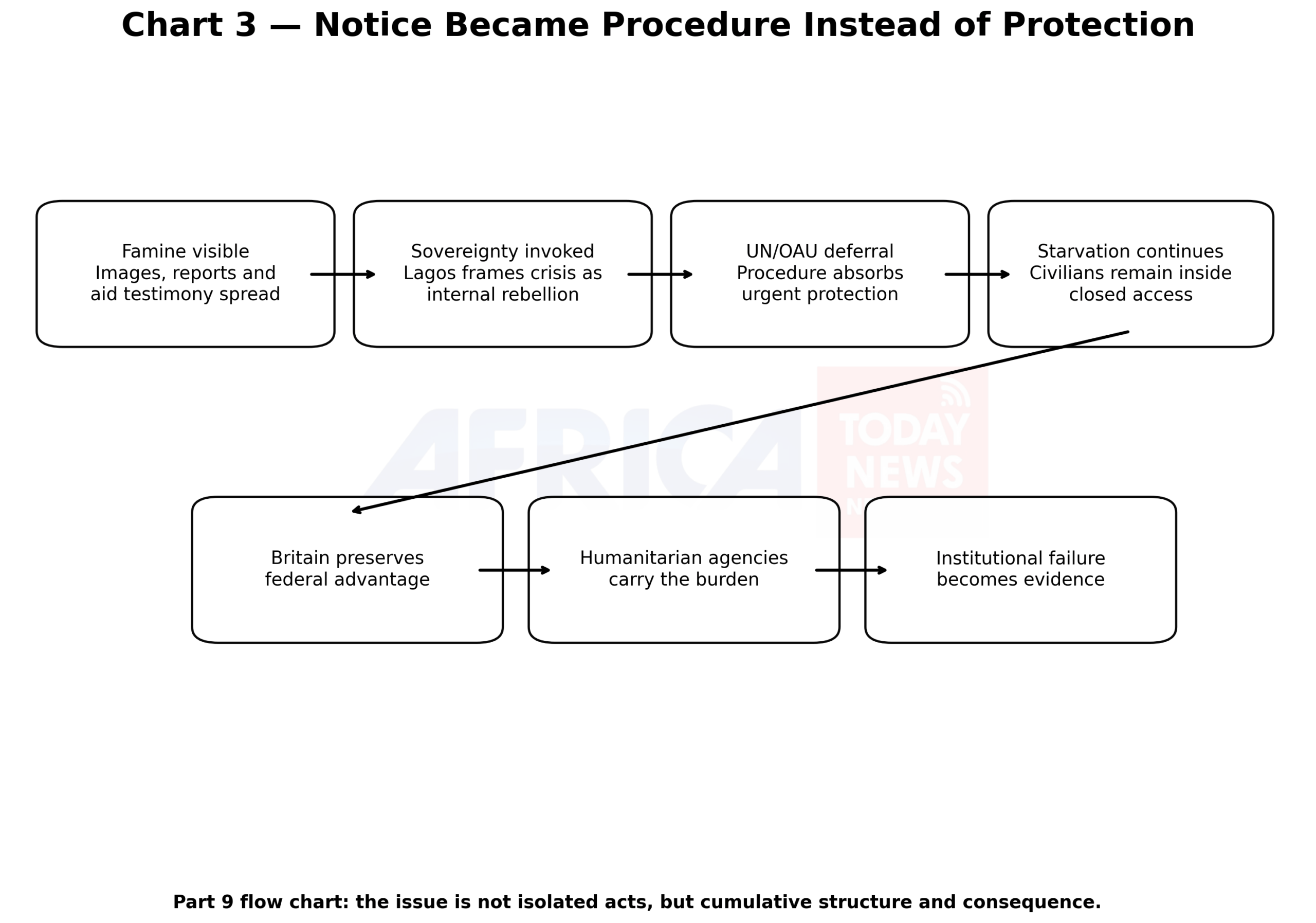
The flow chart shows how famine moved from known harm into procedural caution. Reports, images and relief testimony created notice; sovereignty and internal-war framing absorbed that notice; institutional deferral left humanitarian agencies carrying the burden.
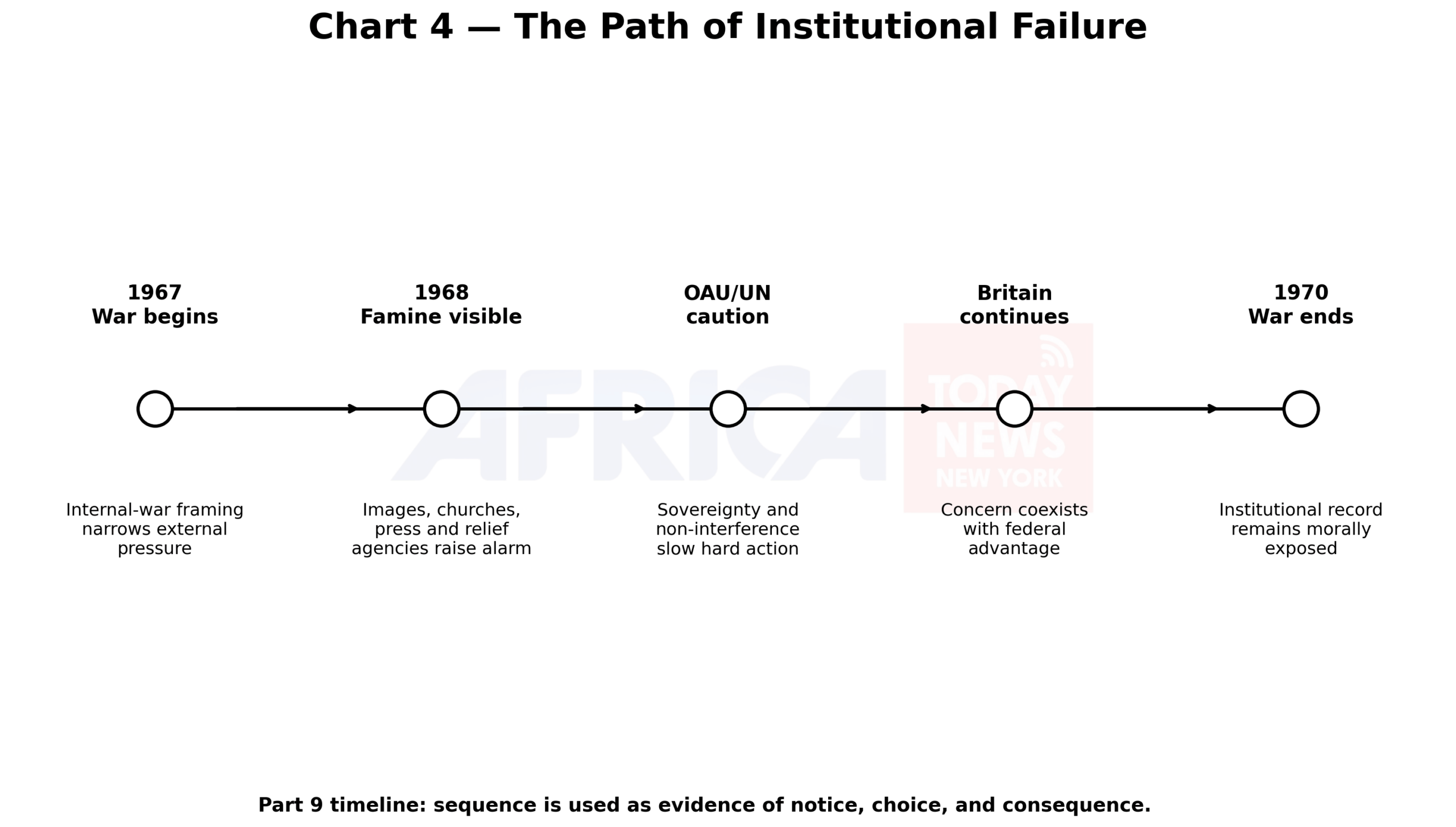
The timeline places the failure in sequence: war, visible famine, institutional caution, British continuity, and war’s end without serious accountability. The point is forensic: sequence proves notice, and notice changes responsibility.
Historical Sources, Legal Authorities, and Evidentiary Record — APA 7th Edition
Britannica. (2026). Biafra. Encyclopaedia Britannica.
Desgrandchamps, M. L. (2020). Biafra, humanitarian intervention and history. Journal of Humanitarian Affairs, 2(2), 66–75.
Heerten, L. (2017). The Biafran War and postcolonial humanitarianism: Spectacles of suffering. Cambridge University Press.
Ignatus, O. O. (2020). In defense of vital interests: United Nations and Anglo-American responses to the Nigerian Civil War. Global Politics Review, 6(1–2), 77–95.
O’Sullivan, K. (2016). NGO humanitarianism and the Nigerian Civil War: The global networks of aid and activism. University of Galway.
Stremlau, J. J. (1977). The international politics of the Nigerian Civil War, 1967–1970. Princeton University Press.