
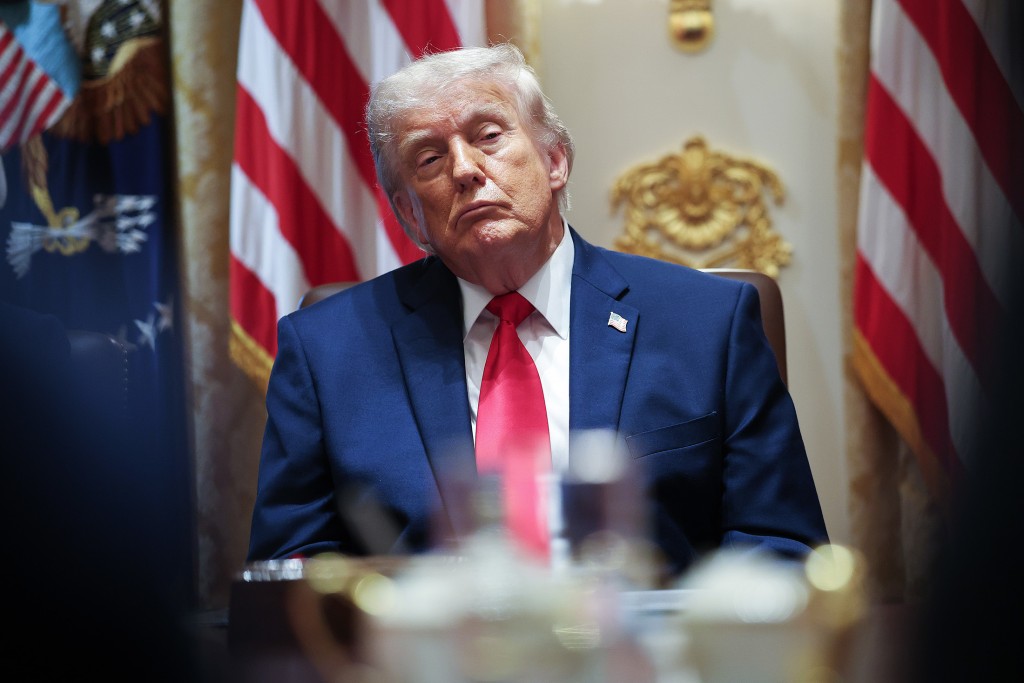
Donald Trump’s Justice Department killed a controversial $1.8 billion compensation fund Tuesday after his own Republican allies revolted, but the administration preserved the element of the underlying legal settlement that arguably mattered most to the president personally: a permanent bar against future federal audits of his and his family’s tax records.
The audit protection survives. The fund does not.
Acting Attorney General Todd Blanche delivered the retreat before a House appropriations committee with the kind of bluntness reserved for announcements one prefers not to dwell on. “We are not moving forward with the fund.
Period.” The declaration, offered two weeks after the Justice Department had unveiled the arrangement with evident enthusiasm, closed one of the more unusual chapters in recent American executive history — a sitting president filing a $10 billion lawsuit against his own government, settling it on terms that directed federal money into a compensation pool for grievances he had personally defined, and then being forced to abandon it by the legislative branch his own party controls.
Read also: Iran, US Agree To Extend Ceasefire, Awaiting Trump’s Nod
The fund had been structured as a settlement mechanism for Trump’s lawsuit against the Internal Revenue Service, which he filed alleging the mishandling of his tax records under the Biden administration. It would have paid out to those Trump deemed victims of government “lawfare” — a term his allies use broadly enough to encompass anyone who faced federal scrutiny during the years he spent as a defendant in multiple criminal proceedings. The money would have flowed directly from the Justice Department’s judgment fund, a financing mechanism that bypasses congressional approval and the appropriations process entirely. That detail alone was enough to put Republican appropriators on edge before the fund’s other problems became apparent.
The problem that finished it politically was simpler and more visceral. Blanche, in testimony last month, declined to commit to excluding January 6 rioters — individuals who assaulted Capitol Police officers during the 2021 attack on Congress — from the pool of potential recipients. For Republicans who had spent years carefully calibrating their position on that day, the prospect of a Justice Department fund cutting checks to convicted participants in the Capitol breach was not a defensible vote. Several made clear the $72 billion immigration enforcement bill — a White House legislative priority — would not clear the Senate if the fund remained intact.
The White House absorbed that math and moved fast. Officials spent most of Monday on calls with lawmakers, according to two sources familiar with the effort, assuring them that no disbursements would occur. The damage control set the stage for Blanche’s declaration Tuesday, which a source familiar with White House deliberations said the acting attorney general was under considerable pressure to deliver — his own position, the source indicated, turning partly on his ability to satisfy the Republicans demanding the fund’s termination.
Read also: Paxton Ends Cornyn’s Senate Run With Trump’s Help In Texas
A federal judge had already paused disbursements last week while legal challenges to the fund’s constitutionality proceed, meaning Tuesday’s announcement codified, for political purposes, what a court had already imposed as a temporary practical reality.
Trump himself emerged from public silence on the matter only after the announcement was made, posting on Tuesday afternoon a link to a Substack piece defending the fund’s original rationale. The post praised the administration for compensating citizens it argued had been abused by federal power and dismissed critics as politically motivated. Trump offered no comment on his administration’s decision to abandon it.
Senate Majority Leader John Thune, speaking after a Republican caucus lunch, said he had spoken with Blanche and expected the hearing testimony would resolve his members’ concerns. Thune was also candid about what he needs the immigration bill to be: narrowly confined to enforcement operations, stripped of the kind of additions that had been accumulating around it, including a $1 billion provision to construct a large ballroom facility on White House grounds — an item that, under Senate budget reconciliation rules, would have forced the bill past the procedural threshold requiring a simple majority vote.
Democratic lawmakers at Tuesday’s hearing were unsatisfied with Blanche’s verbal commitment and pushed him to put the abandonment in writing. He declined. That refusal left open, at least technically, the question of permanence — a distinction Senate Democrats moved to exploit, with Minority Leader Chuck Schumer announcing plans to bring legislation preventing the creation of any similar fund, ensuring the political argument over the concept outlasts the fund itself.
What will also outlast it is the provision that drew the least scrutiny during the weeks of controversy over the money: the clause in Trump’s IRS settlement shielding him and his family from future federal tax audits. That protection, Blanche confirmed Tuesday, remains fully operative. The $1.8 billion is gone. The audit barrier is not. For a president whose tax records have been a source of litigation, congressional subpoenas, and public dispute since 2016, the arithmetic of what was surrendered and what was kept may be less complicated than the week’s political drama suggested.