
Lagos received 271 Nigerian nationals off a single flight Tuesday, the latest wave in a repatriation effort that has now pulled 632 people out of South Africa as anti-migrant pressure builds across the country.
The flight landed the same day South African police say they arrested more than 900 people during nationwide demonstrations targeting undocumented foreigners — a coincidence of timing that captures how deeply the country’s immigration standoff has begun reshaping lives on both sides of the continent.
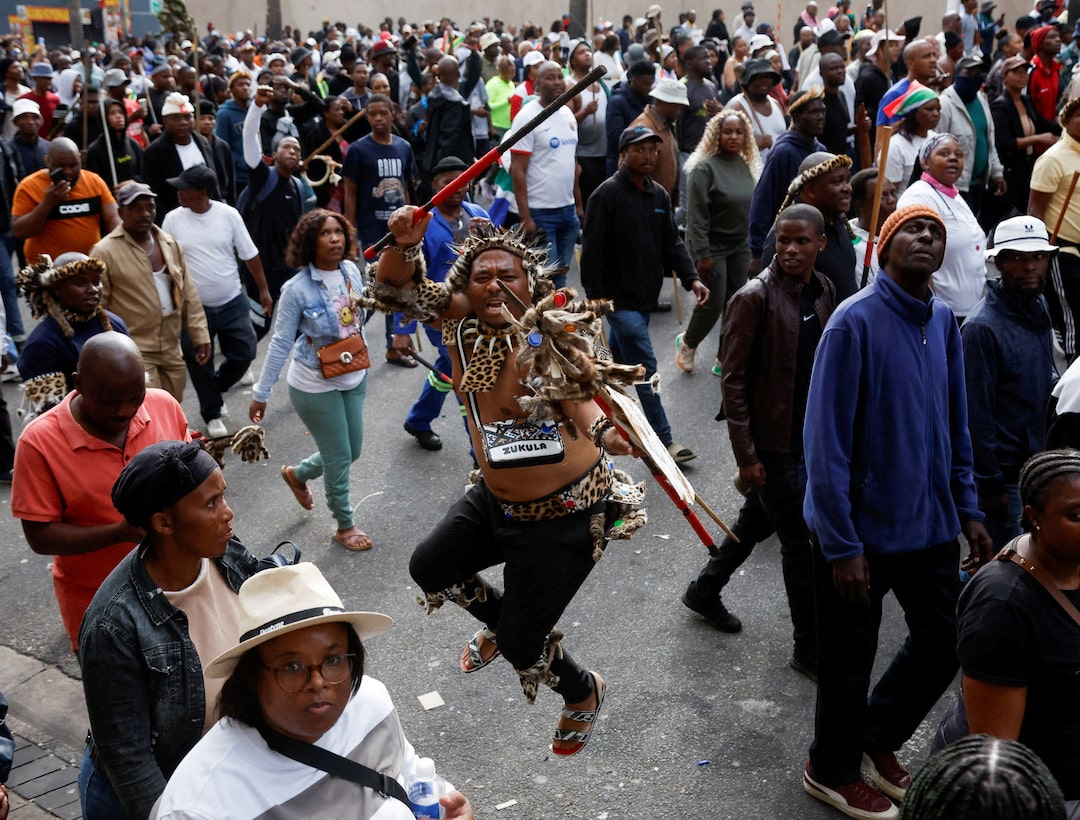
Deputy national police commissioner Tebello Mosikili said 120 marches unfolded Tuesday, with 108 passing without incident and a dozen requiring intervention after looting and violence broke out. Reinforcements moved into five of South Africa’s nine provinces overnight, and soldiers were deployed to Johannesburg’s Hillbrow district to back up police responding to isolated unrest.
But the arrest tally tells only part of the story. At the Beitbridge border crossing into Zimbabwe, bus traffic has surged in recent days as migrants head north. In Durban, a temporary repatriation center has emptied out as thousands of Malawian nationals opted to go home rather than wait out the pressure. Nigerian officials say more evacuation flights are expected in the coming days, with over a thousand Nigerians having already registered for voluntary return.
Read also: South Africa Defies US Demands On Iran, Israel & Race Laws
For some, the decision to leave had nothing voluntary about it.
Emmanuella Akagbosun ran a shop with her sister in South Africa for eight years before it was ransacked during the protests, its stock looted. She fled to Lagos convinced that staying meant risking her life. “We are not safe, so we had to leave,” she said after arriving back in Nigeria. Fintan Opara, repatriated after 18 years in the country, described a similar shift — most Nigerians, he said, no longer feel welcome in South Africa at all.
Tuesday’s demonstrations were built around a deadline. A coalition of minor political parties and vigilante citizen groups had informally set June 30 as the date by which undocumented foreigners were expected to leave the country, and the marches were staged to enforce that ultimatum. Groups including Operation Dudula, March and March, and Progressive Forces have led the campaign, framing migrants as the source of South Africa’s unemployment, crime and strained public services.
Protest organizer Ngizwe Mchunu pointed to the drug trade and to immigrant-run informal shops as evidence the country had lost control of its borders, arguing those businesses belonged in South African hands. He told reporters the government had ignored the issue since the end of apartheid and needed to act. “It is time for our government to put South Africa first,” he said.
Read also: Exposing Western Grip On Africa’s Neo-Colonialism
President Cyril Ramaphosa has pushed back directly against that narrative, rejecting the claim that foreign nationals are responsible for the country’s economic strain. He met Monday night with protest leaders and urged them toward peaceful demonstrations ahead of Tuesday’s marches.
Amnesty International South Africa went further, arguing the entire premise of the protests misdiagnoses the problem. Executive director Shenilla Mohamed said migrants, refugees and asylum seekers are being scapegoated for failures rooted in apartheid’s legacy, entrenched inequality and a dysfunctional asylum system — and warned that misinformation about foreigners was fueling the very violence now driving people out of the country.
That violence has been building for months. Homes have been emptied, businesses stripped bare, and property destroyed in attacks that have drawn condemnation from governments and rights groups well beyond South Africa’s borders. Tuesday’s marches were meant to be the culmination of that pressure campaign — a final, organized push timed to a deadline of the protesters’ own making.
What the numbers show is a country working through two competing processes at once: law enforcement making mass arrests to contain unrest, and a parallel, quieter exodus of people who decided they weren’t willing to find out what came next. Akagbosun didn’t wait for an official deadline. She left when her shop was emptied, and she has no plans to return.