
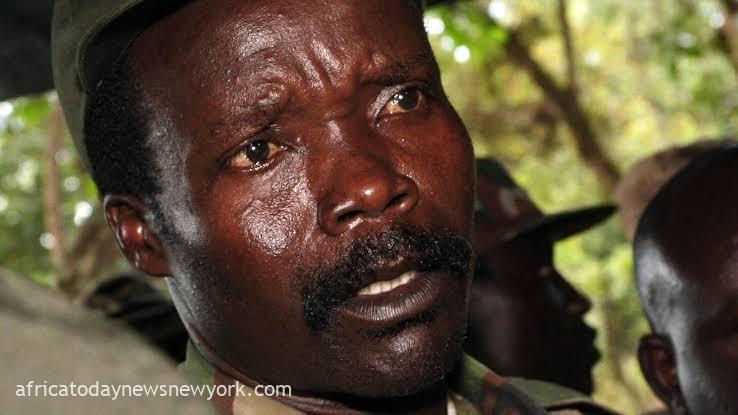
The International Criminal Court has opened proceedings against Joseph Kony, the fugitive leader of the Lord’s Resistance Army (LRA), nearly two decades after first issuing an arrest warrant for him. Kony, accused of atrocities that devastated northern Uganda and spread across central Africa, remains at large.
Deputy prosecutor Mame Mandiaye Niang, addressing a panel of three judges in The Hague, said the LRA’s campaign of violence “tore apart the social and cultural fabric of Northern Uganda,” leaving victims “scarred in their body and spirit.” The militia, which emerged in the late 1980s, became infamous for abducting children to fight as soldiers, mutilating civilians, and enslaving women.
To underscore the charges, prosecutors showed graphic video evidence, including police footage from Uganda depicting a body pulled from the rubble of a burned-out home. Survivors and rights groups say such images, though harrowing, capture the reality of a movement that terrorized communities for decades before retreating into the borderlands of Congo, Central African Republic, and South Sudan.
The current hearing is not a trial but a “confirmation of charges” session, where judges will decide whether the case should advance further. Kony is being represented in absentia by a court-appointed lawyer, Peter Haynes, who argued that the proceedings undermine the defendant’s fair-trial rights. “The empty chair impacted the preparation of the defense,” Haynes told the judges, pointing to the vacant seat that symbolized the rebel leader’s continued freedom.
Read Also: Scientists Warn Of Risks In Polar Geoengineering Plans
The case is being closely watched, not only in Uganda but also in international legal circles. Experts say the move could set precedent for pursuing other figures unlikely to face immediate arrest—among them Russian President Vladimir Putin and Israeli Prime Minister Benjamin Netanyahu, both under ICC warrants. “Everything that happens at the ICC is precedent for the next case,” said Michael Scharf, a professor of international law at Case Western Reserve University.
Kony became a household name in 2012 when a viral video thrust his crimes into the global spotlight, but despite U.S. military efforts and a $5 million bounty, he has never been captured.
In Uganda, survivors remain hopeful. “He did many things bad,” said Odong Kajumba, abducted by the LRA in 1996. “If they can arrest Kony, I am very happy.”