
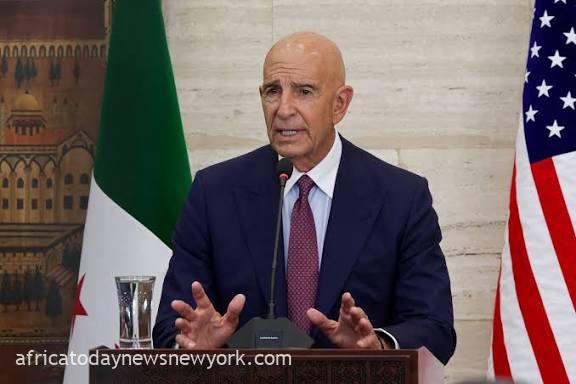
Israel and Syria appear to be edging closer to a “de-escalation” agreement that could mark a rare moment of cooperation between the long-time rivals. U.S. Special Envoy for Syria Tom Barrack confirmed on Tuesday that discussions are under way, describing the talks as being conducted “in good faith.”
The proposed agreement would reportedly see Israel halt its ongoing military strikes against Syrian targets. In exchange, Damascus would pledge not to move heavy machinery or military equipment near the border. Barrack noted that while negotiators had aimed to finalize the deal this week, progress was slowed by the observance of Rosh Hashanah, the Jewish New Year.
Speaking in New York ahead of the United Nations General Assembly (UNGA), Syrian President Ahmed al-Sharaa signaled support for the talks. Al-Sharaa, whose forces overthrew former leader Bashar al-Assad late last year, stressed that Syria did not seek confrontation. “We are scared of Israel, not the other way around,” he said, warning of risks if negotiations were to stall.
The president highlighted the wider regional stakes, warning that instability in Syria could ripple across the Middle East. “Jordan is under pressure, and any talk of partitioning Syria will hurt Iraq, will hurt Türkiye,” he said. Al-Sharaa is set to become the first Syrian leader in six decades to address the UNGA, underlining the significance of the moment.
Israel and Syria have remained adversaries since the 1967 Arab-Israeli war, when Israel seized the Golan Heights from Syria. A 1974 ceasefire provided only a fragile framework. Since Assad’s fall, Israel has intensified military action, with Damascus claiming that more than 1,000 strikes and 400 incursions have taken place in the past year alone.
Read Also: Ghana Mourns Bahubali: Boxer Ernest Akushey Dies After Fight
While Israel maintains its strikes are aimed at preventing terrorism and protecting vulnerable minorities, critics argue the campaigns are designed to fragment Syria and prevent its recovery.
Alongside the negotiations, al-Sharaa renewed calls for Washington to lift sanctions, even holding talks with U.S. Secretary of State Marco Rubio. Meanwhile, Israel has lobbied American lawmakers to maintain pressure on Damascus.
Despite the uncertainty, the possibility of a de-escalation pact offers a rare glimmer of hope in one of the region’s most entrenched conflicts.