
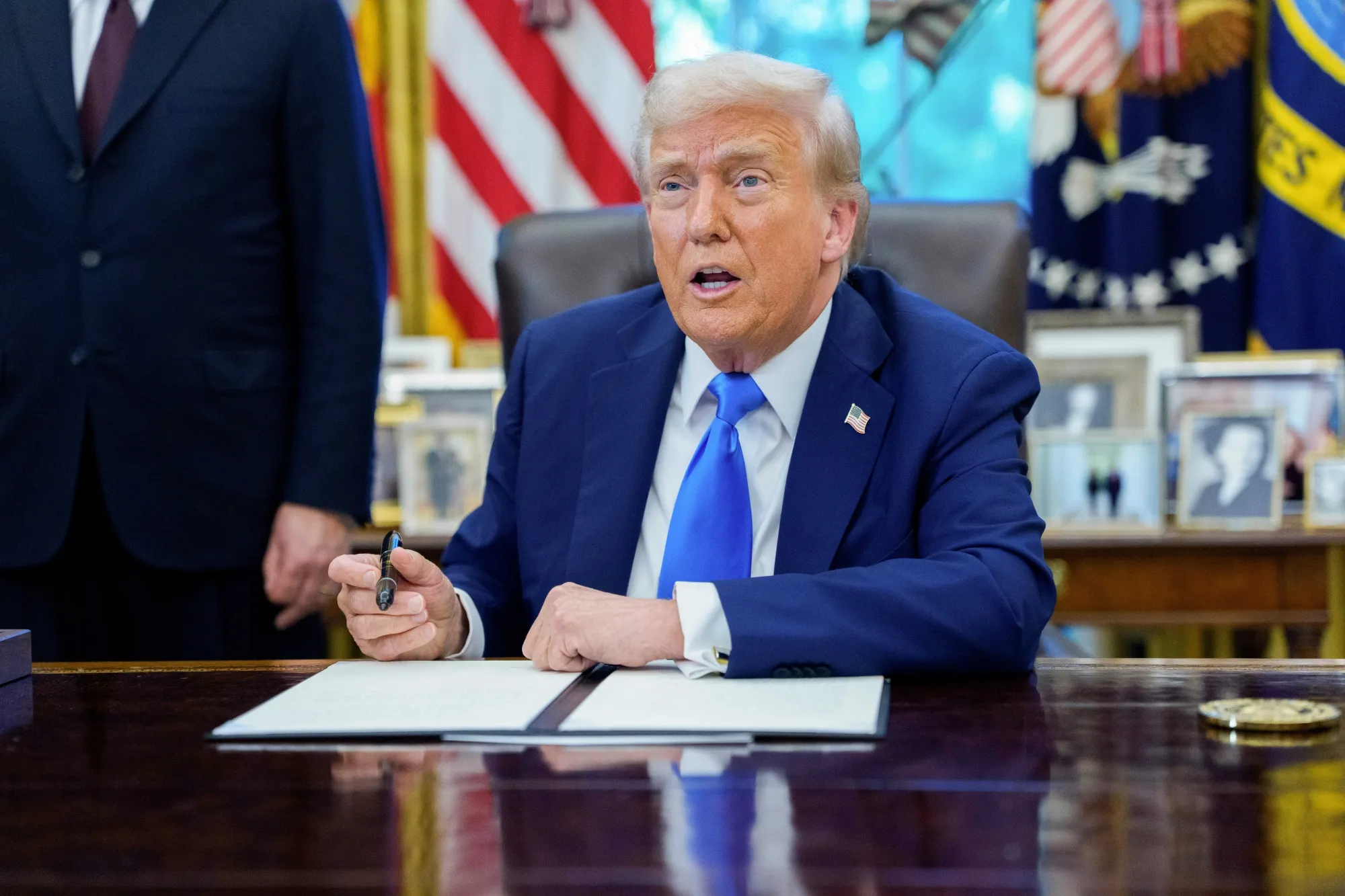
A broad alliance of labour unions, business groups and educators has gone to court to challenge President Donald Trump’s attempt to slap a $100,000 annual charge on companies seeking H-1B visas for foreign professionals.
The complaint, filed Friday in federal court in San Francisco, says Trump’s recent proclamation “upends three decades of law” by forcing employers to pay what the plaintiffs call an unlawful immigration tax. The case was brought by the United Auto Workers, the American Association of University Professors and several other groups, with legal support from immigration advocates.
Under Trump’s order, issued last month, no new H-1B holder may enter the United States unless the sponsoring company first pays a $100,000 fee per visa. The administration says the measure will keep jobs in American hands and protect national security. Existing visa holders and applications filed before September 21 are not affected.
Read also: Trump Demands Probe Into UN Escalator, Teleprompter Mishaps
Critics say the order weaponises executive power, replacing a merit-based system with one that rewards deep pockets. Employers already pay between $2,000 and $5,000 in H-1B processing fees, depending on company size and other criteria.
The lawsuit argues that the president cannot rewrite immigration law by decree or use visa policy to generate revenue — powers reserved for Congress. It also accuses the Departments of Homeland Security and State of skirting legal procedures by enforcing the policy without public consultation or a cost-benefit analysis.
The H-1B programme, which issues 85,000 visas annually, has long supplied the U.S. tech and research sectors with specialised talent. The plaintiffs warn that the new fee would push smaller firms out of competition and drive innovation overseas.
Government data show India received 71 percent of all H-1B approvals last year, while China followed with about 12 percent — a measure of how global the stakes remain in America’s talent wars.