
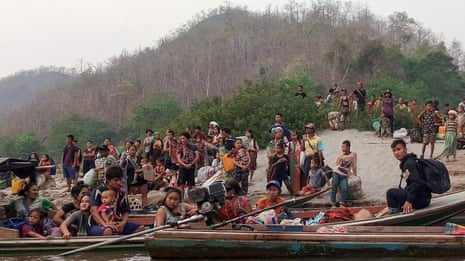
The International Organization for Migration and the UN refugee agency said Thursday that more than 500 people are feared dead after two boats carrying Rohingya refugees from Myanmar disappeared in rough seas over the past three weeks.
One boat, carrying an estimated 250 people, lost contact with the outside world shortly after leaving Myanmar’s western Rakhine State in late June, according to a joint statement from the two agencies. A second boat, carrying roughly 280 people, is believed to have sunk off Myanmar’s Ayeyarwady coast on July 8. Neither the incidents nor the casualty figures have been officially confirmed, the agencies said, though they described themselves as “gravely concerned by the potentially devastating loss of life.”
Acting Police Brig. Gen. Soe Lin Aung, a spokesperson for Myanmar’s Ministry of Home Affairs, declined to comment when asked about the missing boats.
Most of those aboard were Rohingya, a stateless Muslim minority from Rakhine, and some had traveled to Myanmar from refugee camps in Cox’s Bazar, Bangladesh, before boarding, according to the UN agencies. The boats departed outside what the agencies called the region’s regular sailing season, when sea conditions are calmer, and recent torrential rain and flooding across the region made the crossing especially dangerous. Flooding and mudslides in Cox’s Bazar last week flattened shelters and killed more than a dozen people, including children, compounding the danger facing anyone attempting the sea route from the area.
Myanmar’s military ousted the country’s elected government in a 2021 coup and has fought a civil war ever since that has killed at least 100,000 people, according to the conflict-monitoring group ACLED. Rakhine State has been especially hard hit, with fighting between junta forces and the Arakan Army, an ethnic armed group that now controls much of the state, deepening a humanitarian crisis that aid groups say has been worsened further by steep cuts to U.S. and other international funding, which have already forced ration reductions in Bangladesh’s refugee camps.
Read also: Myanmar Expels Timor-Leste Rep Over War Crimes Dispute
Myanmar’s military killed thousands of Rohingya during a 2017 crackdown that the United States has formally classified as genocide, driving hundreds of thousands from their homes. The Rohingya have been effectively stateless since a 1982 citizenship law stripped most of them of legal status in Myanmar, leaving them without a recognized nationality anywhere. Roughly 1.2 million Rohingya now live in crowded camps in Bangladesh’s Cox’s Bazar district, while about 630,000 remain in Rakhine, according to Human Rights Watch. Neither group has a safe path back to full citizenship or protection in Myanmar.
Conditions in the Cox’s Bazar camps, already strained by overcrowding, have deteriorated further after the United States and other major donors cut humanitarian funding earlier this year, forcing aid agencies to reduce food rations for hundreds of thousands of refugees. Aid workers have said the reductions, combined with a lack of legal work opportunities inside the camps, have pushed a growing number of Rohingya to attempt the sea crossing despite the risks, including some who first return to Rakhine to board boats there rather than departing directly from Bangladesh.
The route through the Andaman Sea and Bay of Bengal, which Rohingya refugees use to reach Malaysia, Indonesia and other destinations, ranks among the deadliest maritime migration corridors in the world. Nearly 300 people have already died or gone missing along it this year before the latest disappearances, the IOM and UNHCR said. Last year was the deadliest yet recorded for Rohingya attempting the crossing: more than 6,500 people set out by boat in 2025, and nearly 900 of them were reported dead or missing, giving the route the highest mortality rate of any major refugee sea passage tracked globally, according to UNHCR.
The agencies said the latest disappearances reflect the toll of prolonged conflict and displacement and the continued absence of durable solutions for Rohingya communities, and said worsening conditions in Myanmar alongside limited aid and opportunity in Bangladesh’s camps are driving growing numbers of people to attempt the crossing. They called for expanded search-and-rescue capacity, greater access to asylum protections, and stepped-up action against the smuggling networks that organize the voyages, saying stronger regional and international cooperation is needed to prevent further loss of life along the route.
The IOM and UNHCR did not say when they expect to confirm how many people were aboard the two boats or whether any survivors have been located.