
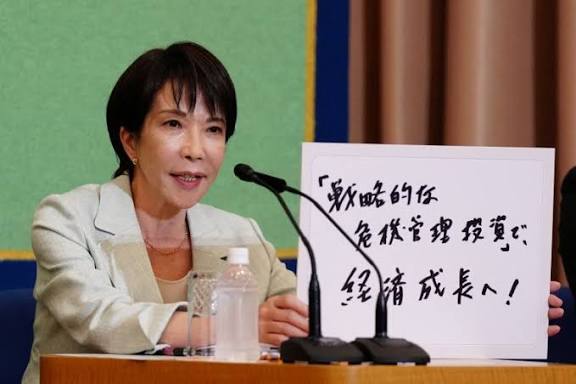
Sanae Takaichi has emerged as the new leader of Japan’s ruling Liberal Democratic Party (LDP), positioning her to become the country’s first female prime minister. Her victory over Shinjiro Koizumi, son of former Prime Minister Junichiro Koizumi, came after a run-off vote on Saturday following an inconclusive first round in which none of the five candidates secured a majority. Had Koizumi won, he would have been Japan’s youngest prime minister in more than a century.
Takaichi, 64, a former economic security minister, represents the LDP’s conservative wing. Her ascendancy underscores a broader trend within the party: a blend of traditionalist values with a populist tilt, particularly on immigration and national security. In the leadership vote, only 295 LDP parliamentarians and around one million dues-paying party members participated—a fraction of Japan’s electorate, reflecting the tight internal mechanisms that continue to dominate political succession.
Despite assuming the LDP helm, Takaichi faces an immediate challenge: governing without a parliamentary majority. The LDP-led coalition now lacks control of either chamber, necessitating negotiations with centrist opposition parties and an expanded partnership with Komeito to pass legislation.
Her agenda is likely to confront Japan’s most pressing issues: an ageing population, a sluggish economy, regional geopolitical volatility, and rising anxieties over immigration. During the campaign, she echoed nationalist rhetoric reminiscent of populist parties like Sanseito, warning against “people with completely different cultures and backgrounds,” and framing foreign visitors and migrants as a potential source of social tension—a rare strain of alarmism in a country where less than three percent of residents are foreign-born.
On fiscal matters, Takaichi has historically supported bold monetary easing and expansive spending programs, following the template of her mentor, Shinzo Abe, though she has sought to present a more measured posture on China during the campaign.
Read also: Hong Kong, Southern China Brace For Typhoon Ragasa
Observers caution that her historic leadership as a woman may not translate into progressive gender policies. “She has no interest in women’s rights or gender equality,” notes Yuki Tsuji, a political scientist specializing in gender studies at Tokai University.
Her first diplomatic test looms large: a potential summit with US President Donald Trump in late October, where pressure on Japan to increase defence spending is expected. How Takaichi balances domestic conservatism with international expectations will define whether her tenure begins as a symbolic milestone or a contentious turning point for the LDP.