
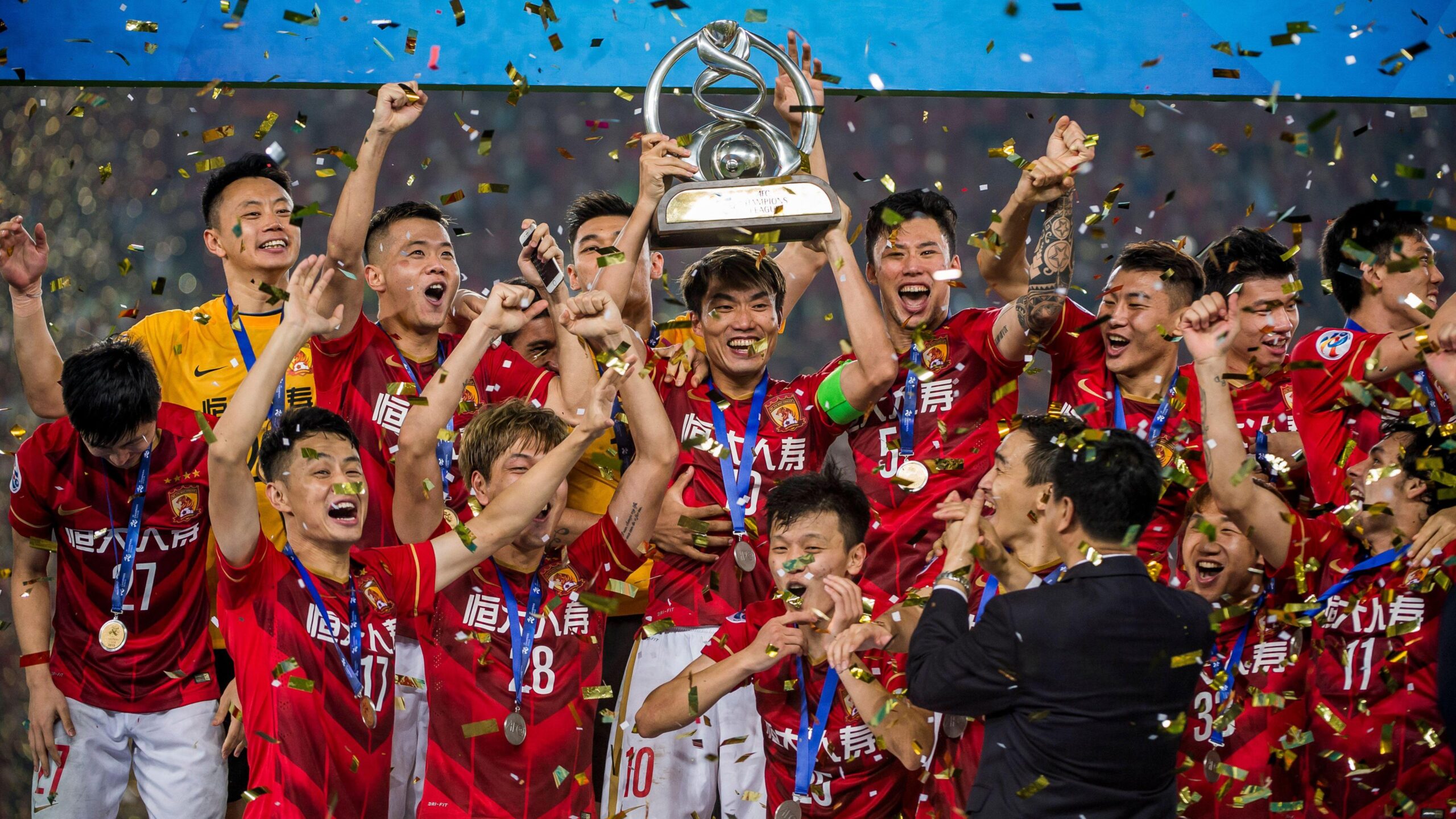
Guangzhou FC, once the pride of Chinese football and one of Asia’s most formidable clubs, has officially ceased operations — marking the end of an era for a team that once redefined the financial and competitive landscape of the Chinese Super League.
The announcement comes years after the club’s owner, the real estate conglomerate Evergrande Group, collapsed under the weight of a staggering $300 billion debt, triggering one of the largest corporate crises in China’s history. The financial implosion not only crippled the company’s property empire but also dragged its flagship football team into ruin.
Founded in 1954 and rebranded as Guangzhou Evergrande in 2010, the club became a symbol of China’s footballing ambition. At its peak, Guangzhou FC shattered transfer records and salary ceilings to attract global talent. In 2016, the club paid €42 million to Atlético Madrid for Colombian striker Jackson Martínez, while Argentine midfielder Diego Conca earned an estimated £170,000 per week — at the time, the third-highest wage in world football, behind only Lionel Messi and Cristiano Ronaldo.
The club also signed Brazilian stars Paulinho from Barcelona and Lucas Barrios from Borussia Dortmund, building a powerhouse that dominated the Chinese Super League and captured multiple AFC Champions League titles. Their success extended beyond the pitch, symbolizing the Chinese government’s push to elevate the nation’s football standards through massive investment.
Two World Cup-winning coaches, Marcello Lippi and Luiz Felipe Scolari, both took charge during the club’s golden years — guiding Guangzhou FC to unprecedented continental glory.
However, the global pandemic and Evergrande’s subsequent financial collapse marked the beginning of the end. The club was relegated from the top flight in 2023, and its founder, Xu Jiayin, was later detained amid investigations into financial misconduct.
Read More: Alaba To Exit Real Madrid As Free Agent In Summer 2026
After two seasons in the second division, Guangzhou FC has now officially announced the termination of all football operations, bringing to a close one of the most remarkable — and cautionary — stories in modern football.
What began as China’s most ambitious football project has ended as a sobering reminder of how quickly sporting empires can crumble when built on unstable financial ground.