
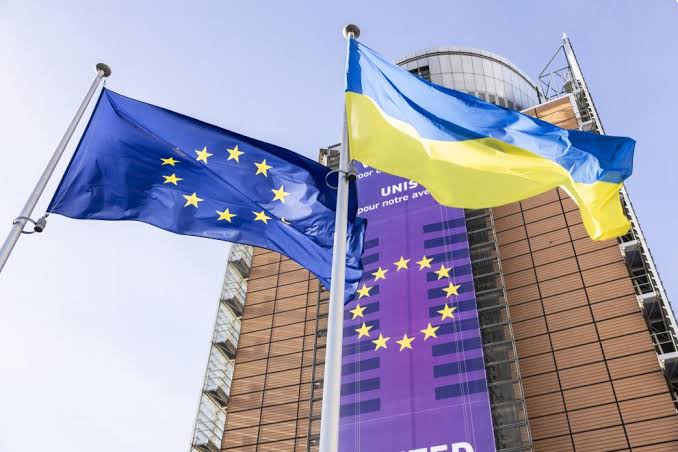
European Union leaders have committed to bolstering Ukraine’s defense funding but hit a roadblock Thursday over an ambitious proposal to tap frozen Russian assets, revealing fractures in the bloc’s approach to financing Kyiv’s war effort.
The impasse emerged during high-stakes talks in Brussels, where leaders gathered to address what officials described as Ukraine’s “pressing financial needs” over the next two years. At the heart of the dispute: a controversial 140 billion euro ($163.3 billion) loan scheme that would leverage Russian central bank assets currently held by Euroclear, a Belgian financial institution.
Since Russia launched its full-scale invasion in 2022, the EU has frozen roughly 200 billion euros ($232.4 billion) in Russian central bank holdings. The European Commission, the bloc’s executive arm, had proposed an intricate financial arrangement to convert those frozen assets into immediate support for Ukraine without technically seizing them outright.
Under the plan, the EU would borrow against matured funds held by Euroclear and channel that money to Kyiv. The twist: Ukraine would only be required to repay the loan if Russia ultimately provides reparations for the war. If not, the loan would effectively become a grant funded by Russian money.
The scheme required a collective guarantee from all 27 EU member states, meaning they would shoulder the risk if the bloc eventually decided to return the assets to Russia without securing reparations. That’s where Belgium balked.
Prime Minister Bart De Wever raised fundamental concerns about the proposal’s legality, effectively blocking consensus. Russia has already characterized any use of its frozen assets as theft and threatened retaliation, adding diplomatic pressure to the already complex situation.
Ukrainian President Volodymyr Zelenskyy, attending the summit as a guest, made an urgent appeal for swift action. “Anyone who delays the decision on the full use of frozen Russian assets is not only limiting our defence, but also slowing down the EU’s own progress,” he told the assembled leaders, noting that much of the funding would go toward purchasing European-made weapons.
Read also: EU Agrees To Use Frozen Russian Assets To Fund Ukraine
After hours of negotiation, the final declaration approved by leaders—notably excepting Hungarian Prime Minister Viktor Orban—reflected the deadlock. The watered-down language called only for exploring “options for financial support based on an assessment of Ukraine’s financing needs,” with concrete proposals delayed until the next summit in December.
The statement did reaffirm one principle: “Russia’s assets should remain immobilised until Russia ceases its war of aggression against Ukraine and compensates it for the damage caused by its war.”
The financial maneuvering came alongside more traditional sanctions measures. On Thursday, the EU rolled out a fresh package of restrictions targeting Russian energy exports, including a ban on liquefied natural gas imports. The move came just a day after U.S. President Donald Trump announced sanctions against Russia’s two largest oil companies, suggesting renewed coordination between Washington and Brussels on economic pressure.
Russian President Vladimir Putin responded defiantly Thursday, dismissing the sanctions as an “unfriendly act” and insisting Russia would not yield to external pressure. His remarks underscored the Kremlin’s position that it can weather Western economic measures, even as they intensify.
The Brussels summit exposed the delicate balancing act EU leaders face: demonstrating solidarity with Ukraine while navigating complex legal, financial, and diplomatic terrain. The frozen Russian assets represent a potentially massive source of funding for Ukraine’s defense and reconstruction, but accessing them requires threading a needle between international law, domestic politics, and the risk of Russian retaliation.
Belgium’s objections reflect genuine concerns about setting precedents in international finance. If the EU moves forward with using frozen assets without clear legal cover, it could face challenges in international courts and potentially undermine the foundations of the global financial system—where asset protection, even for adversaries, has historically been sacrosanct.
For Zelenskyy, the delay represents a frustrating setback at a moment when his forces face mounting pressure on multiple fronts. Ukraine’s ability to sustain its defense depends heavily on continued Western financial support, and any hesitation from European partners creates uncertainty about long-term backing.