
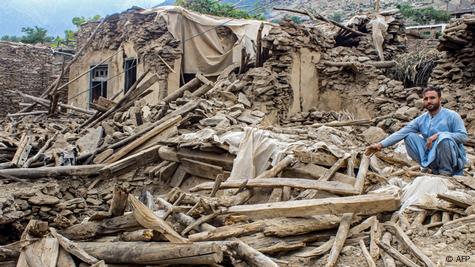
A powerful 6.3 magnitude earthquake tore through northern Afghanistan early Monday, killing at least seven people and injuring 150 while damaging the revered Blue Mosque in Mazar-i-Sharif.
The tremor struck at 12:59 a.m. local time, its epicenter located 28 kilometers beneath the surface near Mazar-i-Sharif, a commercial hub of over 500,000 residents. Terrified inhabitants fled into frigid streets as buildings shuddered, unwilling to trust structures that groaned under seismic stress.
Samim Joyanda, spokesperson for Samangan province’s Public Health Ministry, confirmed the toll based on hospital reports compiled through Monday morning. The mountainous province absorbed significant impact as medical facilities scrambled to receive casualties.
The U.S. Geological Survey issued an orange alert—its second-highest warning level—projecting “significant casualties” and characterizing the disaster as “potentially widespread.” Such classifications typically demand regional emergency mobilization, though Afghanistan’s Taliban government lacks resources for effective response after international aid collapsed following their 2021 takeover.
Haji Zaid, representing Balkh province officials, confirmed structural damage to Mazar-i-Sharif’s celebrated Blue Mosque. The centuries-old shrine, distinguished by its luminous turquoise façade and immense religious significance across the Muslim world, suffered partial collapse.
Read also: Afghanistan Claims 58 Pakistani Soldiers Killed In Clash
This earthquake extends a brutal pattern of seismic catastrophes battering Afghanistan since 2021. Just months ago, on August 31st, a 6.0 magnitude quake killed over 2,200 people in eastern provinces—the deadliest in recent Afghan history. Major tremors near Herat in 2023 and Nangarhar in 2022 killed hundreds more and destroyed thousands of homes.
Afghanistan sits along one of Earth’s most seismically volatile zones, where the Eurasian and Indian tectonic plates collide beneath the Hindu Kush mountains. Since 1900, the country’s northeast has endured a dozen earthquakes exceeding 7.0 magnitude, according to British Geological Survey seismologist Brian Baptie.
But geology alone doesn’t explain Afghanistan’s catastrophic tolls. Decades of war left pervasive poverty, crumbling infrastructure, and housing built from mud brick that disintegrates under seismic stress. Rescue operations face collapsed roads, nonexistent heavy machinery, and hospitals lacking supplies—obstacles magnified by the Taliban government’s diplomatic isolation and financial depletion.
The country simultaneously grapples with severe drought, millions of returnees expelled from Pakistan and Iran, and an economy shattered by sanctions. Each earthquake becomes exponentially more lethal without international assistance that once provided emergency response capacity.
Afghanistan’s disaster management agency promised comprehensive assessments later, suggesting initial casualty figures may climb as reports arrive from remote areas where communication remains difficult and rescue efforts face days-long delays.