
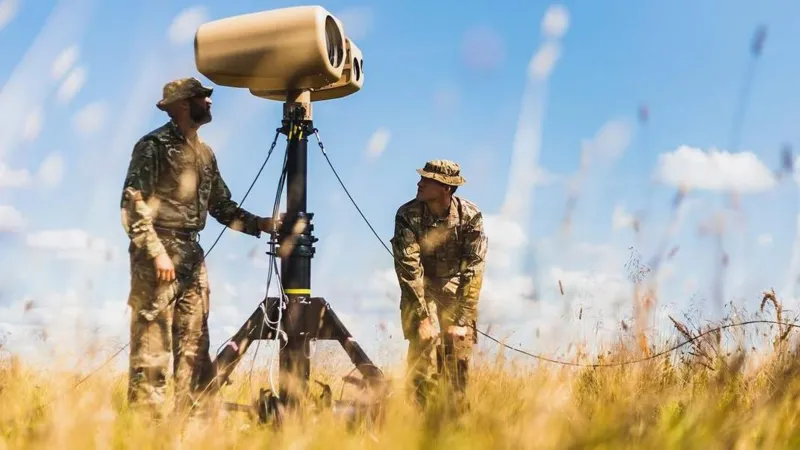
Britain is sending military equipment and personnel to Belgium after a series of suspected Russian drone incursions disrupted Belgian airspace, including a temporary shutdown of Brussels Airport, officials confirmed on Sunday.
The UK’s Chief of the Defence Staff, Air Chief Marshal Sir Richard Knighton, said Belgium requested assistance earlier in the week following multiple drone sightings near civilian and military sites. “We don’t yet know the source of those drones,” Knighton told the BBC’s Sunday with Laura Kuenssberg program. “But it is plausible they were ordered by Moscow.”
The UK deployment, expected to include members of the Royal Air Force’s 2 Force Protection Wing, which specializes in counter-drone operations, comes as part of a broader NATO response to what European officials describe as growing “hybrid threats” from Russia.
British Defence Secretary John Healey said the move shows the importance of allied cooperation. “As hybrid threats grow, our strength lies in our alliances and our collective resolve to defend, deter, and protect our critical infrastructure and airspace,” Healey said in a statement.
The German Defence Ministry also announced support for Belgium on Friday, pledging to provide anti-drone equipment and expertise.
Read Also: Unauthorized Drones Trigger Belgian Airport Disruptions
The suspected drone incursions forced Brussels Airport in Zaventem to close temporarily on Thursday night, affecting about 3,000 Brussels Airlines passengers and leading to dozens of cancelled or diverted flights. Belgian authorities said drones were also detected near a military base and other strategic sites across the country.
While German Defence Minister Boris Pistorius and Belgian security services have suggested Russian involvement, Belgium’s Defence Minister Theo Francken cautioned that no direct evidence has been found. “At first, drones flying over our military bases were seen as our problem,” Francken said earlier this week. “Now it has become a serious threat affecting civilian infrastructure across multiple European countries.”
The drone sightings in Belgium follow similar airspace incidents across Sweden, Norway, and Denmark in recent months. Western intelligence officials believe such activity may form part of Russia’s wider hybrid warfare strategy, combining cyberattacks, disinformation, and physical sabotage to destabilize Europe.
Sir Richard Knighton said Russia remains “the most pressing threat right now” to European security. “The illegal invasion of Ukraine has shown the barbaric nature of Russia’s war efforts,” he said, warning that Moscow has also engaged in sabotage and assassinations on UK soil.
Shadow Defence Secretary James Cartlidge welcomed Britain’s support for Belgium but urged the government to accelerate its defence spending commitments. “We are in a heightened threat environment,” he said. “Deterring those threats means acting decisively with our NATO allies.”
Moscow has denied involvement in the drone activity. However, according to Reuters and AFP, Russian aircraft have carried out multiple airspace violations in Eastern Europe this year, intensifying pressure on NATO’s eastern flank. The UK has already deployed RAF Typhoon jets to Poland as part of NATO’s defensive operations in response to those incidents.