
The battle over political boundaries in the United States widened this week as the Justice Department moved to block California’s newly approved congressional map, arguing that the state crossed a constitutional line in its attempt to counter Republican gains elsewhere.
The map, created through Proposition 50 and endorsed by voters with overwhelming support last week, hands Democrats an advantage in several additional districts. For California’s leadership, the plan was framed as a defensive measure—an attempt to neutralize redistricting moves in Texas that tilted heavily toward Republicans. But federal officials see something else entirely: a blueprint shaped around race rather than lawful political strategy.
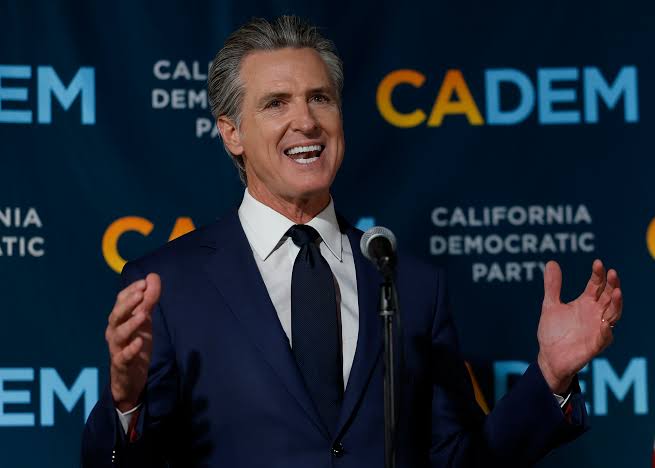
In a sharply worded complaint filed in federal court, the Justice Department accused Governor Gavin Newsom and Secretary of State Shirley Weber of imposing boundaries that rely heavily on Latino demographics to consolidate political power. The filing argues that the design violates the Equal Protection Clause by elevating race to a controlling factor, something the courts have repeatedly struck down in past cases.
California officials, for their part, dismissed the lawsuit as partisan theater. Newsom’s team cast the challenge as an attempt to override the will of voters, while Attorney General Rob Bonta pointed to earlier legal contests that failed to undermine Proposition 50. They insist the map reflects political reality in a state where demographic shifts and voter preferences have long leaned in one direction—and that voters simply endorsed a plan that fits their vision.
Read Also: South Korea U.S. Nuclear Submarine Deal Finalized
Still, the timing and tone of the dispute reveal a deeper national struggle. Redistricting has become a high-stakes tool in the race for control of the House of Representatives, and both parties have leaned heavily on state-level maneuvers to protect or expand their influence ahead of the 2026 midterms. What once unfolded quietly in legislative committees now erupts in public campaigns, ballot measures, and rapid-fire litigation.
California’s move was bold even by modern standards. Months before the vote, Newsom openly argued that the state had no choice but to “fight fire with fire,” signaling a willingness to suspend its historically independent redistricting process in response to aggressive changes elsewhere.
The lawsuit ensures that the debate is far from over. What California views as strategic parity, the Justice Department casts as an unconstitutional overreach. The courts will now determine which vision prevails—and how far states can go when the political map becomes a battlefield.