
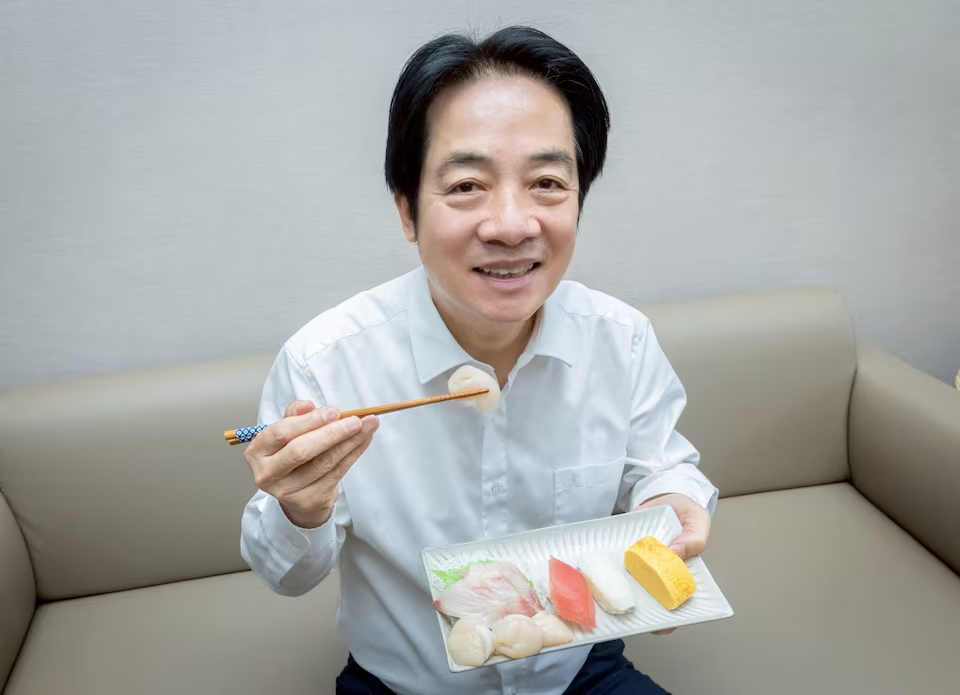
Taiwan President Lai Ching-te publicly backed Japan on Thursday by sharing photos of himself eating sushi made with Japanese seafood, a clear response to Beijing’s move to block imports from Japan amid a growing row over security and sovereignty.
The gesture comes as tensions between China and Japan rise sharply after new Japanese Prime Minister Sanae Takaichi said earlier this month that any Chinese assault on Taiwan that threatened Japan’s survival could prompt a military reaction. Her remarks sparked protests from Beijing and set off a fresh round of trade pressure.
Lai posted images on his Facebook, Instagram and X accounts showing him eating yellowtail sourced from Kagoshima and scallops from Hokkaido. He captioned the posts simply with “Today’s lunch is sushi and miso soup” in Chinese, English and Japanese.
The meal served as a symbolic show of support for Tokyo as China prepares to halt all seafood imports from Japan. Lai’s office did not issue a separate statement, but senior officials framed his post as part of Taipei’s effort to push back against trade restrictions used as diplomatic punishment.
Read Also: China Ban On Japan Seafood Import Deepens Political Standoff
Foreign Minister Lin Chia-lung told reporters earlier on Thursday that China had repeatedly used food bans and military pressure to intimidate others. “China’s use of economic coercion and military intimidation to bully other nations are already too numerous to mention individually,” Lin said. At a later parliamentary hearing, he urged Taiwanese people to visit Japan more often and buy more Japanese products to demonstrate goodwill.
Asked about Lai’s online posts, Chinese foreign ministry spokesperson Mao Ning dismissed the move and restated Beijing’s stance on Taiwan. “Taiwan is an inseparable part of China’s territory,” she said. “No matter what show the Lai Ching-te authorities put on, it cannot change this ironclad fact.”
Beijing maintains that Taiwan is part of its territory and has not excluded the possibility of using force to bring it under its control. Taiwan’s government rejects that view, saying the island’s future should be decided only by its people.
China has previously targeted Taiwanese goods such as pineapples, groupers and various food products during periods of political friction. According to Reuters reporting on past disputes, Taipei has described these measures as attempts to influence public sentiment and exert pressure on Lai’s administration.
The latest seafood restrictions follow Japan’s shift in diplomatic language under Takaichi, who took office this month and has been more direct in expressing concern about China’s military activity around Taiwan. Her comments aligned with Japan’s broader security strategy, which already identifies China as its “greatest strategic challenge,” according to the country’s defence documents.
Taiwanese officials expect the seafood ban to stay in place for now, though they say it is unlikely to affect local markets significantly because Japan already exports much of its seafood elsewhere. The government plans to continue working with Tokyo as both sides navigate the political fallout from the dispute.