
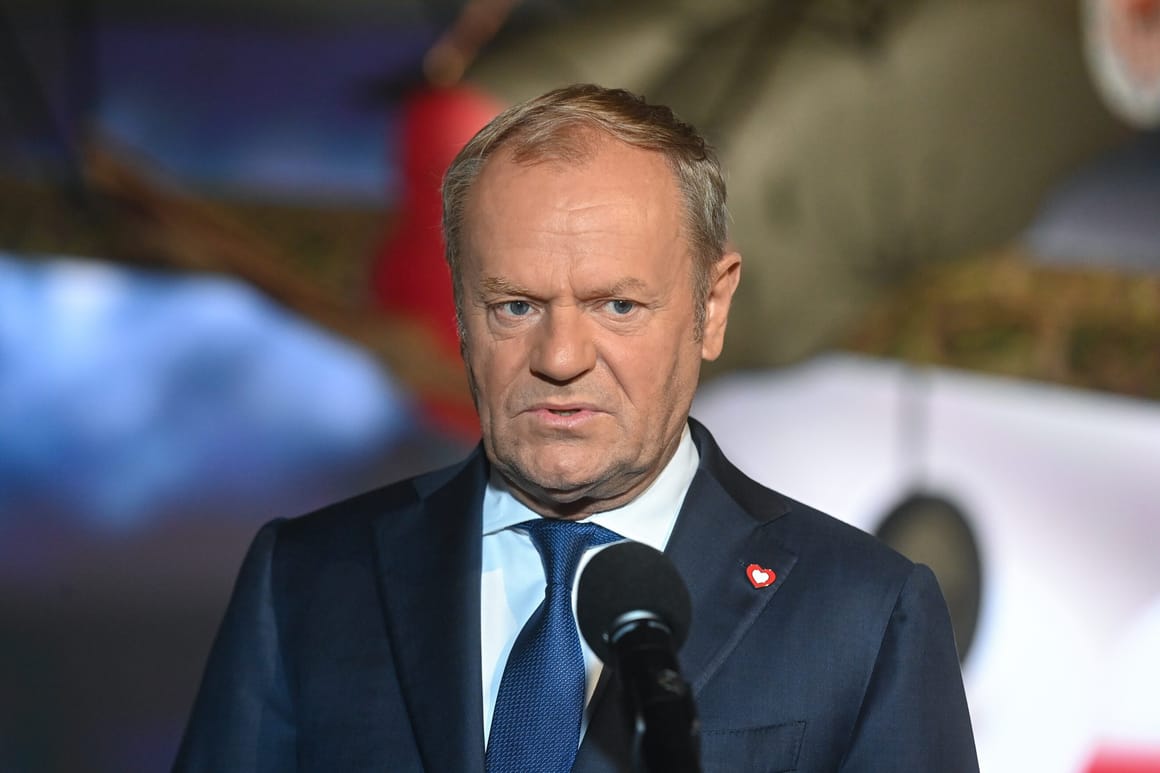
Polish Prime Minister Donald Tusk on Friday condemned recent sabotage attacks on the country’s infrastructure, describing them as “state terrorism” orchestrated by Russia to destabilize Poland. Over the weekend, an explosion damaged railway tracks on the Warsaw-Lublin route, a vital line connecting the Polish capital with the Ukrainian border.
Tusk described the incident as an “unprecedented act of sabotage,” highlighting the growing security threat along Poland’s eastern frontier.
Authorities have identified two individuals responsible for the explosion as Ukrainian nationals allegedly working with Russian intelligence. Both suspects have reportedly fled to Belarus. Poland has formally requested their extradition and, in response to the ongoing threats, has closed the Russian consulate in Gdansk—the last one still operating in the country. Additionally, thousands of troops have been deployed to protect critical infrastructure nationwide.
Read Also: Poland To Boost Military After Russian Drone Breach
Russia has rejected any role in the attack, accusing the Polish government of “Russophobia.” Moscow has also announced plans to limit Poland’s diplomatic and consular presence within Russia. Speaking to parliament, Tusk emphasized the systematic nature of these operations. “Recent events leave no room for any illusions: Russia is implementing another phase of hybrid warfare aimed at destabilizing our country,” he said. “The sabotage operations, inspired and directly organized by the Kremlin’s services for many months, have recently crossed a critical line, and one can now speak of state terrorism.”
The railway explosion is part of a broader pattern of sabotage, arson, and cyberattacks targeting Poland and other European nations since Russia launched its full-scale invasion of Ukraine in 2022. Officials have warned that such operations, which exploit both physical infrastructure and digital networks, are intended to weaken European resilience and create strategic pressure along key borders.
Poland’s security agencies are intensifying monitoring and protective measures, with increased patrols and surveillance around transport hubs and critical installations. The government has urged citizens to remain vigilant while emphasizing that investigations are ongoing.
As hybrid threats evolve, European countries are examining new strategies to counter attacks that blur the lines between conventional warfare, espionage, and terrorism.