
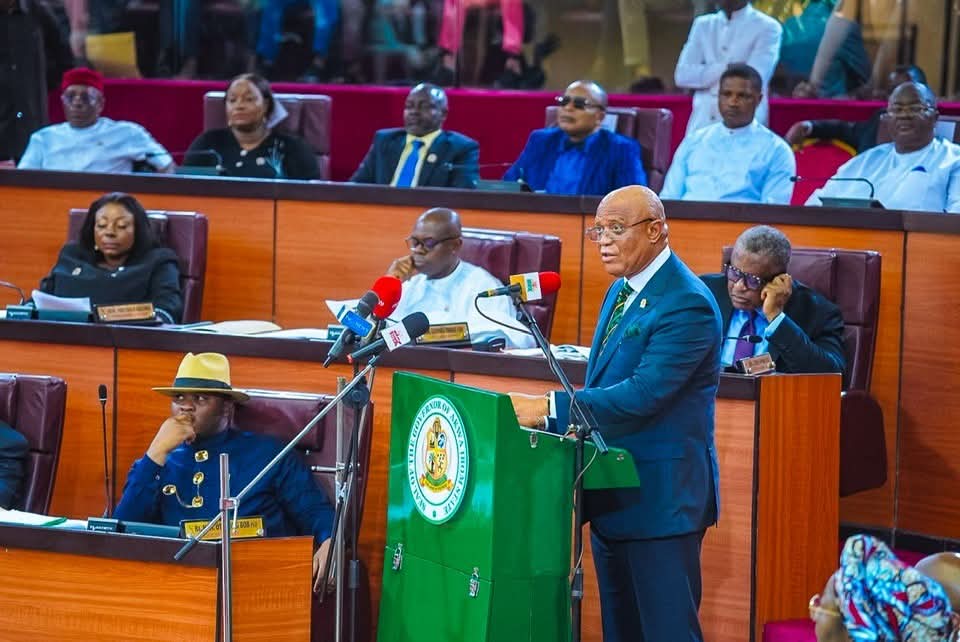
Akwa Ibom State has set the tone for a more disciplined financial year, as Governor Umo Eno on Monday presented a proposed ₦1.39 trillion Appropriation Bill for 2026 — a noticeably slimmer plan compared with this year’s revised ₦1.65 trillion budget. The figures, released officially by the state government and confirmed through multiple reputable outlets, reflect a 16 percent reduction, signalling a cautious but intentional recalibration of spending.
Governor Eno, addressing lawmakers at the State House of Assembly, framed the 2026 proposal as a budget designed to “stabilise, stimulate, and strengthen” the state’s economy. In his telling, this leaner financial outline is not a retreat but a reset — a deliberate shift toward long-term investment rather than short-term consumption.
The heart of the spending plan sits firmly in capital projects, a sector the governor says will drive productivity and expand the state’s economic base. Roads, industrial infrastructure, public utilities, and community-level development programs are among the areas expected to see increased attention. The administration’s argument is simple: if the state wants durable growth, it must build the structures that support it.
Still, the decision to scale down the budget comes at a moment when most Nigerian states are dealing with revenue fluctuations, rising project costs, and tightening federal allocations. In that context, Akwa Ibom’s proposal reads more like an attempt to pre-empt financial strain than a response to it. The state appears intent on keeping spending tethered to what it can realistically sustain, rather than riding the wave of expansionary budgets seen in previous cycles.
Read Also: Trump Envoy Heads To Moscow As Peace Push Intensifies
Governor Eno also hinted that the coming fiscal year will prioritize “value for money,” a phrase that has become something of a mantra for his administration. It signals not just an interest in building things, but in ensuring those things are useful, functional, and aligned with the state’s broader development map.
As the Assembly begins its scrutiny of the bill, the numbers will inevitably draw debate. But the posture of the proposal is clear: 2026 is being cast as a year for tightening bolts, sharpening priorities, and building with intent.