
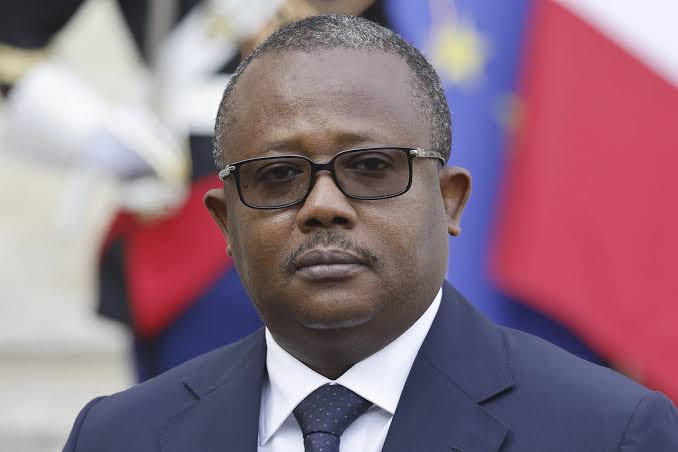
Umaro Sissoco Embalo’s detention by military officials deepens turmoil after both leading candidates claimed victory in Guinea-Bissau’s disputed election.
Guinea-Bissau was thrown into fresh political turmoil on Wednesday November 26, 2025, after President Umaro Sissoco Embaló announced that he had been detained by senior military officers in what he described as an attempted coup. The development comes amid an escalating standoff over disputed presidential election results.
Embaló told Jeune Afrique that he was taken into custody at around 1 p.m. local time while in his office at the presidential palace. He said no force was used against him and claimed the operation was orchestrated by top commanders of the armed forces.
Among those reportedly detained alongside the President were the armed forces’ Chief of Staff, General Biaguê Na Ntan; his deputy, General Mamadou Touré; and the Interior Minister, Botché Candé. Embaló said their arrests appeared to be part of a wider power struggle within the military hierarchy.
Tensions had already been rising in the capital, Bissau, as both Embaló and opposition challenger Fernando Dias de Costa declared victory in Sunday November 23, 2025, presidential vote. Embaló claimed he secured 65% based on figures compiled by his campaign, but the National Electoral Commission (CNE) has not yet released provisional results, which were expected on Thursday November 27, 2025.
Read Also: Guinea Bissau Election Draws Heavy Turnout Amid Tense Climate
Journalists and eyewitnesses reported gunfire near the CNE headquarters as unrest spread through parts of the city. Reuters reported that its correspondents, who were monitoring the vote-counting process, were forced to take shelter inside the building as shots rang out and residents fled the area.
The chaotic scenes underscore the deep political divisions that have long shaped Guinea-Bissau, a country with a history of military coups, contested elections and fragile civilian institutions. The latest crisis reflects increasing tensions between the Presidency and security forces, exacerbated by Embaló’s confrontations with parliament and his controversial decision to dissolve it in 2022.
Analysts say Embaló’s efforts to consolidate political authority and restructure security institutions may have fuelled mistrust within sections of the armed forces. The disputed election, combined with competing claims of victory, has further strained a political system already prone to instability.
Regional and international observers have not yet issued formal reactions to the President’s reported detention, but diplomats say the incident could deepen uncertainty in a country that has struggled for decades to establish lasting civilian governance.
As of Wednesday November 26, 2025, evening, the situation in Bissau remained fluid, with no clarity on who is exercising effective control of the state.